Office of the Provost Office of the Provost Office of the Provost Office of the Provost Office of the Provost

Budget and Curricular Review Information:

Office of the Executive Vice President
and Provost

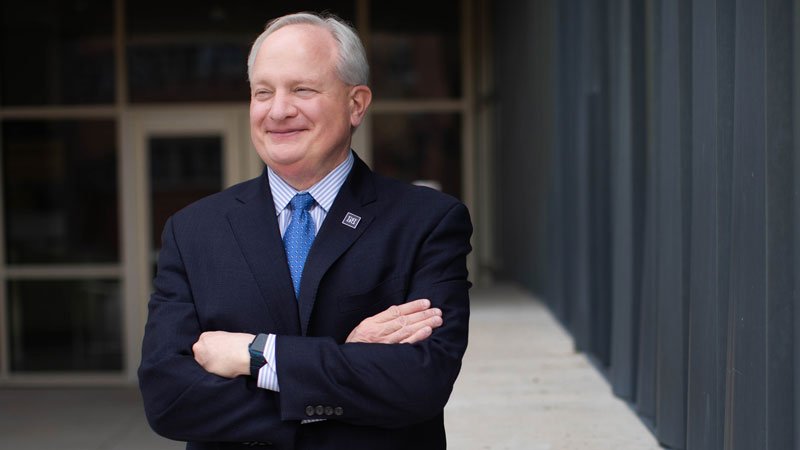
Marc Johnson is the Executive Vice President and Provost, the chief academic officer of the university.  As Executive Vice President, he acts for the President in his absence.

The Provost has overall leadership and responsibility for the following academVaseic units:  College of Agriculture, Biotechnology & Natural Resources; College of Business; College of Education; College of Engineering; Division of Health Sciences; College of Liberal Arts; College of Science; Extended Studies; Reynolds School of Journalism; and the University of Nevada Cooperative Extension.  In addition, he works closely with the Vice President for Health Sciences in shared oversight of the School of Medicine, the Vice President for Research, and the Vice President for Information Technology, the Dean of the Graduate School, and the Dean of the University Libraries.

The Provost is responsible for academic programs and related support services including faculty development, promotion and tenure, faculty development leaves, academic budgeting, personnel issues in the academic affairs area, curricular planning, and assessment. The deans of the colleges, three vice provosts and the directors of the Core Curriculum and Academy for the Environment report to the Provost.

The Provost also coordinates all short- and long-term space planning at the University, including the setting of priorities for renovations through the Facilities Resource Committee (FRC), and overall campus master planning.  This arrangement of responsibility means that short-term and strategic planning of space will be driven by the university's academic mission.

The Office of the Provost is committed to continuous enhancement of educational experiences for both undergraduate and graduate students through curriculum development, faculty development, outreach activities, research opportunities, and cooperation with public schools and community groups.  Statewide needs for quality higher education are also a recognized part of providing educational opportunities through on-campus programs, off-campus educational offerings, and various distance education programs.