Research
Nevada Forest and Woodland Restoration Institute, in collaboration with regional land management partners and other stakeholders, seeks to:
- identify dryland forest and woodland restoration challenges,
- conduct research to guide treatment options,
- further adaptive management through monitoring of restoration treatments and reforestation efforts, and
- quantify restoration outcomes to inform further research and manage actions.
Research fills knowledge gaps, accelerating the development and application of landscape-scale restoration treatments that protect forest resources and increase ecosystem resilience to wildfire, drought and biological invasions.
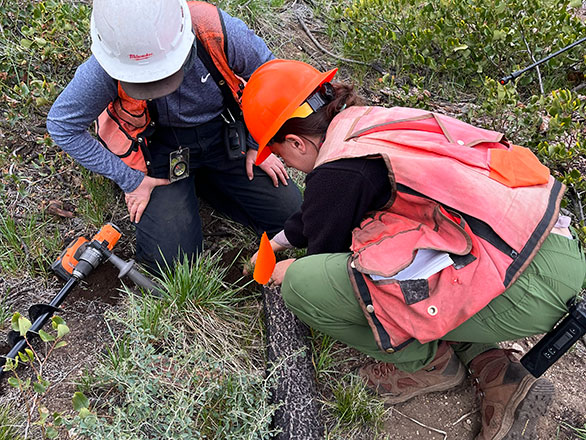
Monitoring treatment effectiveness and forest health
Nevada’s forest and woodlands are increasingly vulnerable to catastrophic wildfire, drought, and invasive species. Research led by the Nevada Forest and Woodland Restoration Institute seeks to understand fuels and restoration treatments that have historically and are currently being applied across the Great Basin and eastern Sierra; the outcomes of these treatments for fire risk and forest health; and the emerging threats and trends in forest and woodlands across the region.
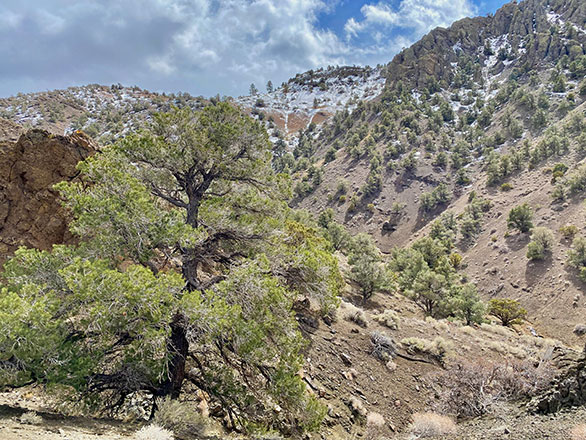
Pinyon and juniper woodlands
Pinyon and juniper woodlands are the most widespread forest or woodland types in Nevada. Fuels reduction treatments are commonly used to improve sagebrush habitat and rangeland resources in areas of the Great Basin where woodlands have expanded in recent centuries. However, less is known about how to effectively manage persistent pinyon and juniper woodlands in the Great Basin to reduce wildfire risk and improve resilience to drought and invasion. To improve the resilience of persistent pinyon and juniper woodlands across the region, the Nevada Forest and Woodland Restoration Institute research seeks to quantify the effectiveness of commonly used fuels treatments, while also working collaboratively with partners to develop and monitor novel restoration treatments.
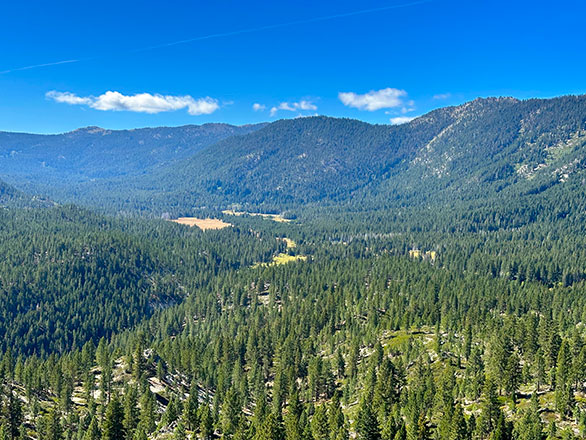
Eastern Sierra forests
Forests of the eastern Sierra Nevada provide critical services to Nevada, including being the headwaters of the rivers that supply water resources to municipalities and agriculture across western Nevada. Forest resources in the eastern Sierra are threatened by increasingly large and severe wildfires. The Nevada Forest and Woodland Restoration Institute is working with partners in the region to:
- better monitor and quantify the effectiveness of fuels treatments for fire risk reduction,
- determine the consequences of these treatments for water and other forest resources, and
- develop novel approaches for accelerating post-fire forest restoration.