Researchers are looking for new sources of dietary fiber in foods better known for their protein.
In a new U.S. Department of Agriculture-funded project at the University of Nevada, Reno, researchers are exploring whether complex carbohydrates hidden within everyday protein-rich foods such as milk, egg whites and soy can be transformed into dietary fiber to help address a gap that leaves 95% of Americans short of recommended levels.
The new $630,000 grant builds on an earlier award, bringing total federal support for the research to nearly $1 million and advancing work that has already produced multiple scientific publications, new research tools and intellectual property related to the enzymes used in the project.
"At the end of the day, what we're trying to figure out is how we can improve the nutritional quality or the nutritional properties of food we already have," said Principal Investigator Steven Frese, an associate professor in the Department of Nutrition at the University’s College of Agriculture, Biotechnology & Natural Resources.
Turning hidden carbohydrates into dietary fiber
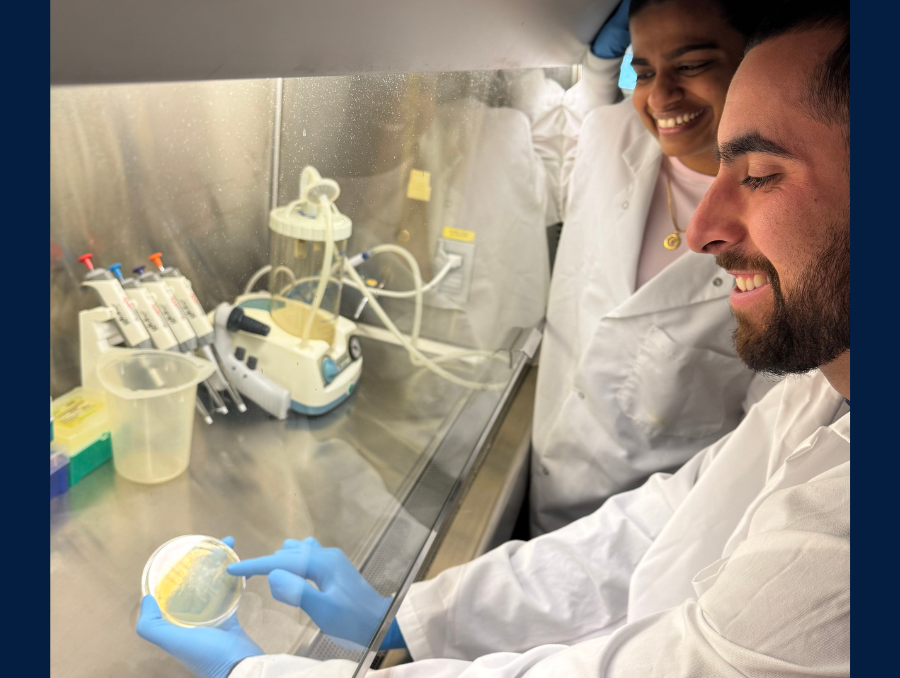
Frese explained that complex carbohydrates known as glycans are naturally attached to proteins in foods such as milk, egg whites and soy. Unlike conventional approaches that add fiber to foods, Frese and his research team are using specialized enzymes to gently cut these glycans free from the proteins, unlocking structures that in some cases share characteristics with other dietary fibers, including resistance to digestion and the ability to be fermented by beneficial gut microbes. A doctoral student, a master's student and a postdoctoral researcher are all contributing to the research as part of their studies at the University.
"The premise of this research is that the complex carbohydrates attached to these proteins are not fully utilized as dietary fiber because they are normally bound to the protein," said Frese, who also conducts research through the University's Experiment Station. "By separating them, we believe they can become more accessible as fiber and help bridge the gap between the amount of fiber people consume and the amount they should be consuming."
One of the project's distinguishing features is that researchers believe the carbohydrates can be removed without significantly altering the original ingredient, effectively creating a new fiber-rich ingredient while preserving the food’s usual uses. In milk, for example, the glycans could potentially be separated and collected while leaving the remaining milk available for its traditional uses.
"We think the milk can still be consumed in all the ways we normally use milk, and it doesn't lose anything when we separate these carbohydrates from it," Frese said.
Milk serves as the primary model system in this project because it is affordable and already processed in liquid form, making it easier to study and apply the enzyme-based technology used to release glycans from proteins. However, the same approach could eventually be extended to other protein-rich foods such as egg whites and soy.
Building on the past, looking to the future
Earlier studies focused on identifying and characterizing the enzymes needed to unlock these complex carbohydrates. Now, researchers are not only working out how to release glycans from proteins, but also how to tweak their structures to see which forms offer the greatest nutritional benefit, and whether less useful forms can be converted into more valuable ones.
While any commercial applications remain years away, the project will help determine whether glycans released from proteins can become more accessible as dietary fiber and whether they deliver the benefits researchers expect once they are made available to beneficial gut microbes.
For now, the project represents a growing body of translational nutrition research aimed at unlocking the health potential of carbohydrates already present in everyday foods.


