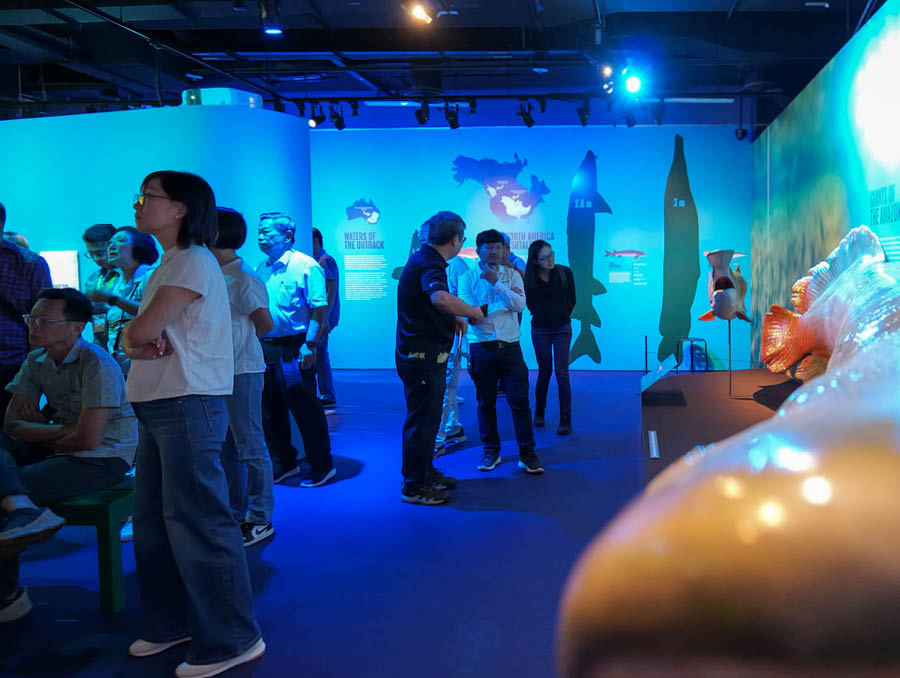
Some freshwater fish grow longer than three meters and weigh hundreds of kilograms. At the Lee Kong Chian Natural History Museum, visitors can now come face to face with models of these aquatic giants in Monsterfish: Freshwater Behemoths, Giants and Titans, which opened on Nov. 17.
Presented by the museum, part of the National University of Singapore's Faculty of Science, in collaboration with the University of Nevada, Reno, the exhibition explores the world's largest freshwater fish and the ecosystems they depend on. The exhibit, which was hosted at the University of Nevada at Lake Tahoe last year, features research from Zeb Hogan, Ph.D., research professor in the Department of Biology at the University of Nevada, Reno, alongside five life-sized sculptures, ranging from two to five meters in length, that anchor the display.
An international partnership
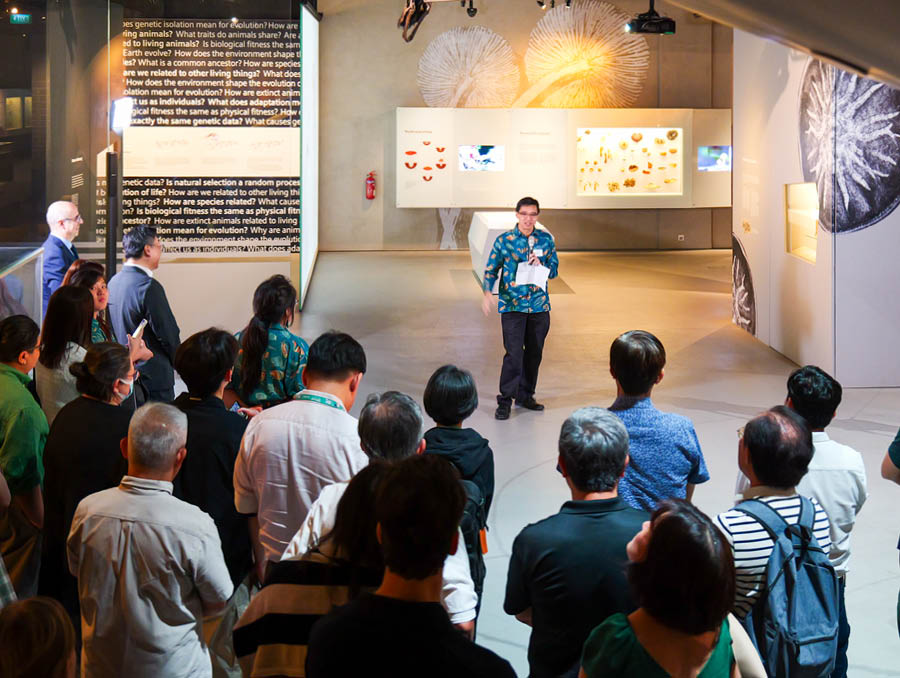
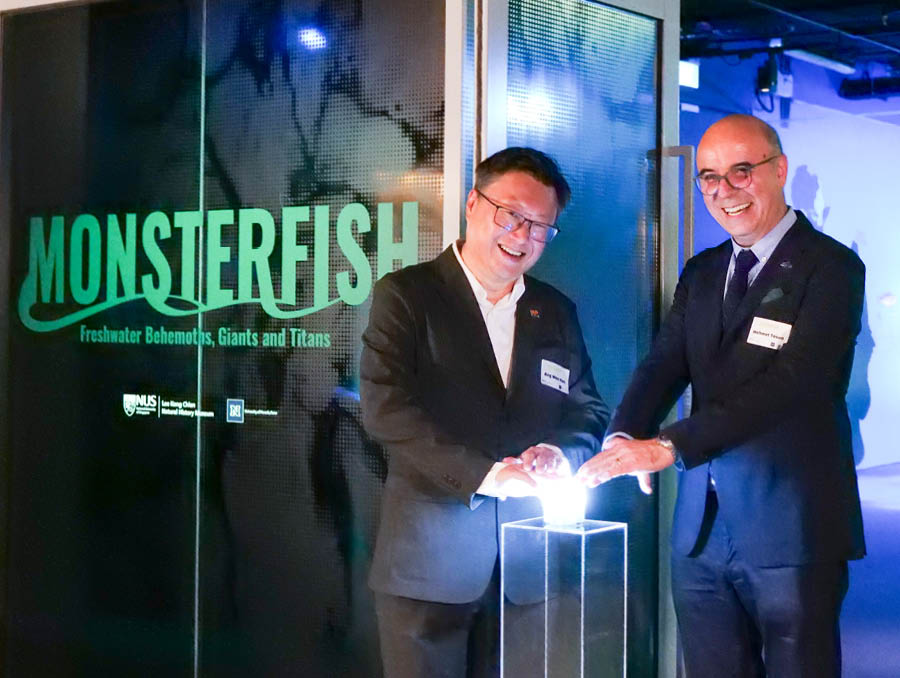
The new exhibit is part of a partnership between the universities that was formed through a memorandum of understanding signed a year ago. Since then, the two institutions have been developing collaborative projects, including the Monsterfish exhibit, which was a cooperative effort between Hogan and the Lee Kong Chian Natural History Museum. Mehmet Tosun, chief international officer at UNR, helped formalize the partnership and visited the National University of Singapore for the opening of the exhibit.
"I was told during my visit to Singapore last week that this is the first time the Lee Kong Chian Natural History Museum has partnered with an external institution, and the first collaboration with a U.S. university, for a joint exhibition,” said Tosun. “It is a source of great pride that we, at the University of Nevada, Reno, are part of this milestone."
What counts as a "mega fish"?
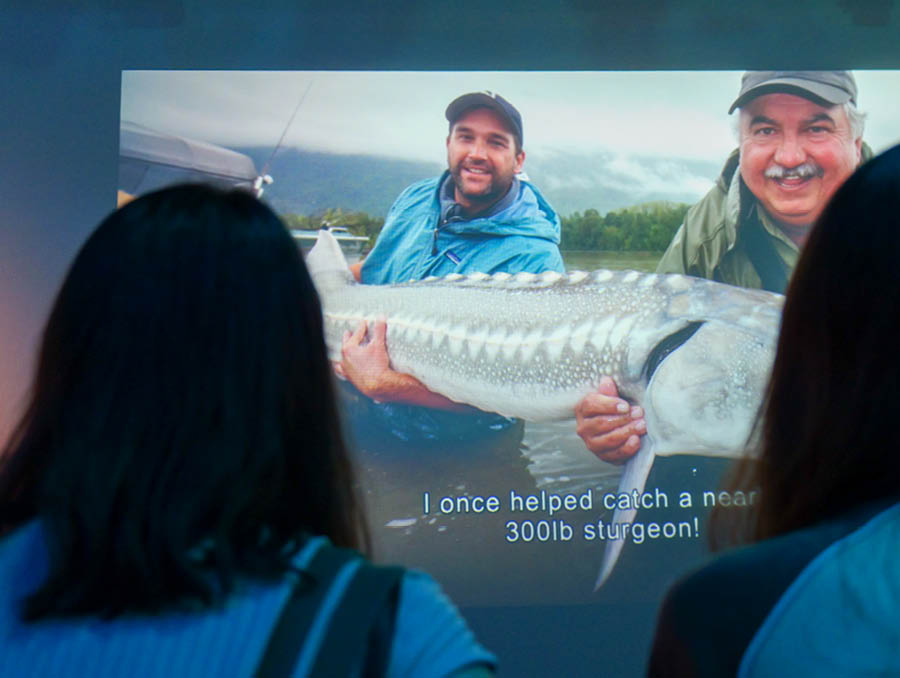
The exhibition explains that a fish qualifies as a "mega fish" if it reaches at least 1.8 meters in length or weighs more than 90 kilograms. Through specimens, research footage and hands-on activities, visitors learn how these species live and why many remain surprisingly poorly known.
“Through research expeditions, we have gained a deeper understanding of these freshwater giants, their remarkable diversity and the pressures they face,” said Hogan. “Protecting these species and their habitats requires collaboration between scientists and local communities. I hope this exhibition gives visitors a glimpse into the work of researchers, deepens their appreciation for these remarkable fishes, and inspires them to play a part in protecting the ecosystems they depend on.”
Darren Yeo, associate professor at the National University of Singapore and head of the Lee Kong Chian Natural History Museum, noted that freshwater ecosystems hold extraordinary biodiversity, and that large fishes can reveal much about the health of rivers and lakes. He said the exhibition aims to highlight the importance of protecting freshwater biodiversity, and added that championing regional biodiversity is part of the museum's mission.


