When people think of watershed health in the Lake Tahoe Basin, they might picture the streams and lakes that define the region. There is, however, much more to this incredible watershed. As University scientists and global experts highlight, watershed health at Lake Tahoe is dependent on interconnected networks that include the mighty meadows of the Sierra Nevada. But what makes meadows so special?
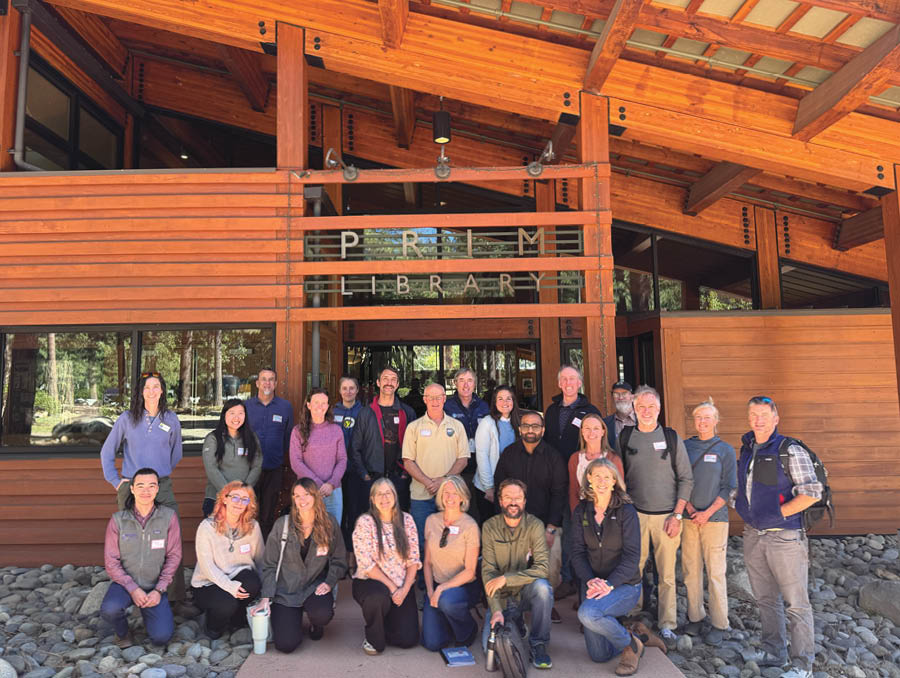
Last week, experts on meadow science convened to discuss exactly this question in a workshop at the University of Nevada, Reno at Lake Tahoe. Hosted by the Tahoe Institute for Global Sustainability, workshop participants, including University of Nevada, Reno professors, graduate students and alumni, worked toward finding interdisciplinary solutions to protect meadows.
“The goal of this workshop is to help invigorate the science community around meadows and to help share our knowledge across disciplines,” said Cody Reed, Ph.D., workshop organizer, senior meadow ecologist at Point Blue Conservation Science and University of Nevada, Reno alum. “We are figuring out what we know and don’t know, and how we can work effectively to address some of the biggest gaps in our knowledge. Hopefully we can address some new big burning questions that need to be answered and go as far as putting together some outlines of research proposals to address these new questions.”
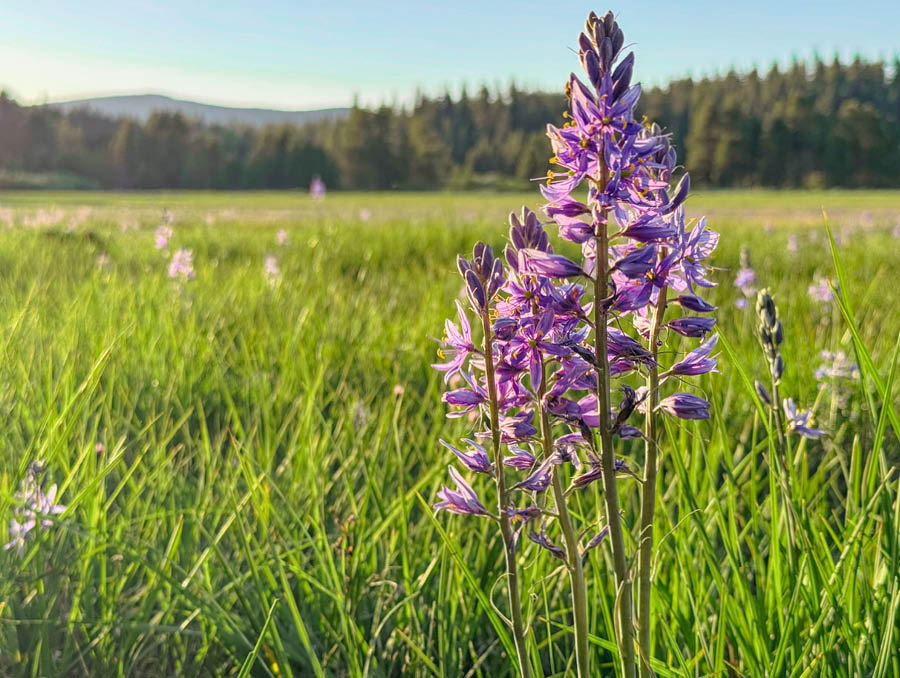
Local meadows in the Sierra Nevada are superheroes, sequestering carbon into plants and soils and creating habitat that supports incredible biodiversity. They help filter water and maintain healthy watersheds. Some meadows in the Sierra Nevada hold upward of 20 million kilograms of carbon, and remarkably, some meadow plants can start processes of photosynthesis under snow and in freezing conditions.
“People experience the benefits of meadows through things like cooler temperatures in the summer, more plants as food for wildlife, pollinators and other insects,” said Ben Sullivan, Ph.D., workshop participant and associate professor in the Department of Natural Resources & Environmental Science. “Aquatic species depend on meadows even if we like to catch them in other parts of a river when they’re older and bigger. And people benefit from the clean water they provide downstream. These meadows provide a host of crucial benefits to wildlife, people, water and air, and they can even act as fire-resistant ecosystems, and may act as fire breaks.”
Part of the workshop included presentations from University of Nevada, Reno graduate students whose emerging research is helping scientists build a stronger foundation of meadow knowledge. University student Chloe Sileo, earning a master’s in geography in the College of Science under the advisement of Julie Loisel, is working to answer how carbon fluxes differ between adjacent meadows and fens. As part of the workshop, she was able to present her research.
“This meadow symposium was the first time I have given a talk on my research,” said Sileo. “While it was nerve-wracking, it was also beyond exciting to share my work with a group of talented professionals. I was very grateful to get some feedback on my work thus far and hear new questions on my work that I can address in the future.”
This is the second meadows workshop hosted by the University of Nevada, Reno and Point Blue Conservation Science, and Reed hopes that the team will be able to continue addressing critical questions in future workshops.
“Meadows have really high rates of biological activity, high rates of biodiversity, leading to high rates of carbon sequestration,” said Reed. “They are critical for wildlife, for water storage, for water quality. They're really understudied relative to the surrounding forest and in other ecosystems. So, we're trying to change that and bring some more awareness to the importance of meadows.”
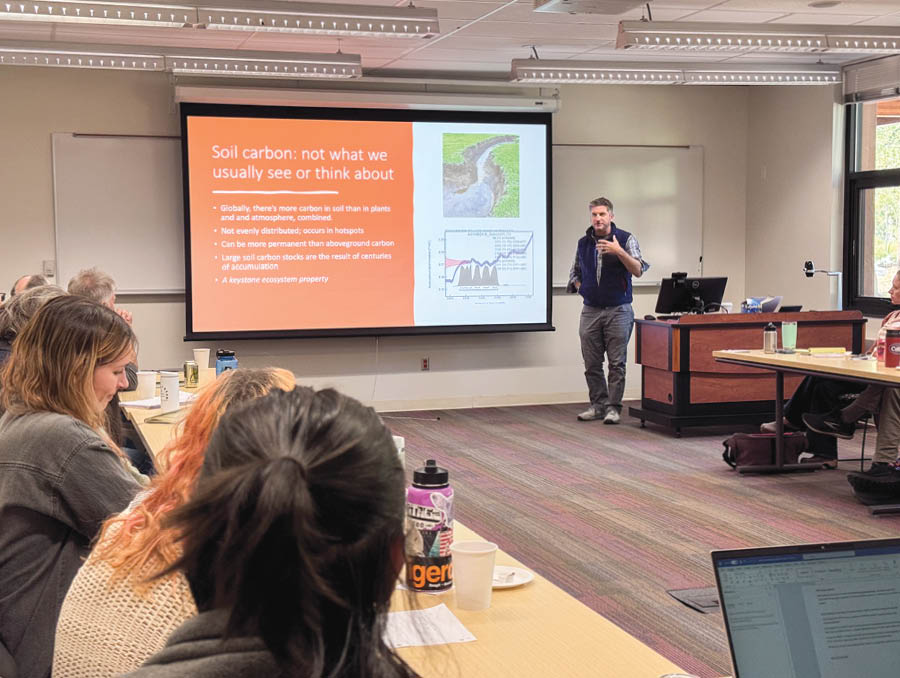
During his presentation, Sullivan highlighted the need for a narrative change around meadows: he believes that if we reframe their importance as a keystone ecosystem, it will bring more awareness to the importance of protecting them.
“I want us to start thinking about meadows as these ecosystems that are capable of so much incredible life within them,” said Sullivan, who also conducts research on our meadows as part of the Experiment Station in the University’s College of Agriculture, Biotechnology & Natural Resources. “I think we should be talking about them in the same sentences as we talk about tropical rainforests, or tropical savannahs. When we go for a hike in a meadow, we are in a place that is teeming with life and that provides amazing things that we love about living in the region more broadly. Without meadows, this region would look very different.”


