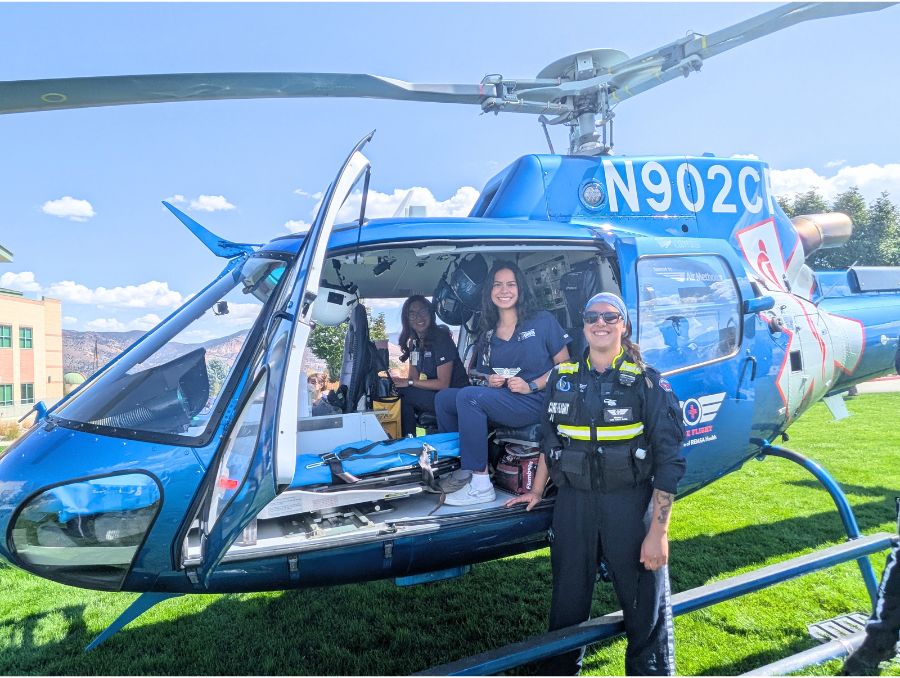
The sound of a Care Flight helicopter arriving at the University of Nevada, Reno's Redfield Campus marked the beginning of a different kind of clinical lesson.
Nursing students learned from flight nurses and emergency medical professionals before following simulated patients from emergency transport to the hospital bedside.
The experience was part of an interprofessional care flight simulation exercise hosted by the Orvis School of Nursing on Sept. 22 and 29. The exercise brought together certified flight nurses, critical care paramedics, a pilot and nursing faculty, creating an environment where undergraduate and graduate nursing students could engage with healthcare professionals across disciplines.
Bringing emergency care into the classroom
The simulation placed students in a fast-moving emergency care scenario that began at a patient’s home and continued through transport, hospital care and a virtual provider consultation.
Care Flight clinicians began by responding to a simulated patient at home. After assessing and stabilizing the patient, the flight team transported the patient to a simulated hospital setting, where undergraduate nursing students assumed care. Later, Advanced Practice Registered Nurse (APRN) students joined the scenario through telehealth to collaborate with the team and develop a plan of care.
For Haley McNeil, MSN, RN, CHSE, director of simulation, the value of the exercise was in bringing those different roles and settings together.
"I wanted students to experience the continuum of care," McNeil said. “By bringing together flight clinicians, undergraduate nursing students and APRN students, we created an experience that reflected the complexity of real-world healthcare and highlighted the importance of each role in the patient's journey. This experience took a great deal of collaboration between our simulation team, faculty, school leadership and the Care Flight team, and I’m proud of what we were able to create for our students.”
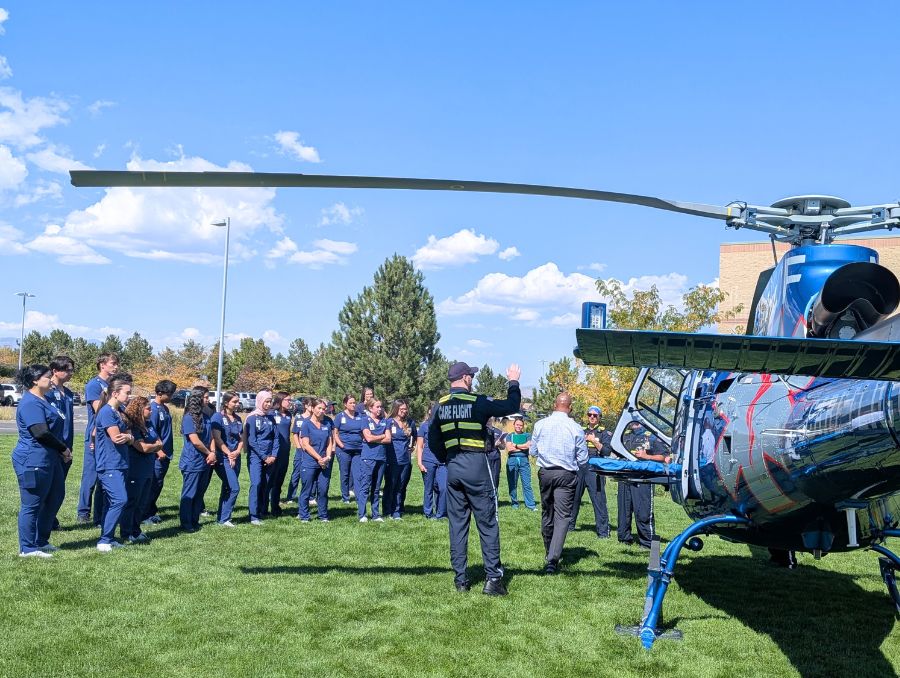
The helicopter landing at the University’s Redfield Campus brought another element of the experience to life. Students explored the aircraft and learned firsthand how flight nurses and critical care paramedics provide care in a confined environment, where space, equipment and communication can all affect patient care.
For students interested in emergency or flight nursing, the experience also offered a firsthand look at a specialty they may one day pursue.
Communication at every stage of care
A patient's care does not stop when one healthcare professional's role ends. A patient may move from an emergency scene to a medical helicopter, to an emergency department and then to inpatient care, with different healthcare professionals responsible for the patient along the way. At each transition, critical information must move with the patient.
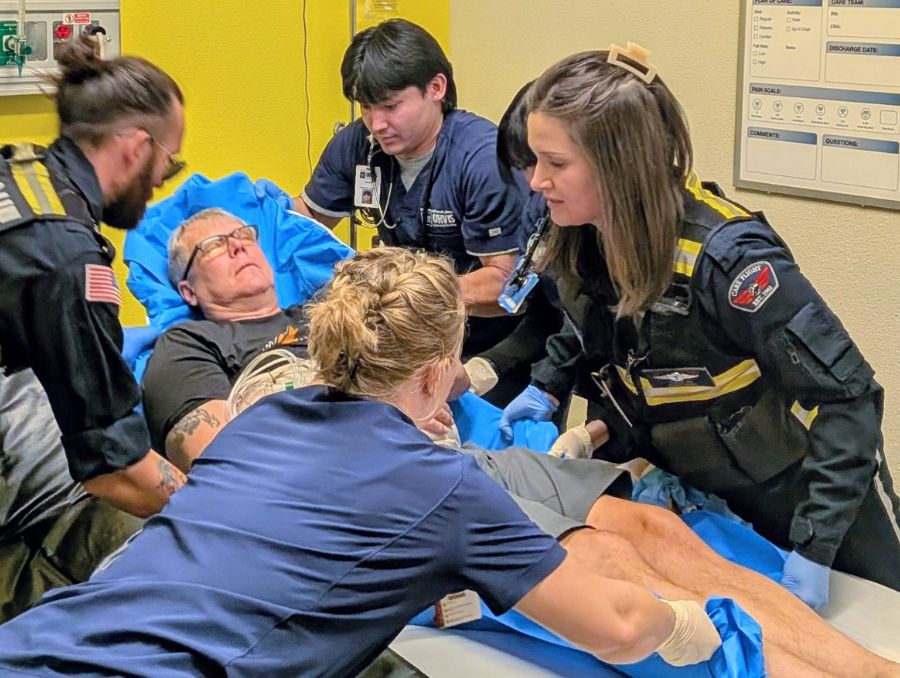
Simulation gives students the opportunity to make decisions and respond to changing circumstances in a realistic environment while faculty guide the experience. Students can work through challenges, communicate with colleagues and reflect on their decisions in a safe setting.
For nursing students, that means learning that patient care is not only about what happens in front of them. It is also about understanding what happened before they arrived, what information the next provider will need and how their decisions affect the rest of the care team.
Connecting education and practice
The Care Flight simulation reflects the growing partnership between the Orvis School of Nursing and REMSA Health Care Flight.
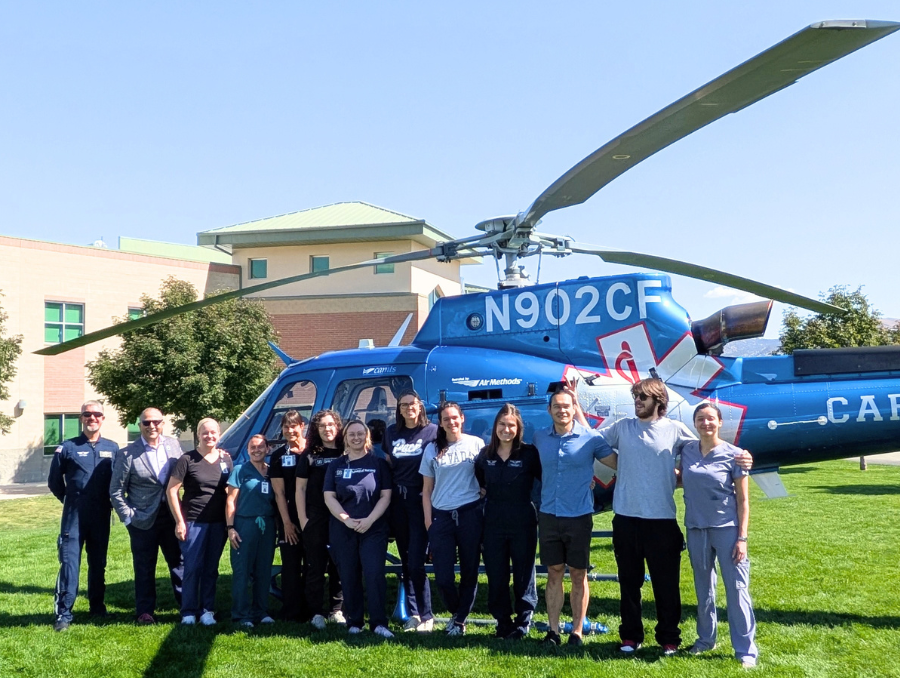
Molly Kokenge, Ph.D., RN, CNL, CEN, associate dean for Strategic Partnerships and Practice, led the development of the interprofessional simulation with REMSA Health.
For Kokenge, partnerships with healthcare organizations create opportunities for both undergraduate nursing students and Advanced Practice Registered Nurse (APRN) students to learn directly from professionals working in the field and experience aspects of nursing practice that cannot be easily recreated in a traditional classroom.
“Our partnerships create opportunities for students to learn from professionals who were once sitting in the same classrooms,” Kokenge remarked. “Having Orvis alumni return as Care Flight clinicians not only enriches the learning experience but also helps students see themselves in these roles and consider career paths they may not have otherwise explored.”
That connection between education and practice helps students understand how their role fits within a larger healthcare team and prepares them for the realities of patient care after graduation.
For Tara Robertson, a flight nurse with REMSA Health Care Flight and alumna of the Orvis School of Nursing, working with nursing students offered an opportunity to give back to the program that helped launch her career.
“Experiences like this help bridge the gap between education and clinical practice while giving future nurses the opportunity to explore this unique career path,” Robertson said. “We have been incredibly excited to partner with the Orvis School of Nursing for this joint simulation experience. This collaboration has provided a unique opportunity for nursing students and our Care Flight clinicians to work alongside one another in a high-fidelity simulation environment, strengthening clinical skills, teamwork and communication.”
Students are learning to communicate across disciplines, recognize the role each healthcare professional plays in patient care and safely transfer information from one setting to the next. Those are skills they will use throughout their careers, whether they care for a patient in a hospital, a rural community or an air ambulance.


