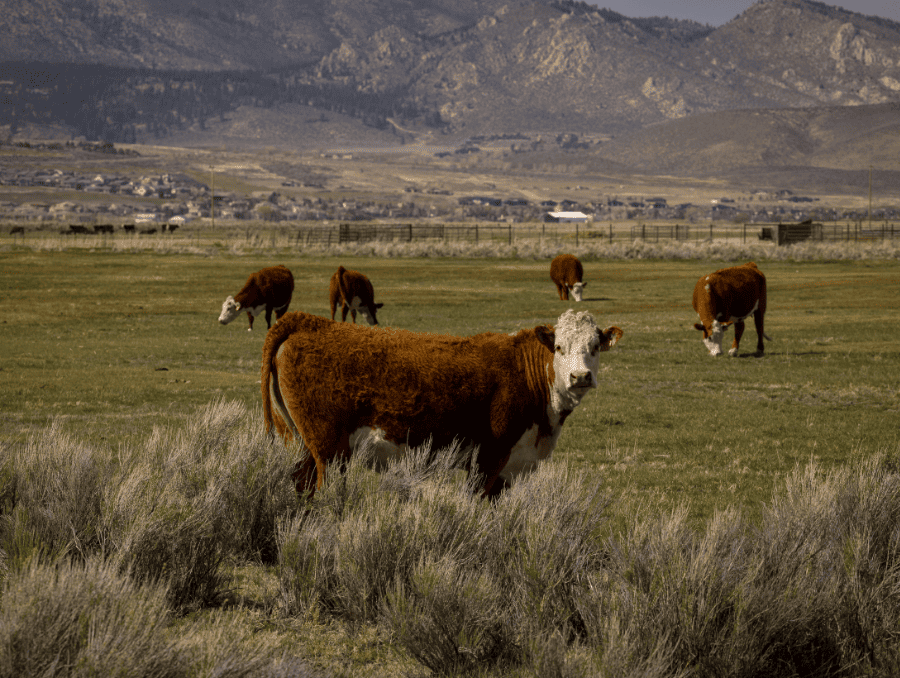
Within Nevada’s 17 counties, 11 are considered frontier — the most remote areas — and three are rural. Residents in these sparse areas often lack access to medical care. There are no rural emergency hospitals; instead, residents rely on rural health clinics or critical access hospitals.
In its mission for “A Healthy Nevada,” the University of Nevada, Reno School of Medicine (UNR Med) strives to build programs to better serve underserved Nevadans and provide necessary health services.
Investing in the next generation of physicians
Federal grants adding up to $3.7 million will expand medical training with a focus on rural health, tribal health and care for Reno’s homeless population. The funding includes:
- Rural Residency Program Development (RRPD) grant: $750,000 over three years to establish a family medicine residency track at Banner Churchill Community Hospital in Fallon, Nev.
- Medical Student Education Program (MSEP) grant: $2.6 million over two years to expand rural and tribal training opportunities for medical students.
- Street Medicine Residency Curriculum (SMRC) grant: $430,000 to create a street medicine curriculum for family medicine residents.
The emphasis on developing additional training programs builds upon the volunteer-run Student Outreach Clinic. Founded by students in 1966, the Student Outreach Clinic (SOC) continues to be led by student volunteers, offering medical students a unique opportunity to practice in a clinical setting – an especially rare option for first-year students. The SOC continues to serve uninsured or underinsured community members who could not otherwise afford medical attention or preventive health care and has expanded offerings both in rural communities and among Reno’s homeless population.
Annually, about 95% of medical students volunteer at one or more student outreach clinics. Building upon the success of the clinical offerings located in Reno, Nevada, the Rural Outreach Clinic provides full-service care to rural communities on a regular basis. Currently, it provides physical examinations, bloodwork and a variety of immunizations with a rotation of locations in Yerington, Lovelock and Silver Springs.
“Most of the patients we see would not be able to access care otherwise,” said Daniel Spogen, M.D., professor of family and community medicine and medical director of the SOC.
“Every clinic I attend, I have students who come up to me afterwards and tell me how much my attendance has been valuable, both from checking on their work, but also learning how to properly see patients and tackle some of their problems,” said Dr. Spogen. “Patients almost every time express how grateful they are that our clinics are there for them and they can get the needed medicines or labs that they otherwise could not get.”
Partnering with Nevada Medicaid to improve health outcomes
The first of its kind, UNR Med has formed the only Medicaid partnership in Nevada to work with state officials and stakeholders to ensure clinical perspectives are integrated into program decisions. The partnership between UNR Med and the Nevada Medicaid/Nevada Health Authority will analyze health care data to identify trends, opportunities and cost drivers. In addition, UNR Med supports research design and evaluation efforts to shape value-based care strategies.
“The Nevada Health Authority is proud to partner with the University of Nevada, Reno School of Medicine on the UNR Academic Medicaid Partnership, a vital collaboration aimed at improving health outcomes and expanding access to safe, high-quality care for Nevada Medicaid recipients,” the Nevada Health Authority said in a statement. “This partnership leverages academic expertise and clinical innovation to address the unique health needs of the state's most vulnerable populations. A key focus is on advancing maternal health outcomes for Nevadans, as well as utilizing population health analytics to identify key trends and address systemic health challenges. By aligning educational resources with Medicaid priorities, we are building a stronger, more responsive healthcare system that uses data-driven insights to ensure every Nevadan has access to quality, affordable care.”
“In my role, I support initiatives that advance population health, care quality and cost-effectiveness,” said Jonathan Chastain, D.O., assistant professor of medicine and clinical informaticist for the Medicaid Partnership. “My hope is that the position will advance Nevada Medicaid’s population health strategy by using data and clinical informatics to identify health needs, guide value-based care, and improve outcomes for Medicaid members.”
The Nevada Medicaid partnership also includes a maternal health component featuring Fay Roepcke, M.D., MPH, assistant professor for family and community medicine. In the role of Maternal Health advisor to Nevada Medicaid, Roepcke brings her clinical expertise to a variety of impactful initiatives aimed at transforming maternal and infant health outcomes across the state.
In her new role, she’ll be at the forefront of efforts to enhance Medicaid services, streamline pregnancy-related enrollment and eligibility, and shape a value-based payment model for maternity care. She also represents Medicaid on key statewide committees, including the Maternal Mortality Review Committee and the Fetal Infant Mortality Review Committee, helping to drive meaningful change for Nevada’s families.
Strengthening emergency care in rural and frontier Nevada
The Rural Nevada Emergency Medical Services (EMS) Conference is an annual event hosted by the Office of Statewide Initiatives, and supports and advances emergency care across the state’s rural and frontier communities. It brings together EMS professionals, health care providers, educators and community partners for hands-on training, continuing education and peer networking — all focused on improving emergency care in Nevada’s most remote regions.
“Rural communities continue to thrive with remarkable resilience, despite the challenges they face and the distances they travel for care,” said Alexis Kirby, manager of Rural and Frontier Programs for the Office of Statewide Initiatives. “They represent some of the most dedicated, compassionate and deserving individuals I’ve had the privilege to support. It’s an honor to be part of an event that uplifts them in every way possible.”
The conference spans four days and features local experts who speak on a variety of timely topics. Attendees earn continuing education units (CEUs), which are essential for recertification. The conference is self-funded, with contributions from Nevada State EMS, local mines, vendors and sponsors.
“We’re always moved by the familiar faces who’ve joined us year after year — some for over two decades — and equally inspired by the new ones just beginning their journey,” said Kirby. “Seeing former K-12 students return as professionals seeking re-certification is a powerful reminder of why we do this work. This is the heart of our mission, and the kind of impact we strive for every day.”
The conference dates for 2026 are scheduled for Sept. 15 – 18 in Elko, Nevada. The application period will begin Jan. 1, 2026, and run through March 21, 2026, with exhibitor applications also available. Those interested are encouraged to join the newsletter to stay informed.
A strategic impact
With an emphasis on developing committed and compassionate physicians and improving access to health care for all Nevadans, UNR Med is leading an increasing number of rural initiatives.
“Distance is a challenge that is unique to Nevada,” said Gerald Ackerman, director of Nevada State Office of Rural Health and assistant dean of the Office of Statewide Initiatives. “Communities are one hour apart, because of mining, agriculture and train stops. These rural communities are isolated with smaller populations, and it is difficult to provide the level of service that is needed in those communities.”
The Frontier Area Health Education Center provides residency programs in rural communities as well as pipeline programs to inspire high school students to pursue a medical degree. The outreach clinics are student-driven, and with more students arriving at UNR Med from rural areas, those students are taking the initiative to start or continue rural outreach clinics.
“I am proud of the leadership at UNR Med, especially Dean Hauptman, for the emphasis on rural support,” said Ackerman. “The dean has been bringing in department heads and faculty who are also dedicated to the rural mission, a huge commitment by all. We could not do this work without amazing statewide partners from hospitals to government leaders and health care providers. It takes a team to provide this level of care in rural communities.”


