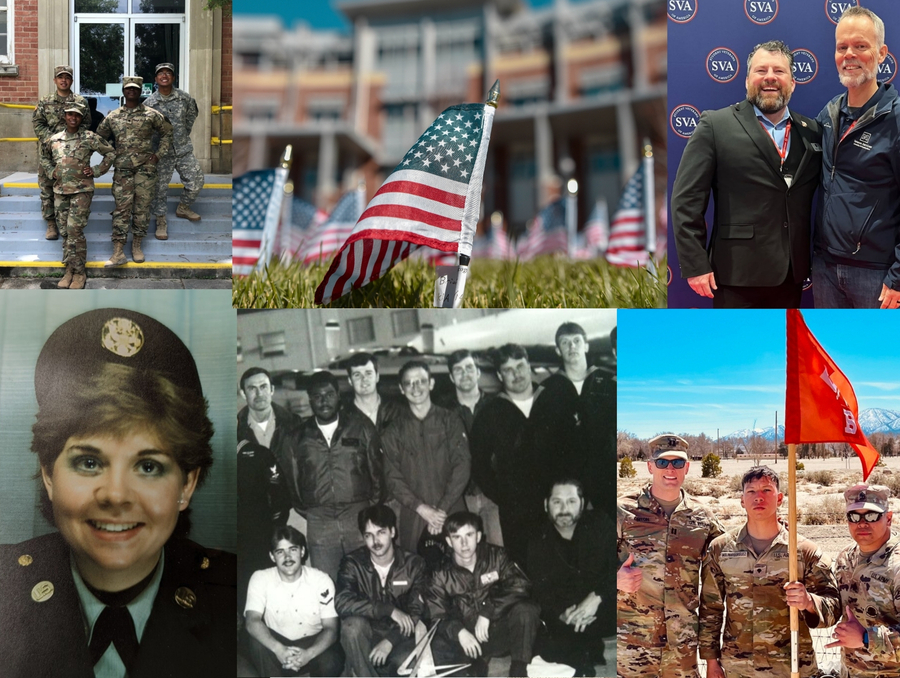
Veterans are part of nearly every corner of the University of Nevada, Reno community. They are students, faculty and staff whose lives have been shaped by their military service.
And their experiences differ greatly: they’ve served in different branches and roles, at different times in history and various places around the world.
“Across the University we have students, faculty and staff who have served our country,” said Executive Vice President and Provost Jeff Thompson. “They bring experience, perspectives and leadership that strengthen our classrooms, our workplaces and our campus. Not only are we grateful for their service, we have a responsibility to make sure our veterans and military-connected students have the support they need to succeed here, and in whatever comes next.”
Creating connection through the University's Veterans and Military Center
For veterans entering higher education, the transition to college can come with practical questions about benefits and enrollment, but also the challenge of finding community in a very different environment.
The University’s Veterans and Military Center helps military-connected students use their VA education benefits and navigate campus and community resources. It also gives students a dedicated place to study, connect with other veterans and find support. VETSMART training helps faculty and staff better understand the transition veterans are going through moving from military to academic life.
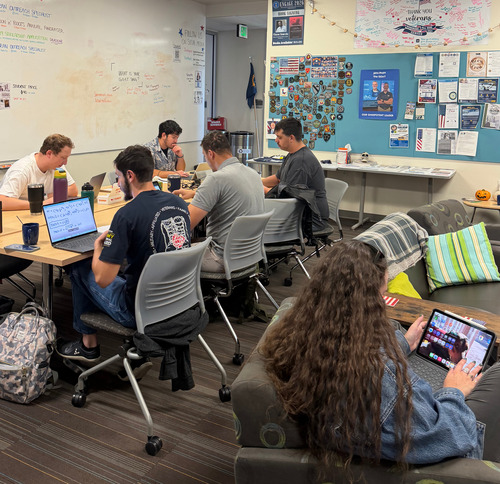
At almost any time of day, the Veterans and Military Center in the Pennington Student Achievement Center is bustling with activity. The offices and common areas are filled with students: some studying, working together on classwork, others sharing stories from their military service. Names and photos hang on the walls, as well as a large calendar with the semester’s upcoming events for Wolf Pack Vets. It is more than a place to access resources; it’s a place of connection and community.
This Veterans Day, we spoke with a few veterans in the University community to hear more about their service, lessons they bring to campus, and what Veterans Day means to them.
Albert Bonk, Information Technology
For Albert Bonk, a technician in IT's user-end support, the distance between military service and the current chapter of his life is measured in decades.
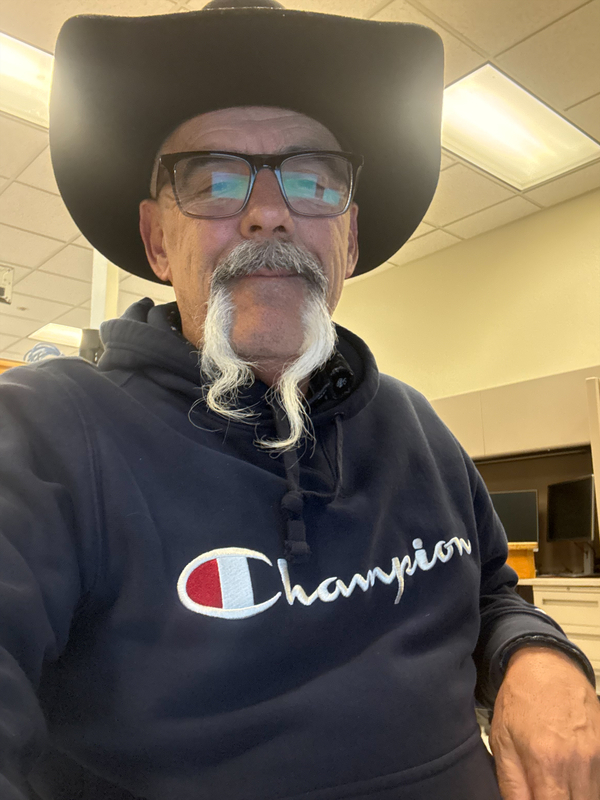
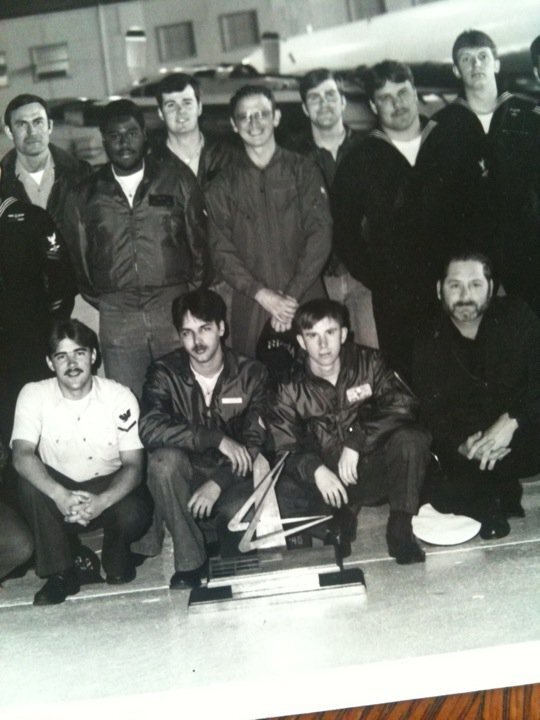
Bonk served in the U.S. Navy from 1980 to 1985 as an aviation anti-submarine warfare operator, flying aboard P-3C Orion aircraft and completing two deployments over the Pacific and Indian oceans.
Today, Bonk has spent 24 years working at the University and serves as secretary of Wolf Pack Vets.
"A debt of gratitude has to go out to all the family members as well, because they sacrifice as well." – Albert Bonk
For Bonk, Veterans Day is a time to recognize the families whose sacrifices can be less visible.
“A debt of gratitude has to go out to all the family members as well, because they sacrifice as well,” he said. “You may be a child of a vet or spouse of a vet. There's still a lot of sacrifice involved with that.”
Holly Underwood, University’s Disability Resource Center
Holly Underwood, coordinator of disability accommodations in the University’s Disability Resource Center, enlisted in the Army in 1986 and served in Germany while the country was still divided by the Iron Curtain. Assigned to a border patrol unit as a chaplain assistant, Underwood supported soldiers and their families, helping keep the chapel running and providing counseling while other members of the unit were away for training.
"Service members are really good at putting on a brave face, but sometimes there's a lot going on underneath." – Holly Underwood
Underwood was there when the Iron Curtain fell, which she said has personal meaning.
“My grandfather was actually there when the wall went up. And so for me to be there when it came down was pretty amazing,” she said.
After returning home in 1991, Underwood began college and remained in the Army Reserve.
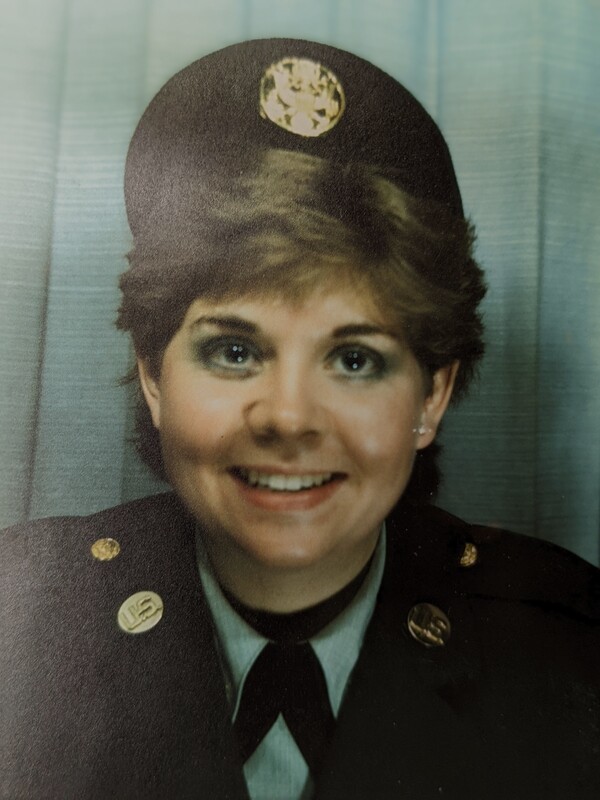
“I wasn't the best student before I went in the Army. It really helped me to be able to set goals for myself and learn how to advocate for myself and others,” she said.
Underwood feels Veterans Day also holds a deeply personal meaning for her. Her father, who was also a veteran, called her every year after she left the Army to wish her a happy Veterans Day, a tradition they shared until his death. She also feels today Veterans Day is more celebrated, that a shift occurred after September 11.
“People are much more appreciative and receptive,” she said. "Understand that you do gain a lot of positive benefits and bring a lot with you for jobs and with your service.”
Underwood wants to make sure the day is about checking up on veterans as well. “Service members are really good at putting on a brave face, but sometimes there's a lot going on underneath; sometimes there is a lot of heaviness with our veterans, with recent veterans especially.”
Greg Hillman, student at the School of Social Work
Marine Corps veteran Greg Hillman is now a student in the School of Social Work. Experiences from his military service, he said, are helping shape the kind of social worker he hopes to become.
“Veterans Day is not Memorial Day ... we're honoring each other, and I really like that." – Greg Hillman
Hillman served more than 11 years in the Marine Corps, including deployments to Afghanistan as an explosive ordnance disposal technician. During a second tour, Greg Hillman worked alongside medical teams triaging wounded Afghan civilians. The experience influenced what Hillman wanted service to look like in civilian life.
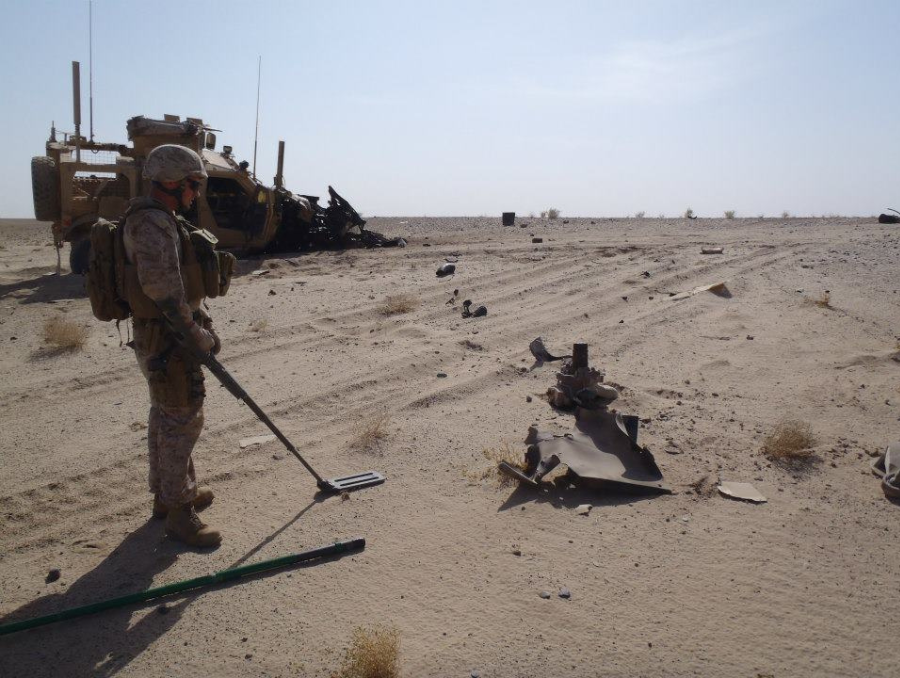
“That hurt my heart in a way that I think set me up to learn later that I wanted to serve people who were maybe underrepresented or vulnerable,” Hillman said.
Today, Hillman is completing a practicum as a case management intern at Eddy House, working with young adults experiencing homelessness. Greg Hillman also founded Semper Resurgo, a nonprofit through which veterans are mentored in Reno Municipal Court’s CAMO Court program.
For Hillman, Veterans Day centers on the people who are still here.
“Veterans Day is not Memorial Day, so we're not honoring the dead. We're honoring each other, and I really like that,” he said.
Read more of Greg Hillman’s story.
Dejanae Weathersby, graduate student at Reynolds School of Journalism
When Dejanae Weathersby talks about what the Army taught her about leadership, the lesson has little to do with giving orders.
“You don't become a great leader by dominating,” Weathersby said. “Filmmaking, like the military, is about working with people who have different specialties, under one mission.”

Dejanae Weathersby spent eight years in the Army National Guard, serving as a supply specialist responsible for everything from vehicles and uniforms to weapons, food orders and budgets.
Now Weathersby is pursuing a master’s degree in media innovation in the University’s Reynolds School of Journalism.
“I think the military gave me structure, leadership and discipline, and teaching gave me compassion, patience and humility,” Weathersby said. “It didn't automatically make me a better creative, but it definitely taught me to pay closer attention to the details.”
Read more of Weathersby’s story.
Mike Orton, Office of the President
Mike Orton’s path has repeatedly led back to Nevada and the University.
A University alum, Orton enlisted in the Nevada Army National Guard in 2010 as a public affairs specialist. After graduating from Officer Candidate School in 2018, Orton commissioned as a communications officer in the Army’s Signal Corps and later deployed to the Middle East in support of Operation Inherent Resolve.
Orton’s final military assignment brought him back to his alma mater as executive officer and assistant professor of military science for Army ROTC. He has since returned to the University in a civilian role as director of special projects in the Office of the President.
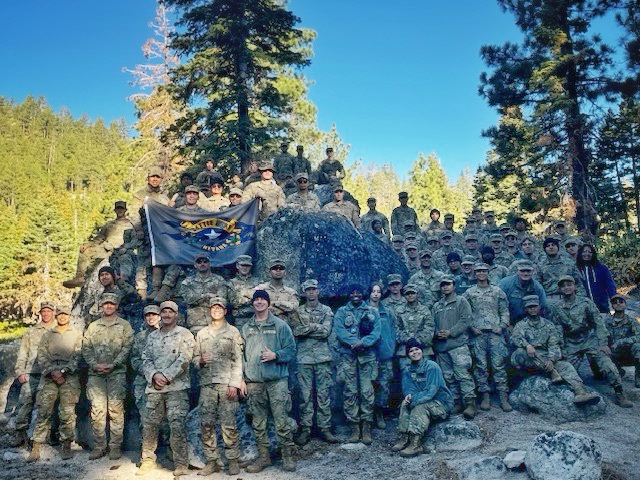
“One of the most important lessons I learned during my time in the Army is that leadership is fundamentally about service and sacrifice,” Orton said. “A good leader puts the needs of their people ahead of their own, takes responsibility when things go wrong, and recognizes that their success is measured by the success of those they lead.”
Veterans Day also connects Orton’s service with an earlier generation. His father served as an Army infantry sergeant after being drafted during the Vietnam War.
“For me, Veterans Day is an opportunity to recognize those who were willing to put their own lives and ambitions aside in service to something greater than themselves,” Orton said. “Whether they volunteered or were called upon to serve, they became part of a legacy that spans generations.
Read more of Mike Orton's story.
Julie Sawyer, Orvis School of Nursing
For Julie Sawyer, faculty member in the Orvis School of Nursing, the transition from soldier to student revealed something she now works to provide for others: belonging.
Sawyer served in the U.S. Army from 2001 to 2006, including a deployment to Afghanistan in support of Operation Enduring Freedom. Combat Lifesaver training sparked an interest in health care that eventually led her to nursing.

When Sawyer returned to college after military service, she found herself in classrooms with students whose lives were at very different stages. Then Sawyer met another veteran.
“There was an immediate sense of understanding,” Sawyer wrote in her Veterans Day reflection (read more here). “That connection made my transition into college a little easier, and it reminded me just how important it is to feel that you belong.”
That experience has stayed with Sawyer as an educator.
“The Army taught me to adapt, think critically under pressure, work as part of a team, and take responsibility for the people depending on me,” she said.
Looking back, Sawyer sees military service as something that did not simply end when the uniform came off.
“Those experiences don't disappear when you take off the uniform," she said. "They become part of who you are and how you move through the world.”
Read more of Julie Sawyer's story here.
Service that continues
Stories from our University military community show that military service does not exist only in the past. It continues to influence how people approach their education, their work and the communities around them.
Sawyer put it simply: “My uniform may have changed, but my commitment to serving others never did.”


