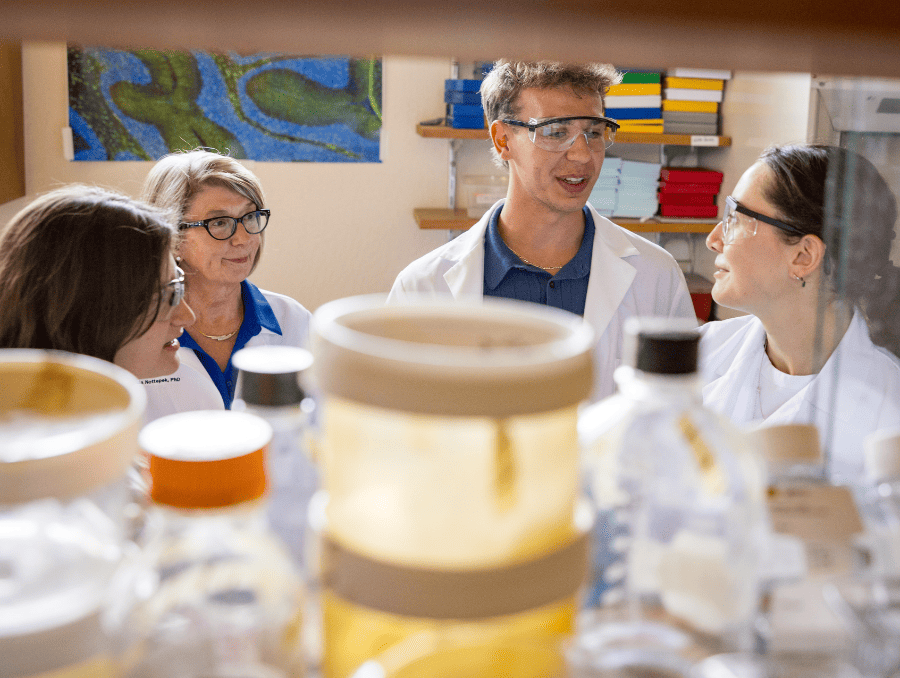
“It is a partnership between students and researchers on campus to find the ideal match for both,” said Lucia Notterpek, Ph.D., senior associate dean of research at the University of Nevada, Reno School of Medicine (UNR Med).
Incoming medical students are not required to participate in research as part of the curriculum, but it does amplify their training record and professional development. Along with their Medical College Admission Test (MCAT) score and undergraduate transcript, applicants can provide additional details that elevate their readiness for medical school. Research experience does that not only for admission but also for a career in medicine.
“Student involvement in research is very important for several reasons,” said Eric Kim, MD, associate dean of clinical research and associate professor with UNR Med, as well as division chief of urology at Renown Health. “It helps them to think in an evidence-based fashion when caring for patients, allows them to more fully understand the imperfections of research and where gaps exist in our knowledge, and finally, fosters critical thinking rather than acceptance of status quo or guidelines.”
The American Medical Association identifies research opportunities as an important way for students to sharpen critical analysis skills and prepare for medical school.
“Participating in research while in college is important for students’ professional development, allowing them to gain new lab skills, work closely with a team and contribute to the world of academic publishing,” said Boston Boyack, a second-year medical student at UNR Med who plans to become a neurologist. “Student participation allows them to grow professionally and better understand current research discoveries, providing them with the skills needed to succeed in future careers as they align themselves with the most up-to-date findings.”
Along with Notterpek, Boyack studies symptom-onset and severity across different mouse models of Charcot-Marie-Tooth (CMT) disease, the most common inherited neuropathy in humans. Neuropathy is damage to the nerves that can cause numbness, tingling and weakness. CMT commonly occurs in the lower legs, feet, hands and arms. Although there is no cure, there are therapeutic efforts in development and assistive devices to help improve mobility.
In June, Notterpek and Boyack will travel to the Netherlands to present their research. This type of experience for a medical student can help with residency placement and future success.
“Working in Notterpek's lab has immersed me in the field of neurology research, and it has opened exciting opportunities to present my work alongside neurologists from around the world at this upcoming international conference,” said Boyack.
Students typically connect with researchers directly, but there are also databases where researchers can post projects to request student support. Other professors on campus also help connect students with researchers. Students are encouraged to share their interests and their timelines, so everyone can establish the right collaborative fit.
“Reach out to faculty. We are open to sit down and chat,” said Notterpek. “It is invigorating and enjoyable for us working together and asking questions. That is why we are in academia.”
Medical school teaches methods and systems to students before they enter a hospital, while research provides techniques, how to understand results and how science can improve clinical care.
“Students are often the engine for clinical research at most academic medical centers,” said Kim. “Attending physicians and providers do not typically have the bandwidth to execute the necessary data collection and analysis that is associated with the clinical research question. So, they are the engine for the vehicle that is clinical research at Renown.”
Interested in learning more about research opportunities for students? Check out the resources for undergraduate, graduate and medical students.


