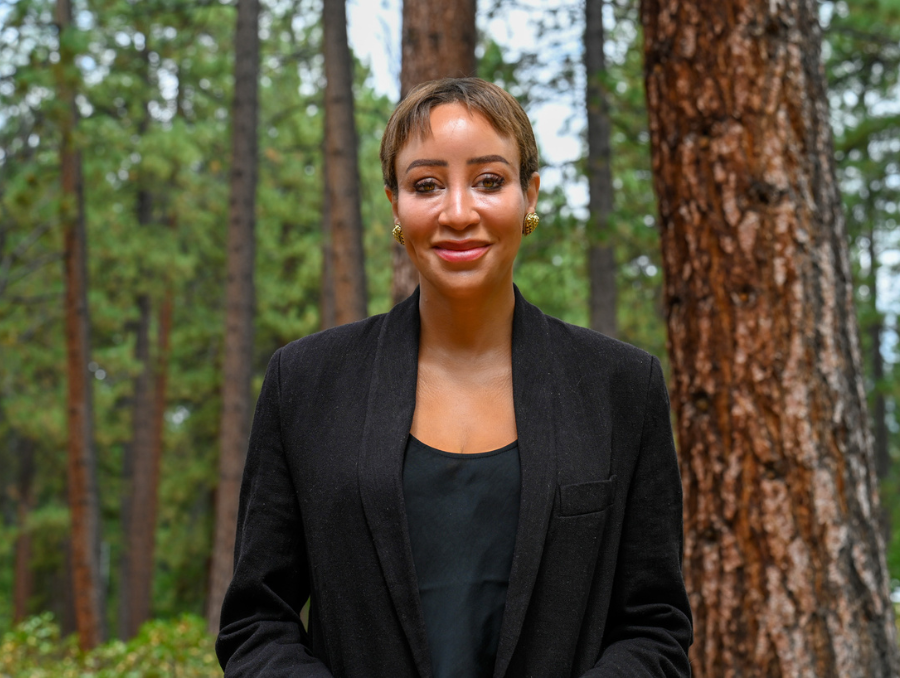
Leta McCollough Seletzky's father is the man kneeling beside the Rev. Dr. Martin Luther King Jr. in the photograph taken on the balcony of the Lorraine Motel in Memphis on April 4, 1968. She grew up knowing that. For most of her life, it was close to all she knew.
"For a long time, my family never talked about what occasioned my father's presence on that balcony," she said.
"The catalyst for that was something that happened before I was born that is an intensely personal story, but is also a hinging moment in history."
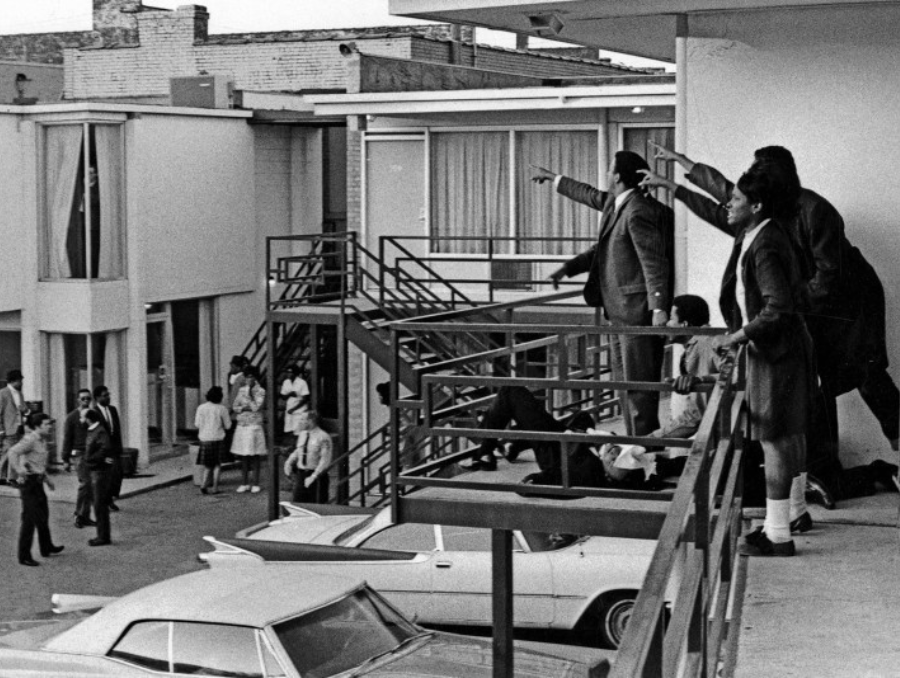 The Rev. Dr. Martin Luther King Jr. lies on the balcony of the Lorraine Motel in Memphis on April 4, 1968, moments after he was shot. Kneeling beside him is Marrell McCollough, father of Leta McCollough Seletzky. Photo by Joseph Louw/The LIFE Images Collection/Getty Images.
The silence eventually became a book. The book eventually made her a writer. And the writer eventually became the director of the low-residency Master of Fine Arts in Creative Writing program at the University of Nevada, Reno at Lake Tahoe, where she now spends her time helping other people find the stories they have not told yet.
The call she answered
Seletzky is an essayist, memoirist and novelist from Memphis. She is also a lawyer, with a J.D. from The George Washington University Law School and a B.A. in political science and French from Northwestern University, where she earned departmental honors in French. Nothing in that résumé points toward a creative writing career, which is exactly how she describes it.
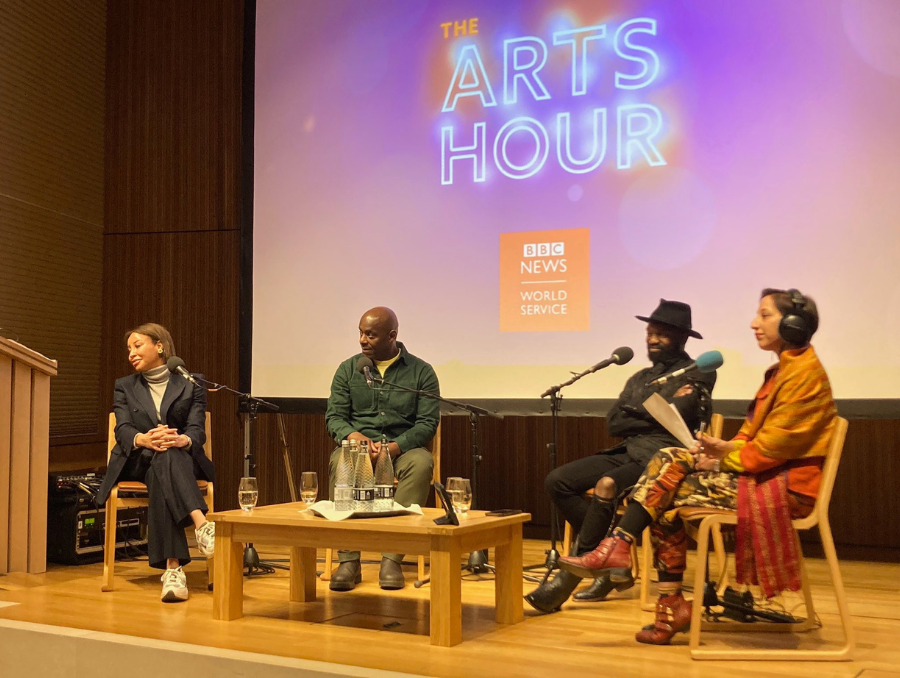 Leta McCollough Seletzky, left, joins a panel for a live recording of the BBC World Service program "The Arts Hour" at the Oxford Literary Festival, where she discussed "The Kneeling Man." Photo by Dimitri Seletzky
"It was something that sort of called me."
"I never really set out to embark on a creative writing career," she said. "It was something that sort of called me. I mean, it really is a vocation in the sense of calling."
It all began with the story she had inherited. Knowing she needed better tools to tell it, she sat in on an undergraduate course on creative nonfiction at Sierra Nevada College, predecessor to the University of Nevada, Reno at Lake Tahoe. What she found there was a room full of writers.
"I realized that I had that personal story to tell, but I had so many other stories to tell," she said. "And not only that, but I wanted to help other people tell their stories as well."
She does that now from the director’s chair. Seletzky has oversight of the academic program, leads student and faculty recruitment, and manages the budget. She also oversees the program's cultural offerings, including the Writers in the Woods speakers series and the student-run literary journal.
“In my job as director, I work to realize our program’s vision of helping writers build a sustainable life of creation in community,” she said. “I ensure our community remains grounded in mutual support, respect and belonging for writers of all backgrounds.”
The Kneeling Man
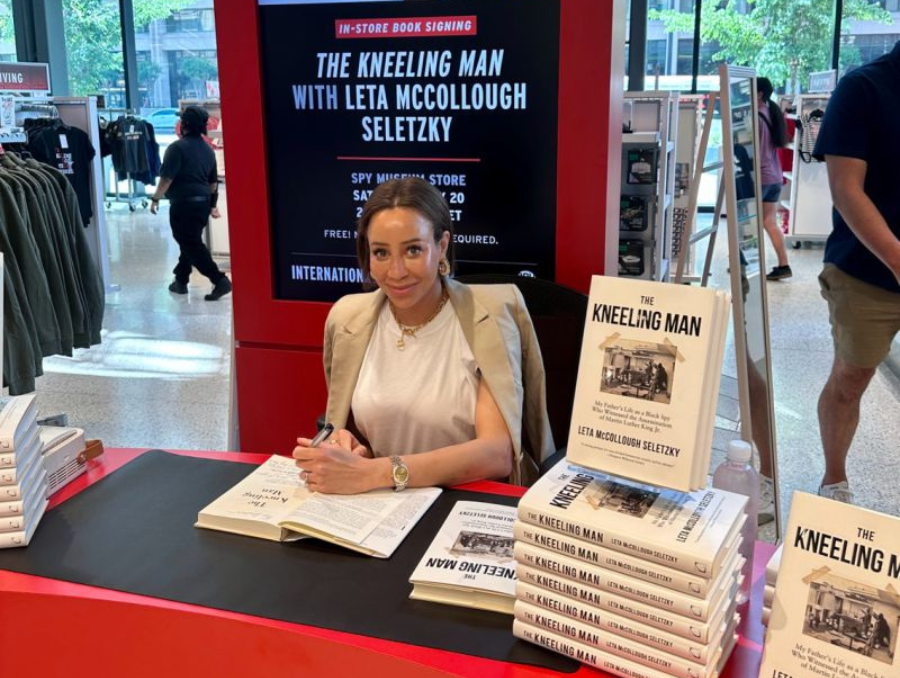
The man kneeling beside Dr. King in that photograph is Marrell McCollough. He is Seletzky's father, and for most of her life the reason he was standing on that balcony was a question no one in her family answered.
Her first book, "The Kneeling Man: My Father's Life as a Black Spy Who Witnessed the Assassination of Martin Luther King Jr.," was published in 2023. It is her attempt to answer that question, and it took the tools of both of her careers to do it. She interviewed her father. She filed Freedom of Information Act requests for government records. She reconstructed a life that had been deliberately kept quiet, including from her.
The answer runs the length of her father's life. Marrell McCollough was born in Mississippi in 1944, one of twelve children in a family that farmed rented land. He served in the Army, joined the Memphis Police Department, and at 23 was assigned to work undercover inside the Invaders, a Black activist group whose members were in contact with King's circle in the days before the assassination. That assignment is why he was at the Lorraine Motel on April 4, 1968. He went on to a career at the CIA and retired in 1999.
"I came to learn there was a story that he had never shared before with the world," she said. "And so it was unpacking this story and discovering what really happened and interviewing my father, doing FOIA requests to get government documents, and really committing the story to paper that began my career as a writer."
The book was named a Library Journal Best Book of 2023 and a BookPage Best Book of 2023, was selected as a Black Caucus of the American Library Association Honor Book for Nonfiction, and was a finalist for the Zora Neale Hurston/Richard Wright Foundation 2024 Legacy Award for Memoir Nonfiction. Seletzky is also a 2022 Creative Writing Fellow of the National Endowment for the Arts, and her work has appeared in The New York Times, The Washington Post, The Atlantic, The Washington Monthly, and MLK50: Justice Through Journalism.
The legal career she once thought of as a detour turned out to be the reason she could write the book at all.
"I think that without my legal background, it would've been much more difficult to write the book," she said. "Even though it felt a little bit random as I was walking this path, when I look back, I see that it makes a lot of sense and there is a definite through line."
Inside the low-residency MFA
The MFA in Creative Writing at Lake Tahoe is built for people whose lives are already full. Students do not relocate and do not stop working. Instead, the program gathers at the University of Nevada, Reno at Lake Tahoe for ten days in August and ten days in January for intensive workshops, courses, and evening events. The rest of the fall and spring semesters are spent in remote one-on-one mentorships with faculty.
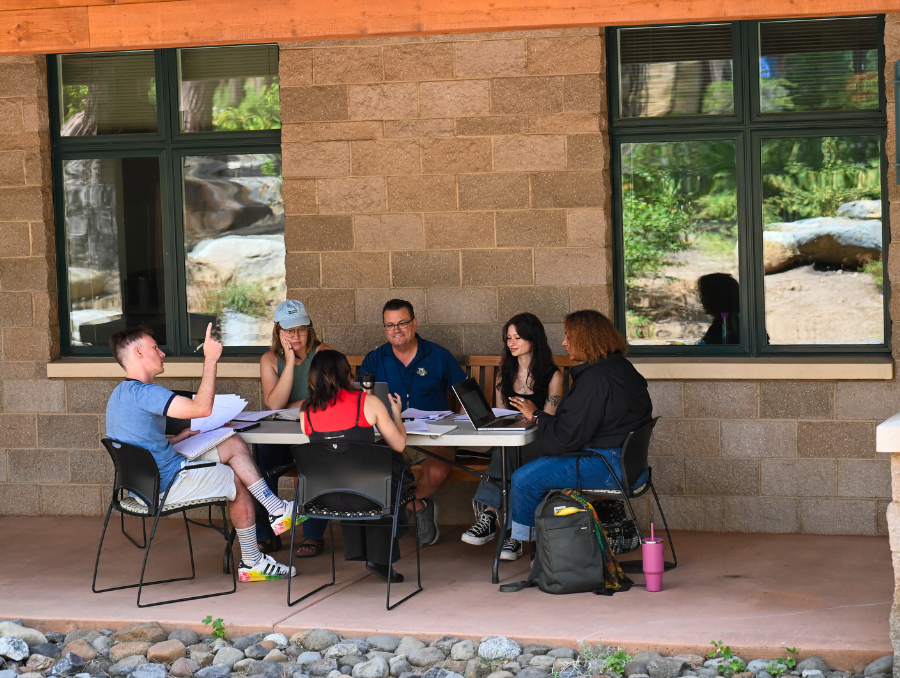 MFA students meet outside during one of the program's twice-yearly residencies at Tahoe campus. Photo by Yasmin Barbosa
"Our program is set up so that people who have jobs, who have caregiving responsibilities, can fit a rigorous education into the rest of their lives."
Students also staff and edit The Sierra Nevada Review, the program's student-run literary journal. And there is the Editing Semester, an intensive one-on-one mentorship focused entirely on editing the body of work a student has been building since they arrived. It is the kind of thing most writers only learn later, usually the hard way.
Because the roster of writers changes every term, so does the work.
"Every semester I have a different mix of writers, I have different faculty, I have new students coming in with new voices and different stories to tell," she said.
One recent example is student Abigail White, who came from D.C. to work on a young adult novel during her MFA. Through mentorships and editing during the rigorous program, White published her book and now joins Leta on the faculty.
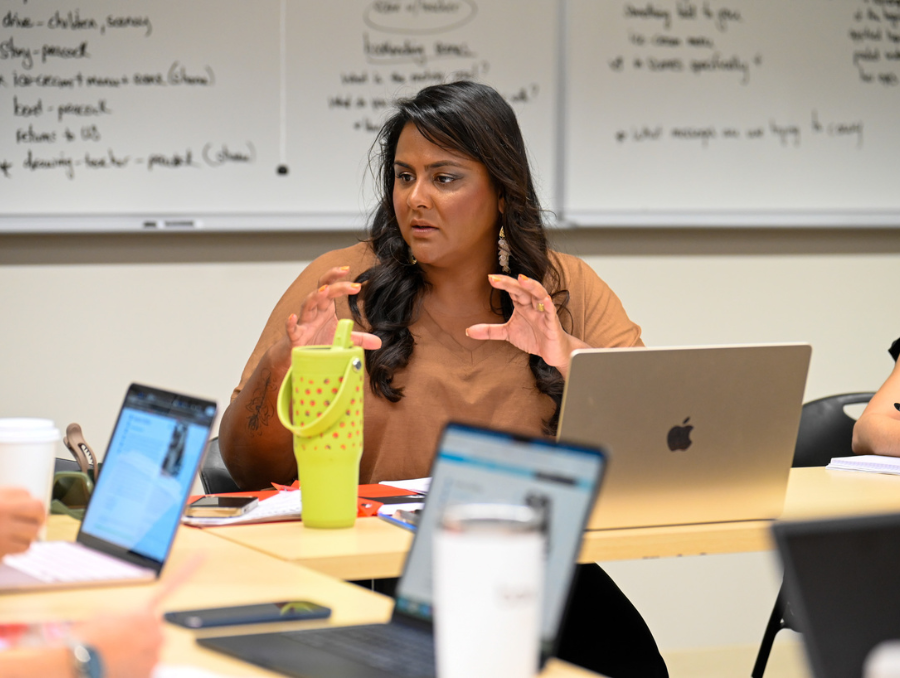 Krystal Sital, author of the memoir “Secrets We Kept: Three Women of Trinidad,” teaches a class in the low-residency MFA in Creative Writing at Tahoe campus. Photo by Yasmin Barbosa
What the lake does
Ask Seletzky what Tahoe gives her creatively, and she reaches for the view.
"Every morning, you get a slightly different view. It's always changing. It's like a masterpiece of a painting, but it's always moving, and it's always evolving," she said. "That is the experience of being here and the creative impact."
The part she talks about most, though, is community. Writing is solitary work, and she is clear that the program exists to keep it from being lonely work.
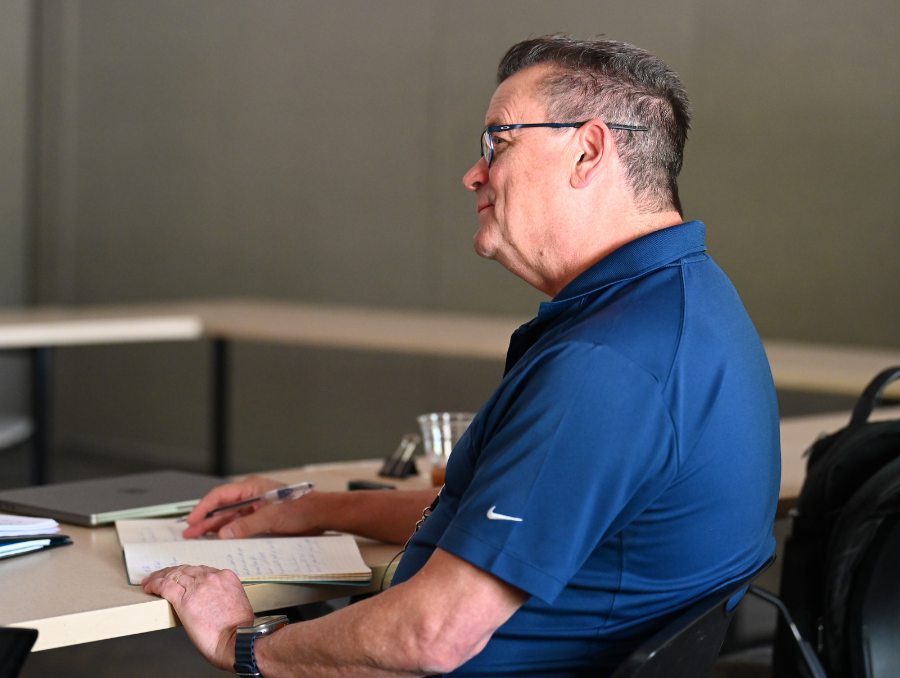
"When you enter our program, you're entering a community that you will have for life."
"As solitary as writing can be, it is ultimately a community endeavor," Seletzky said. "When you enter our program, you're entering a community that you will have for life. You join us as a student, but through your work here, and through the friendships that you form, and through what you learn, you will become a part of a literary community that you will have for the rest of your life."
Students describe it the same way. David Slattery, a first-year poetry student, enrolled after retiring from his career, wanting to be formally trained as a writer.
"All the students and faculty and alumni are all on your side, want you to succeed, and want to build you up to be the best writer you can be," he said.
For anyone reading this while doing the math on their own age, their own job, their own unfinished manuscript, Seletzky has heard the question before.
Her advice for anyone thinking about starting later than they expected is short.
"It's never too late," she said. "If you feel the call, if you feel that pull to this vocation, answer the call."
Slattery took her up on it. A first-year poetry student, he found poetry about eight years ago and enrolled after retiring from his career, wanting to be formally trained as a writer. It is not his first time at the University of Nevada, Reno. He started medical school here 37 years ago.
“I love Nevada, I love this area, and the idea of being able to have focused time in Lake Tahoe with these beautiful surroundings and a really immersive experience up here really attracted me,” he said.


