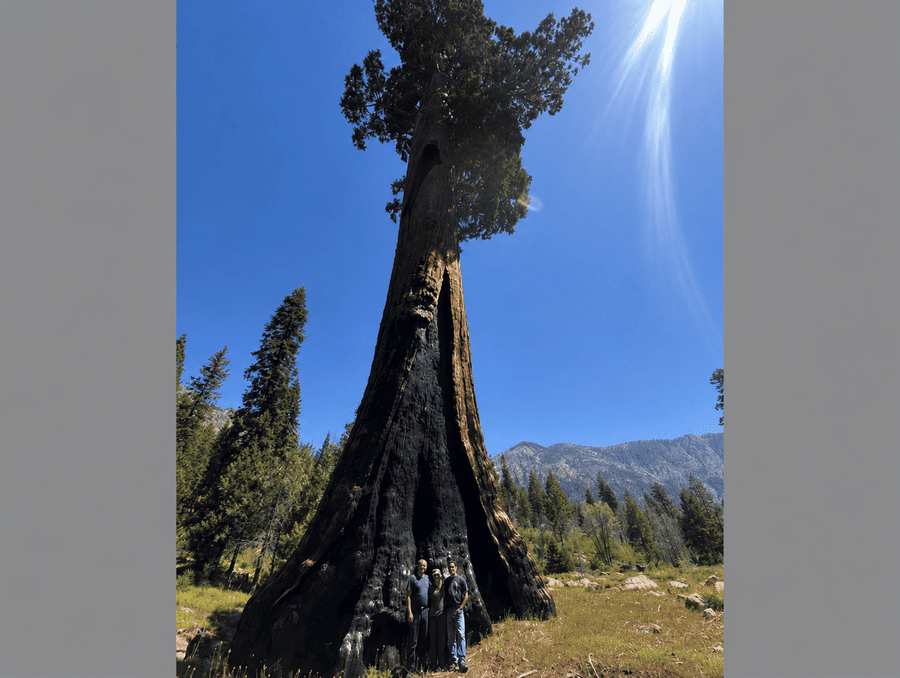
Giant sequoias evolved with fire over millennia. Now, after nearly 200 years of suppressing both wildfire and Indigenous burning, some of the world's oldest and largest trees are dying at unprecedented rates as increasingly severe wildfires sweep through their remaining groves.
A newly published study co-authored by researchers in the University of Nevada, Reno's College of Agriculture, Biotechnology & Natural Resources suggests there is a way to tilt the odds back in the trees’ favor.
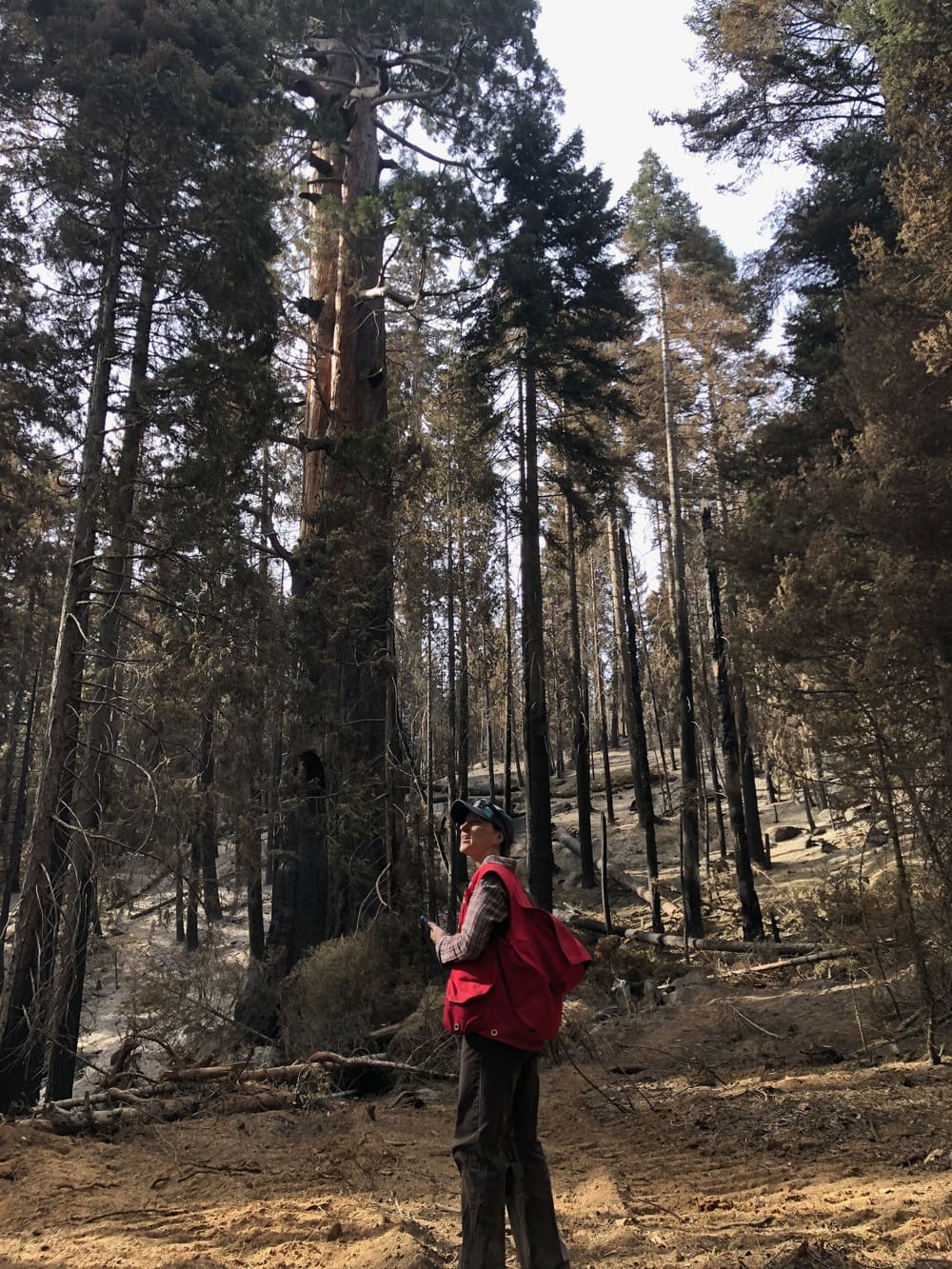
The findings emerged from a rare natural experiment at Mountain Home Demonstration State Forest, a state‑managed forest in the southern Sierra Nevada that contains the world’s largest giant sequoia grove.
When California’s 2020 Castle Fire burned through the forest, it killed about 7% of its old‑growth giants and contributed to the loss of roughly 18% of all large, mature sequoias across their range in just a few years. Yet within the same fire footprint, groves treated with prescribed, low‑intensity fire and other fuel‑reduction measures suffered less than half the mortality of nearby untreated areas.
“These kinds of low‑intensity fires are characteristic of both natural fires and ancient Indigenous forest‑burning practices that helped giant sequoias develop resilience and resistance to severe wildfires,” said Associate Professor Sarah Bisbing, a forest ecologist in the College’s Department of Natural Resources & Environmental Science and principal investigator and co‑author of the study.
Over thousands of years, the combination of natural ignitions and application of low-intensity cultural burns by Indigenous peoples occurred every five to 12 years, clearing out competing vegetation, recycling nutrients and opening bare, sunlit ground where seedlings could take root. Giant sequoias evolved alongside that cycle, developing thick bark and high crowns that help them survive low-intensity fires. Even the species’ reproductive cycle became tied to fire. Heat and smoke trigger cones to release seeds onto freshly exposed soil, allowing new generations to sprout after a burn.
Rare tree, tiny footprint, huge ecological value
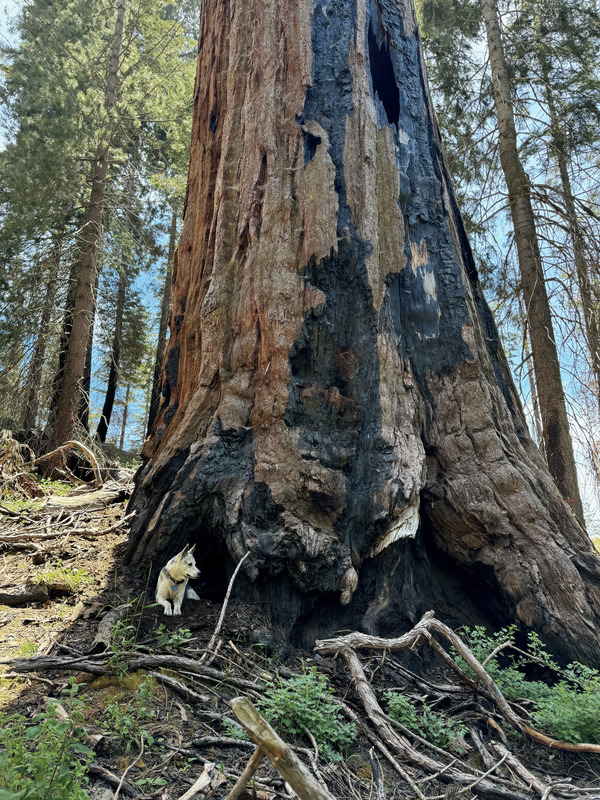
Though they occupy just 27,000 of California's 33 million forested acres, the ecological influence of giant sequoias far exceeds their footprint. They provide habitat for wildlife, store extraordinary amounts of carbon, stabilize soil and watersheds, and support rich underground microbial communities that help sustain healthy forests.
Protecting giant sequoias means defending both a cultural icon and an ecological keystone of Sierra Nevada forests.
“Giant sequoias are iconic, big and beautiful trees that people travel to see. They are part of the U.S. identity and pride,” said Bisbing, who also conducts research as part of the University’s Experiment Station. “They are some of the few truly ancient trees left standing while much of the world's old-growth forests disappeared long ago.”
Inside the Mountain Home Demonstration Forest experiment
At Mountain Home Demonstration State Forest, foresters have spent decades restoring some of the conditions that Indigenous peoples maintained for millennia.
Foresters conducted regular prescribed burns to mimic the frequent, low-intensity fires that shaped giant sequoia forests for thousands of years. These burns reduced the buildup of needles, branches and other vegetation that can fuel high-intensity wildfires. They also regularly thinned overcrowded groves by removing smaller, shade-tolerant trees. In addition, managers maintained a detailed census of every large, old-growth giant sequoia on the property. They mapped and measured 4,361 trees, creating a rare dataset that Bisbing and a team of local and regional researchers would later use to evaluate the impacts of the 2020 Castle Fire.
The researchers were preparing to use those data in a long-term forest management study when the fire burned through the area. Afterward, they returned to the same tagged trees and compared survival in treated groves with survival in nearby areas that had not received recent management.
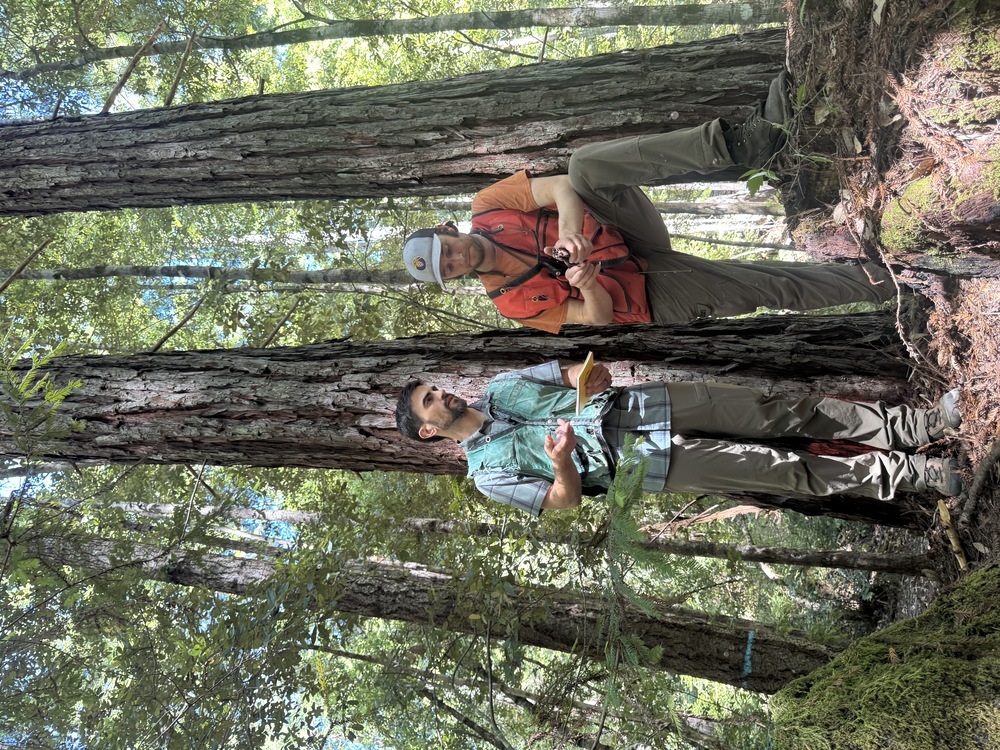
Across Mountain Home, the team found that 6.9% of the censused giants were killed by the fire. But that average masked a stark difference between managed and unmanaged groves.
“In untreated stands, mortality was about 9%. In stands that had been thinned and burned over the decades, the mortality was about 4%,” said Bryant Nagelson, a research associate in Bisbing’s lab and co-author of the study.
On paper, that difference may appear modest, but the researchers point to its significance.
“When you're talking about individual trees that are 1,000 to 3,000 years old, every single loss is a big deal,” Nagelson said.
The dramatic difference in mortality rates raised a broader question: How did forests that evolved with fire become so vulnerable to it?
From cultural burning to two centuries of suppression – and its fallout
The natural and cultural burning that had sustained giant sequoia groves over millennia was largely halted following the Gold Rush, when settlers criminalized Indigenous burning practices. By the early 1900s, the U.S. Forest Service had formalized a policy of fire suppression, resulting in nearly two centuries of excluding fire from forests adapted to frequent, low-intensity burns.
“That gap in fire became profoundly consequential,” Bisbing said. “Over that time, these forests amassed huge amounts of fuel, fallen branches and dense thickets of small trees. When fire eventually came, it was hotter, more severe and more likely to kill even old‑growth trees that used to live through regular surface fires.”
The consequences of that fuel buildup became stark during the 2020 Castle Fire.
“For forest managers, the implications are both sobering and hopeful,” Bisbing said. “In an era of hotter, drier conditions and increasingly extreme fire behavior, active fuel reduction can still tip the odds in favor of trees that have stood for millennia.”
Other members of the research team included Conor Phelan, an assistant researcher colleague of Bisbing and Nagelson, as well as researchers from the California Department of Forestry and Fire Protection; Mountain Home Demonstration State Forest; and the University of California, Berkeley's Department of Environmental Science, Policy & Management.


