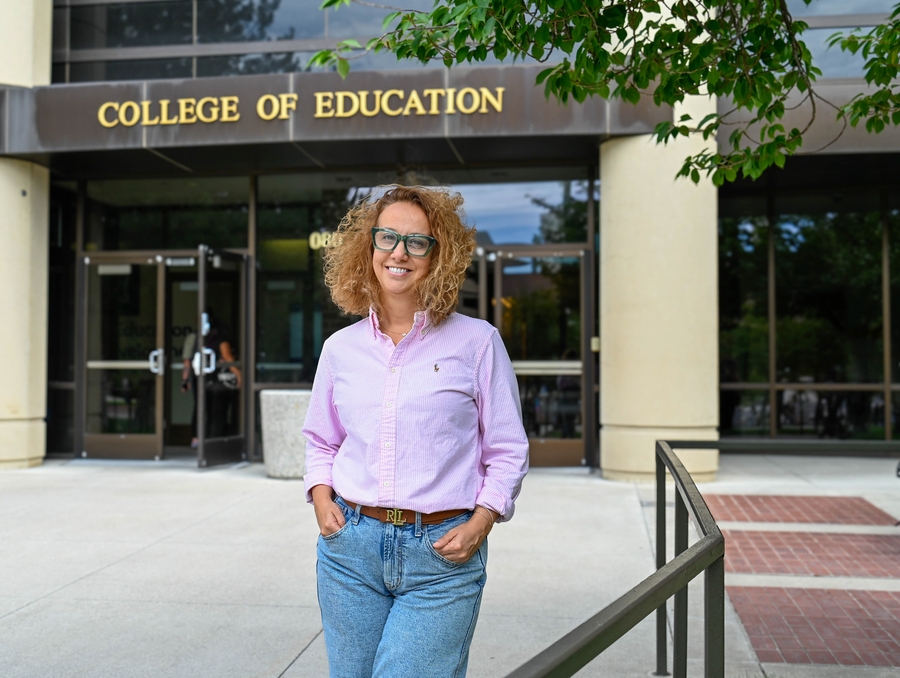
When Gokce Unlu was in middle school in Istanbul, she had a teacher who noticed something in her that she could not yet see in herself. Whenever Unlu spoke English, this teacher told her how much she appreciated her pronunciation. She encouraged Unlu to keep going.
"Those may have seemed like small comments, but they gave me confidence at a time when I really needed it," Unlu said. "I still find it amazing that the girl who was once afraid to speak in front of the classroom now stands in front of one almost every day without her voice shaking."
Today, as a doctoral candidate in educational leadership at the University of Nevada's College of Education and Human Development, Unlu carries that lesson forward. She now stands in front of classrooms regularly, not only as an instructor but as a model for the future educators she teaches. Her message to them is straightforward: teaching is deeply human work.
Istanbul, Edinburgh and Reno
After earning her bachelor's degree in English language teaching from Istanbul University, Unlu moved to Scotland to pursue a master's degree in education at the University of Edinburgh. Once she finished, she returned to Istanbul and built a career in higher education, gradually expanding her focus into curriculum development, teacher preparation and educational leadership. In 2022, after nearly two decades in Istanbul's classrooms, she arrived at the University to begin her doctoral studies.
"I wanted to return to something I had always wanted to do, and the University of Nevada gave me that opportunity."
"After almost two decades of teaching at universities in Turkey, I felt it was finally the right time to pursue the dream I had put aside for many years," Unlu said of her decision. "I wanted to return to something I had always wanted to do, and the University of Nevada gave me that opportunity."
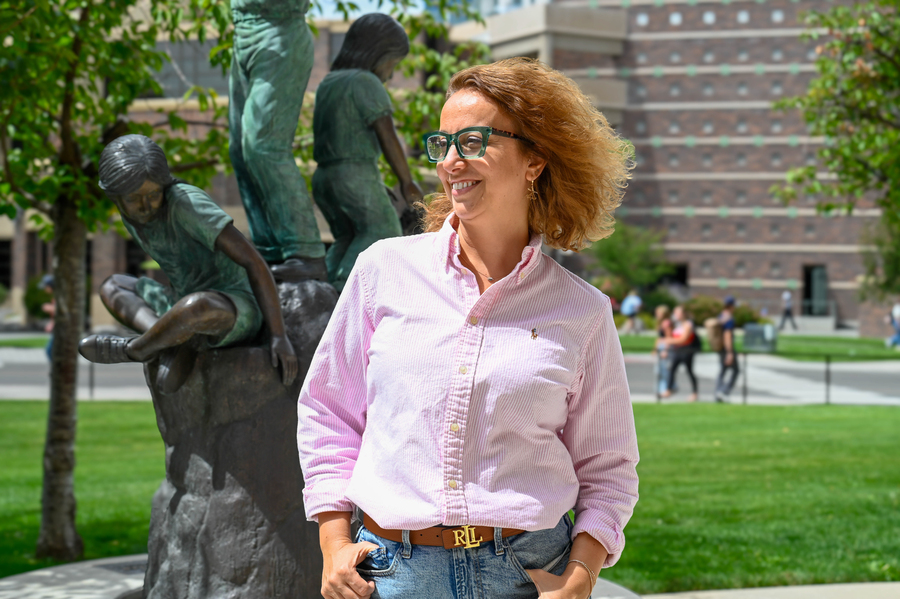
Where good teaching begins
Unlu’s doctoral research examines how academic leaders in colleges of education think about quality teaching and how they create the conditions to support it. It's a question born from her years in the classroom. For more than two decades as an educator, she has seen how profoundly a teacher can influence whether a student feels capable and valued. But Unlu also learned that good teaching does not happen in isolation. Teachers need strong preparation, resources and institutional support.
"That realization gradually moved my research from looking primarily at what happens in the classroom to asking what educational institutions and their leaders can do to prepare teachers and support excellent teaching," she said.
That research has given her new language to describe work she has always done, but it has not changed her fundamental belief: teaching is about creating environments where students feel they belong.
A ripple effect
As an instructor of record at the University, Unlu teaches courses including second language assessment and this semester's "Equity, Diversity and Inclusion in Education."
"I am not only teaching the students sitting in front of me today. I am also indirectly reaching the students they will teach in the future."
She describes her teaching style as student-centered and grounded in social and emotional learning. But her research and her teaching point to something more: Unlu models the kind of teaching she hopes her students will practice in their own future classrooms.
"I often think about the fact that I am not only teaching the students sitting in front of me today," she said. "I am also indirectly reaching the students they will teach in the future. That gives teacher preparation a very special meaning and responsibility for me."
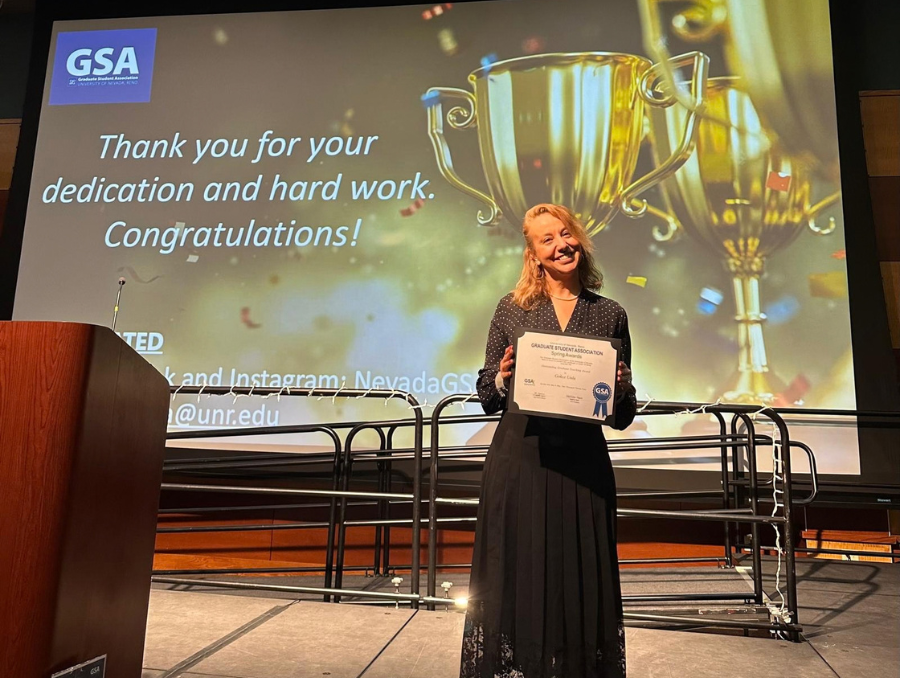
In 2024, her approach earned her the University's Outstanding Graduate Teaching Award. The following year, she received the Outstanding Graduate Student Advocacy Award, recognizing her commitment to supporting and advocating for other students. Both honors meant something significant to Unlu, though in different ways.
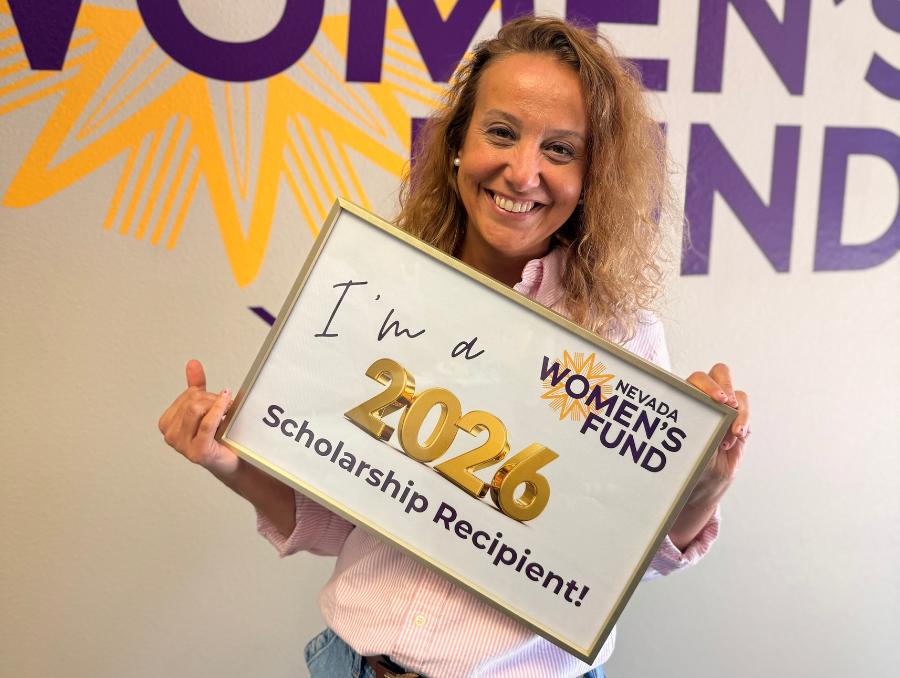
Unlu also received a scholarship from the Nevada Women's Fund, a Reno-based organization that supports women pursuing higher education in Northern Nevada.
"The foundation and encouragement I received at the University helped me build the confidence to apply for a Nevada Women's Fund scholarship. Being selected as a scholarship recipient meant so much to me. I am deeply grateful for their support and belief in my dreams, which give me strength to keep going and inspire me to give back to this community," Unlu said.
Beyond the classroom
Unlu has taken on leadership roles within the College of Education and Human Development: she has organized research forums, supported doctoral students through professional development sessions and built international collaborations.
"Being trusted with these responsibilities helped me recognize that the experience I brought with me still had value and that I could use it to contribute to a new academic community," she said.
Outside work, Unlu has discovered another passion in her adopted home: the natural landscape of Nevada. Coming from Istanbul, a city of millions, she said she finds it special to live somewhere surrounded by mountains with Lake Tahoe nearby. She loves paddleboarding and hiking with family and friends, stopping to listen to waterfalls and watching how the green of the mountains meets the blue of the lake.
"The incredible colors, the serenity and silence," she said, "are all so very amazing."
As Unlu moves toward completing her doctorate, she hopes to continue working at the intersection of educational leadership, teacher preparation and multilingual education. She wants to contribute to preparing future teachers and creating educational environments where increasingly diverse and multilingual students can thrive.
But perhaps more than any specific role or title, what motivates Unlu’s work is something she learned from that teacher in Istanbul long ago, and from every student she has taught since: education creates a ripple effect. When we invest in one teacher, we also invest in every student that teacher will reach.
"That is what continues to motivate my work," Unlu said.


