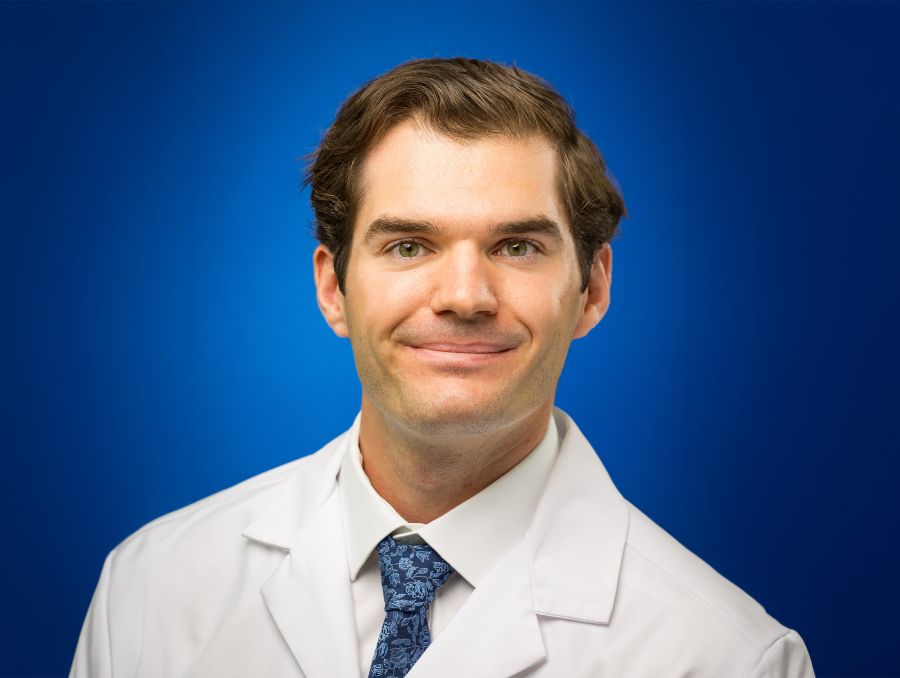
At the University of Nevada, Reno School of Medicine (UNR Med), students are encouraged not only to make a difference in their patients' lives but to also make a difference in the community.
For third-year medical student Benjamin Smith, leadership and advocacy came naturally. Smith received the 2026 Excellence in Public Health Award, presented by the United States Public Health Service Physicians Professional Advisory Committee. The award recognizes medical students who have excelled in public health leadership, advocacy and service to their communities.
While Smith’s passion for community and civic engagement has been highlighted during medical school, it was rooted much earlier in his academic journey.
Since high school, Smith displayed a strong capacity for leadership when he joined the "We the People: The Citizen and the Constitution” program, which sparked his interest in public policy and advocacy. After completing his undergraduate degrees in economics, political science (international affairs) and biology, and enrolling in medical school, he found an opportunity to combine his interests in medicine and policy through health care advocacy.
Becoming a class representative with the American Medical Association (AMA) during his first year of medical school gave him the opportunity to collaborate with other medical students from across the country and engage with the community’s health care needs in a meaningful way. This role enabled Smith to work with Nevada’s underserved communities and helped him recognize how policy decisions directly affect patient outcomes. Smith believes leadership is an important skill for future physicians to practice early in their careers.
“By taking on leadership roles now, students can build the confidence, communication abilities and advocacy skills,” Smith said. “These skills will allow them to better serve their patients and communities throughout their careers.”
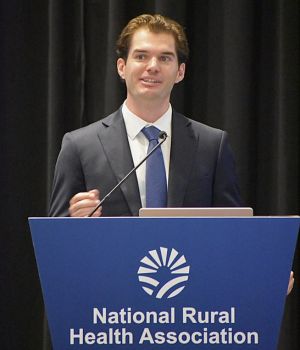
One of the most defining moments in his advocacy efforts was traveling to Washington, D.C., to meet with Nevada legislators and discuss health care workforce shortages and policies affecting rural communities. He also presented the work of the Student Outreach Clinic (SOC) and Rural Outreach Clinic (ROC) at the National Rural Health Association’s Health Access Conference. Advocating for health care at the national level helped him gain the confidence to be a voice for underserved and rural populations.
Beyond advocacy, Smith also took on a leadership role at the ROC.
“My experience leading the ROC has been one of the most influential aspects of my medical education,” Smith said. “Through the ROC, I gained not only clinical experience but also a deeper understanding of leadership, program management, community engagement and the social determinants of health that affect rural populations throughout Nevada.”
Smith’s experiences with both the AMA and the ROC showed him that being a physician means caring for individuals and also improving the systems that serve them.
“Together, the ROC and AMA have reinforced the importance of physician advocacy,” Smith said. “They have shown me that improving health outcomes often requires work beyond the exam room, whether through community engagement, organizational leadership or public policy.”
Associate Professor and Assistant Dean of Student Research John Westhoff, M.D., MPH, believes that Smith’s achievement reflects the best of medical education.
“Ben’s achievement is a reminder that meaningful public health impact can begin before residency or practice,” Westhoff said. “It sets an example for other UNR Med students who want to make a difference on a larger scale. We're very proud of what he's accomplished.”
For Smith, receiving an award for his health care advocacy efforts is also a reflection of the hard work of the volunteers, physicians, health care workers and community partners behind this shared mission. Receiving this honor has motivated him to continue advocating for Nevada’s underserved communities and making an impact on a larger scale.
“This award reflects the collective efforts of many individuals working toward a shared goal of improving the health of our communities,” Smith said. “It serves as a reminder that meaningful improvements in public health are achieved through collaboration, service and a commitment to addressing the needs of the communities we serve.”


