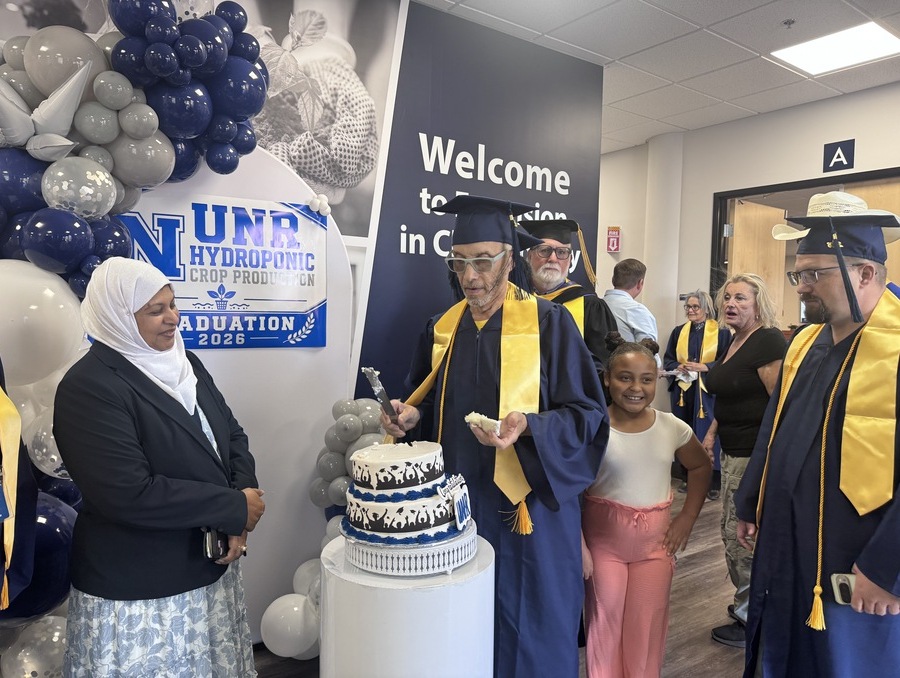
In this first person narrative, Semi-retired plastic surgeon Dr. Stephen Gordon reflects on a lifelong love of learning that led him back to plant science decades after withdrawing from a college botany course. Through the Hydroponic Crops Production Certificate Course offered by University of Nevada, Reno Extension, he discovers a new appreciation for hydroponics and joins a growing community of growers shaping the future of food production in southern Nevada.

The only college class I ever withdrew from was botany, and I suppose I never really escaped the guilt.
Over the past several years, I have taken a variety of agriculture classes, built a greenhouse, established several vegetable gardens and now have 24 fruit trees on my property. I would describe my approach as traditional outdoor, soil-based cultivation, complete with all the challenges and uncertainties of plant selection, soil type, soil pH, sunlight, water management, temperature and pest control. Southern Nevada has a tough growing environment. The greenhouse offers some reprieve from the heat, dryness and winter cold.
I met Most Tahera Naznin, associate professor of urban and indoor agriculture with the College of Agriculture, Biotechnology & Natural Resources, about a year ago when I signed up for my first Hydroponic Crops Production Certificate Course training. I had previously purchased an inexpensive hydroponic growing system online that looked simple enough. I didn’t know anything about the varieties of hydroponic growing methods, only that they required a nutrient solution in a relatively small amount of water that circulated around to all the little plants. By enrolling in this course, I predicted that I would learn enough to get started growing lettuce or whatever.
The hydroponics class turned out to be a profoundly exciting experience. I soon learned that my now dusty hydroponic system was the NFT type, which stands for Nutrient Film Technique, and that it would need thorough cleaning before it could be used for food production.
In a Nutrient Film Technique system, essential plant nutrients are dissolved in water and pumped from a reservoir to the top of a series of connected PVC pipes.
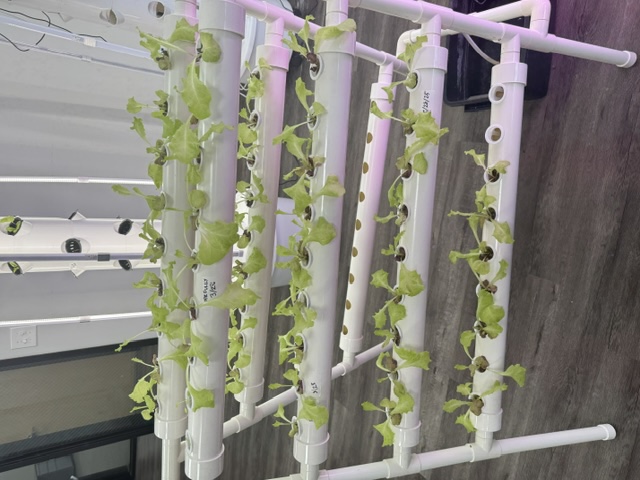
The plants sit in baskets fitted into holes along the pipes, allowing their roots to dip into the thin stream of nutrient-rich water flowing past. As the water moves downward by gravity, the roots absorb nutrients and oxygen before the solution returns to the reservoir. I came to think of it as a marble rolling through a zigzag series of connected pipes or troughs on its way downhill.
The first course scratched the surface of hydroponics and its capabilities for growing a variety of crops quickly and efficiently. The bigger picture is the potential for hydroponic crop production to help address global food insecurity. I was in a class of early learners, and after it was over, I was hungry to learn more. This year, I signed up to repeat the class.
The second class was a completely different experience.
The students were more advanced, and Professor Naznin provided more in-depth material and a more robust lab experience. Some participants were practicing aquaponics, raising fish, a subject area in which Professor Naznin has published her research. Others were commercial hydroponic growers, bringing valuable industry perspectives to the group. One participant, middle school teacher Shawn Kelly, was taking the course for a second time, as I was. Since completing the program, he has built a thriving hydroponics program at WYLEES Middle School, giving students hands-on experience with hydroponic food production.
During my second time through the course, I felt I had a much stronger understanding of the material. My classmates brought diverse experiences to the discussions and asked thoughtful, probing questions. Each week, instructors also provided references and additional reading materials that enriched the learning experience.
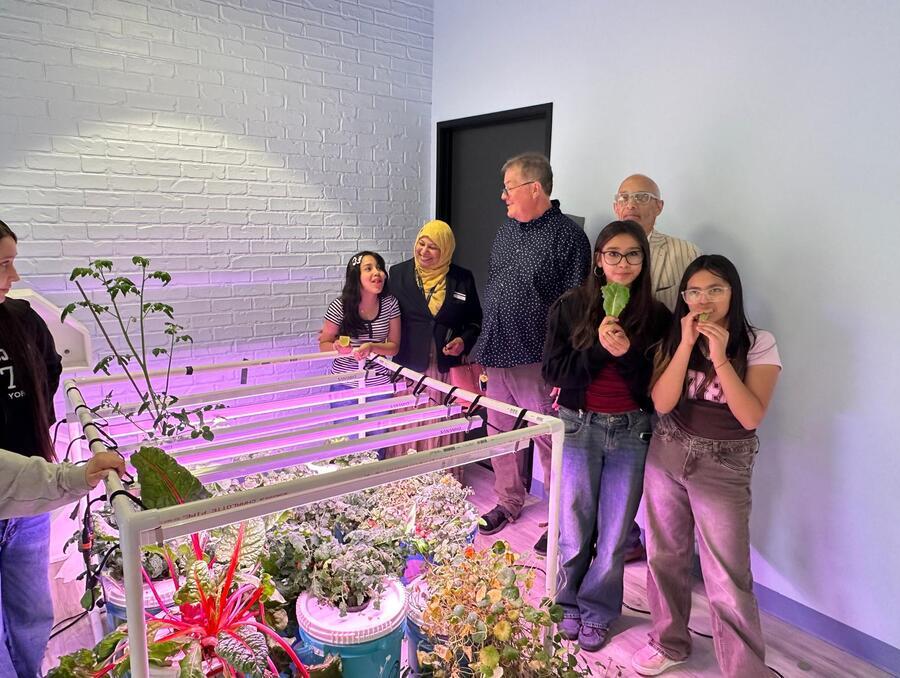
Later, Professor Naznin and I were invited by Kelly to visit the WYLEES Middle School hydroponics lab. Professor Naznin's enthusiasm for hydroponic education quickly resonated with the students as she spoke with them about their experiences and what they had learned through the program.
Professor Naznin directs a hydroponics lab at the University of Nevada, Reno Extension campus in North Las Vegas. The lab is filled with leafy green plants grown by students, along with additional plants used for research. Several types of hydroponic systems are on display, giving students the opportunity to see how each element of plant production connects to outcomes, from oxygen and pH to electrical conductivity, nutrition, and the color and intensity of light.
I have not quite decided what I will be doing with my Nutrient Film Technique system or whether I will expand to more advanced or high-volume production methods. One thing I am debating for sure is converting my greenhouse to hydroponic production as I continue experimenting with what I have learned.


