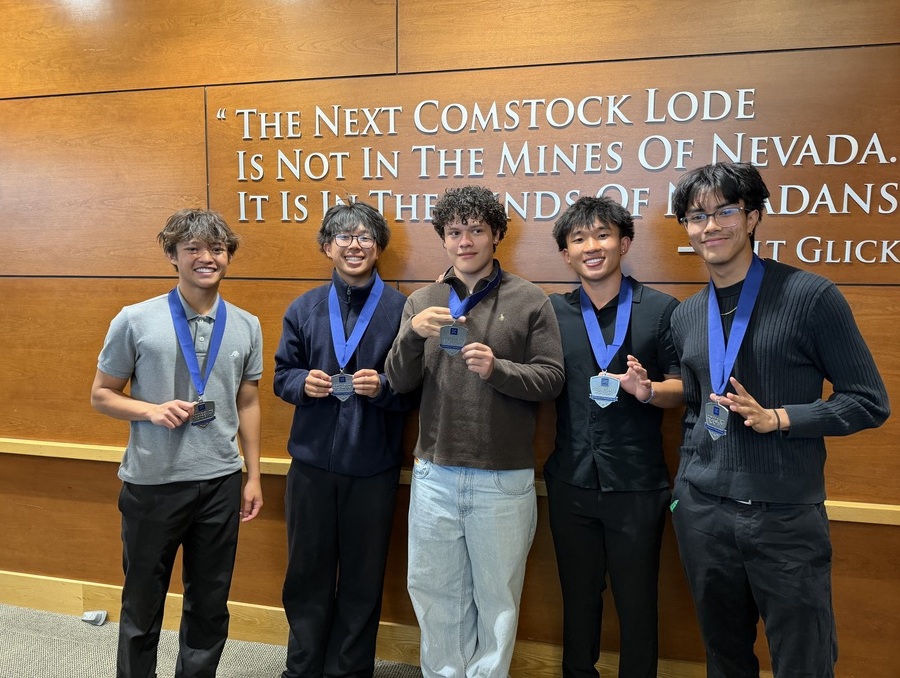
At various celebrations this spring across the Silver State, families, educators and University partners gathered to honor graduating high school seniors participating in the University of Nevada, Reno’s Collegiate Academy program. While the celebrations marked the end of these students’ high school careers, they also marked the beginning of their college journeys, which are already underway.
Collegiate Academy is a dual-credit program that offers high school students the opportunity to earn a year or more of college credit at a discounted cost in their high school classrooms. What began with 400 students three years ago has grown to more than 7,700 students across the state.
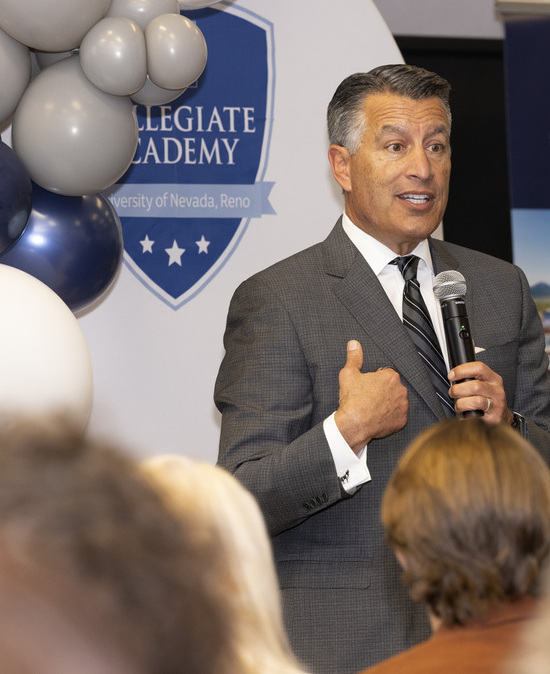
"This is one of the strongest examples of how we serve the state as Nevada’s land-grant institution,” said University President Brian Sandoval. “We are meeting students where they are, expanding access to education, and creating opportunities that change trajectories for students and their families.”
Bellamy Fougner, a senior at Coral Academy High School, was one of the 1,474 Collegiate Academy seniors in Washoe County. She attended the celebration with her family and reflected on the achievement. “I didn’t think I could take college classes and do well,” said Fougner. “My first class was English and I got an A. Not only did I do well, but I gained so much confidence in myself and now know that I can succeed in college.”
"Not only did I do well, but I gained so much confidence in myself and now know that I can succeed in college.” – Bellamy Fougner, Coral Academy High School
For the celebrations in southern Nevada, University leadership visited 18 schools in Clark County to honor 4,138 Collegiate Academy seniors within that school district.
“There’s something powerful about students realizing they belong at a university before they ever step foot on its campus,” said Vice President of Government Affairs and Community Engagement Michael Flores. “Collegiate Academy gives these students – many of them first-generation college students – and their families, a sense of belonging and an understanding that higher education is accessible. This time each year, I am overjoyed to see our Collegiate Academy students’ confidence and their momentum.”
In addition to honoring the students and their hard work, the ceremonies also highlighted the partnerships that make Collegiate Academy possible, particularly with school districts and educators across Nevada.
“What makes Collegiate Academy so special is the collaboration behind it. Faculty, schools, and communities are working together to support students and show them what is possible." – Vice Provost for Undergraduate Education Hillary Procknow
“What makes Collegiate Academy so special is the collaboration behind it,” said Vice Provost for Undergraduate Education Hillary Procknow. “Faculty, schools, and communities are working together to support students and show them what is possible. That shared commitment is what allows the program to grow and truly make an impact for Nevada’s high school students.”
At each of the celebrations, students and their families were honored for the achievement of not just excelling through high school, but taking college-level courses at the same time. And as students thanked their families for support, they also acknowledged their teachers, the instructors who play a key role for Collegiate Academy students navigating college-level work while still in high school.
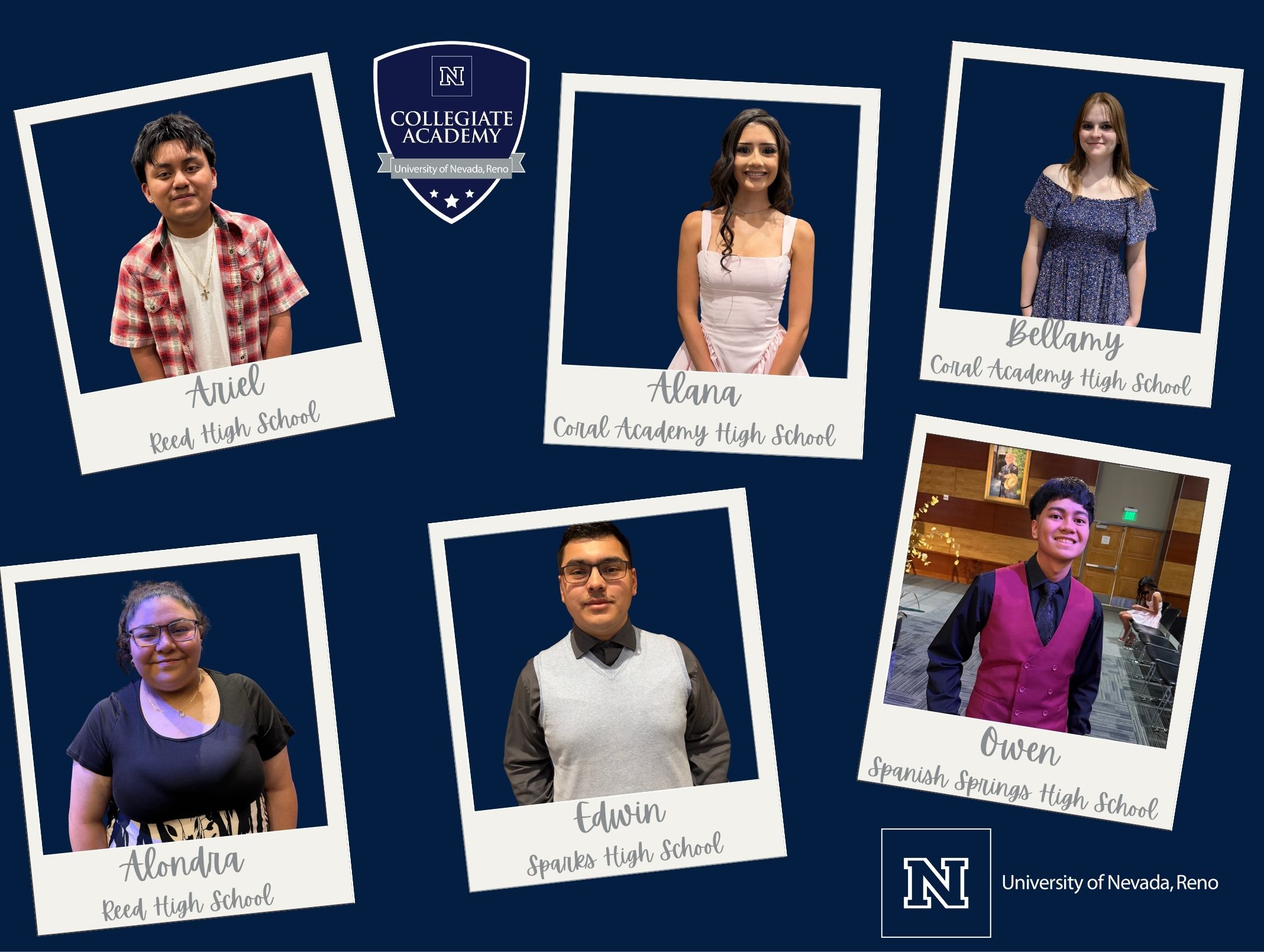
“Coach K was always there for me. She took her time with everyone and really supported us through the challenges. Honestly, that was one of the best things about taking these college classes.” – Ariel Martinez, Reed High School
“One of the biggest things I learned during my time in Collegiate Academy was how to work under pressure and collaborate with other people. I was a shy kid, but being in a professional environment helped me open up. It was meaningful to be in classes with students who had similar goals and ambitions.” – Alondra Guido Cabrera, Reed High School
“These courses shift your mindset. It’s not just about writing or grammar, it’s about understanding different perspectives and learning more about society. When you approach projects with a positive mindset instead of seeing them as chores, you gain so much more from the experience.” – Alana Chavez, Coral Academy High School
“The biggest advice I would give future students is to push yourself, even when things get difficult. You’re going to face challenges, but it’s doable. Always work as a team and lean on your peers. A lot of the material can feel overwhelming, and collaborating with others made a huge difference for me." – Edwin Portillo Macias, Sparks High School
“Not only did I do well, but I gained so much confidence in myself and now know that I can succeed in college.” – Bellamy Fougner, Coral Academy High School
“Being in Collegiate Academy helped me become a better person. It pushed me to be more outgoing, get comfortable in uncomfortable situations and become the best version of myself. I appreciate everything my teachers taught me, both the good and challenging experiences.” Moreno also credited his pre-calculus and trigonometry teacher with helping him grow academically and personally. – Owen Marcus Moreno, Spanish Springs High School
As these and other Collegiate Academy graduates move forward, many will continue their education at colleges and universities across Nevada and beyond. For example, after graduation, Portillo Macias plans to attend the University of Nevada, Reno and explore programs related to software engineering and coding.
On the tail of these celebrations came another celebratory moment: In early June, the University of Nevada, Reno’s Collegiate Academy earned accreditation from the National Alliance of Concurrent Enrollment Partnerships (NACEP), becoming the first and only higher education institution in Nevada with an accredited concurrent enrollment program.
NACEP accreditation represents the nation’s highest standard for concurrent enrollment, ensuring that college courses taught in high school settings match the rigor, curriculum and academic oversight of those offered on campus. The designation is awarded following a comprehensive peer review process that evaluates program leadership, faculty collaboration, student support and academic quality.


