A caring teacher. A bus driver who takes an interest. A safe neighborhood. A place to belong after school.
These everyday relationships and environments may seem simple, but Kristen Clements-Nolle, Ph.D., MPH, has found they can play a powerful role in helping children thrive, even when they experience adversity.
“It turns out that the more you can surround a child and a family with positive experience, even if you have negative experience, you can minimize some of that impact,” Clements-Nolle said.
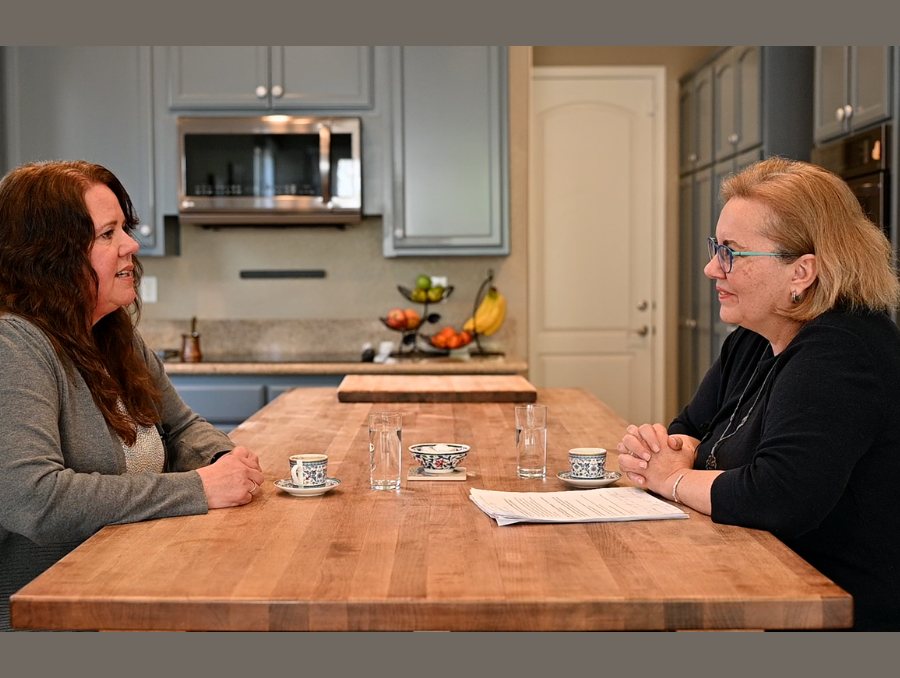
In Episode 7 of Brewing Better Health, Clements-Nolle joins Muge Akpinar-Elci, M.D., MPH, dean of the University of Nevada, Reno School of Public Health, over a cup of Turkish coffee to discuss childhood experiences, early prevention and the importance of listening to communities.
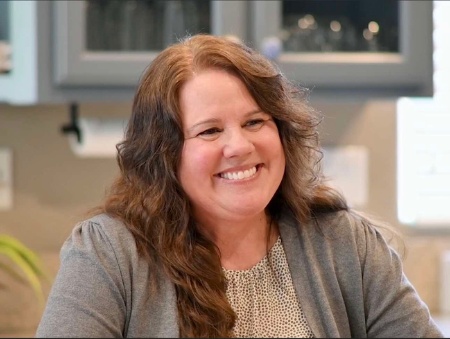
Clements-Nolle is a foundation professor and graduate director of epidemiology in the School of Public Health. Her research examines factors that contribute to or protect against poor health outcomes throughout a person’s life.
Much of her current work focuses on early adolescence, approximately ages 9 to 12, a period of rapid physical, emotional, social and neurological development. She said many mental health concerns begin to emerge during these years, making early adolescence an important time to prevent or delay substance use and other harmful behaviors.
“A lot of my research has looked at childhood adversity, adverse childhood experiences that might occur all through childhood into adolescence and the strong impact that has,” Clements-Nolle said. “But we’re also measuring the positive.”
Adverse childhood experiences, or ACEs, are potentially traumatic experiences such as abuse, neglect, exposure to violence or instability within a household. Positive childhood experiences, or PCEs, are safe, stable and nurturing relationships and environments within families, friendships, schools and communities. They may include having a supportive caregiver, feeling connected at school, participating in activities or knowing a trusted adult outside the home.
“We can’t prevent everything, but we really can have a profound impact,” Clements-Nolle said. “There’s actually strong scientific evidence showing that these positive things can have just as strong of an impact.”
Clements-Nolle is also the principal investigator for Nevada Essentials for Childhood, a partnership among the University of Nevada, Reno School of Public Health, UNLV’s Nevada Institute for Children’s Research and Policy, and multisector partners and communities across the state. The initiative uses research, data, prevention and evaluation to reduce ACEs and strengthen the relationships and environments that help Nevada children thrive.
Her commitment to community-based research grew from an experience early in her career. Shortly after earning her Master of Public Health, she traveled to a small village in the Alaskan Arctic to work on a traditional healing research project. She arrived with plans and materials prepared, but the elder hosting her told her to put them aside.
“She said, ‘You need to sit back and you need to listen,’” Clements-Nolle recalled. “‘Get to know us. You don’t know us. You don’t know our culture, and so your research will not be meaningful.’”
The lesson has stayed with her throughout her work with schools, juvenile justice agencies and communities.
“Since then, I’ve worked with lots of different communities where, if I hadn’t listened, the work wouldn’t have been as impactful as it was,” Clements-Nolle said.
Akpinar-Elci said this focus on relationships and listening reflects a core principle of public health.
“When you build that relationship, trust is building,” Akpinar-Elci said.
“Every day I’m inspired by the students, and I see a lot of potential in where they’re going and what they’re doing. The future is there,” said Clements-Nolle
Clements-Nolle’s designation as a Foundation Professor recognizes her accomplishments in research, teaching and service. One of the University’s most prestigious faculty honors, the award recognizes tenured professors who have achieved national prominence in their fields and demonstrated an outstanding record of scholarship, instruction and service. For Clements-Nolle, those roles are closely connected. She involves students in research, brings real-world experiences into the classroom and helps students recognize that public health skills can be applied across many professions.
When asked what gives her hope for public health, she did not hesitate.
“For me, it’s the students,” Clements-Nolle said. “Every day I’m inspired by the students, and I see a lot of potential in where they’re going and what they’re doing. The future is there.”
Brewing Better Health features faculty and public health leaders from the University of Nevada, Reno School of Public Health and beyond. Each episode pairs thoughtful conversation with the tradition of Turkish coffee, emphasizing connection, listening and shared understanding. Episode 8 of Brewing Better Health is available on the School of Public Health’s YouTube channel and Spotify.


