A new seed-grant fund established in collaboration with Renown Health’s William N. Pennington Cancer Institute (PCI) has awarded more than $667,000 to researchers whose projects aim to improve cancer prevention, diagnosis, treatment and patient outcomes.
Following a call for applications, an impartial committee comprised of joint PCI and UNR Med faculty conducted formal review of 14 submissions and selected six projects to fund. These projects are designed to foster collaboration and accelerate the translation of discoveries into patient care, and generate preliminary data to be used when the Principal Investigator (PI) submits proposals for larger state and federal grants.
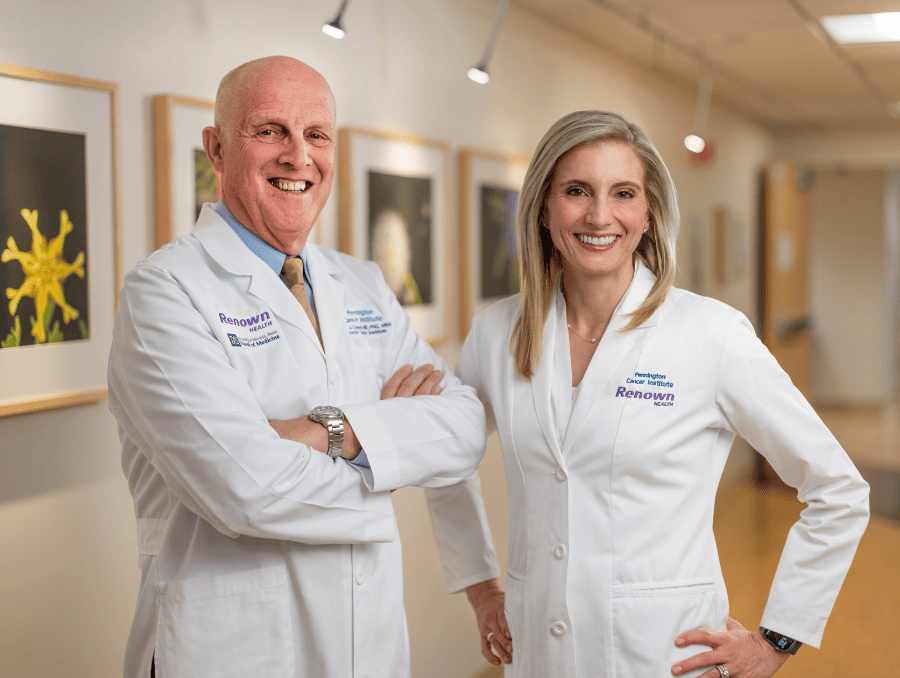
“Our long-term goal is to gain National Cancer Institute (NCI) designation,” said Max Coppes, M.D., Ph.D., M.B.A., past director of PCI and professor emeritus of pediatrics and internal medicine at UNR Med. “There hasn’t been a lot of cancer research happening in our region, and NCI designation is primarily based on extensive, well-funded and excellent cancer research. These seed grants are an important first step.”
There are currently 74 NCI-designated cancer centers in the United States, institutions recognized for leading scientific excellence, innovative research and advanced patient care. Building a strong research program is a critical step toward achieving this ambitious but attainable distinction for PCI, whose goals include recruitment of talented individuals, expansion of research capability and the development of a statewide network for cancer research.
“For Nevada, where no NCI-designated cancer center exists, we intend to expand access to cutting-edge treatments and clinical trials, attract leading physicians and researchers and increase research funding opportunities,” said Kate Ward, Pharm.D., B.C.P.S., vice president of oncology at the PCI. “Most importantly, it would allow more patients and families to receive world-class cancer care close to home while helping reduce cancer disparities across our state.”
The research grant recipients include:
- Subhash Verma, Ph.D., will investigate how Kaposi sarcoma-associated herpesvirus (KSHV) drives cancer development and progression. KSHV is a common, lifelong virus that can cause a rare type of cancer called Kaposi sarcoma. The discoveries from this project could lead to new strategies to prevent or treat cancers caused by viruses, reducing disease burden and improving survival. Alicia Gingrich, MD, MS, surgical oncologist at PCI will help develop the translational direction of this project.
- Anathea Powell, M.D., colorectal surgeon at PCI, will focus on improving outcomes for patients with rectal cancer through enhanced understanding of treatment patterns. The project aims to identify ways to improve access to high-quality, evidence-based rectal cancer care, leading to better outcomes and experiences for patients throughout the region. Her co-investigators include Garrett Green, M.D., radiation oncologist at PCI and Adel Mburia-Mwalili, Ph.D.
- Dean Burkin, Ph.D., in close collaboration with Eric Kim, M.D., chief of Urology at Renown Health, will generate critical preliminary research data on a recently identified small molecule, which could be useful as a treatment modality for prostate cancer. This innovative research project may support future external grant applications and expand scientific knowledge relevant to cancer biology and treatment.
- Maryam Raeeszadeh-Sarmazdeh, Ph.D.’s research proposes to redesign one of the body's natural defense proteins to prevent aggressive brain tumors from invading healthy brain tissue. By making this natural protein more precise and powerful, they hope to create a new type of treatment that slows tumor growth while causing fewer side effects than previous approaches. Katherina Thomas, M.D., MSc, a medical oncologist with the PCI will provide clinical and pathological consultation for specific components being studied (matrix metalloproteinases and related cell-surface receptors) and implicated in tumor biology across relevant cancer types.
- Albert Gonzales, Ph.D., is investigating how glioblastoma multiforme (GBM) tumors manipulate blood flow in the brain to secure oxygen and nutrients that support tumor growth. GBM is one of the most aggressive and difficult-to-treat forms of brain cancer. His research seeks to identify previously unrecognized mechanisms that tumors use to survive and spread, which could lead to new treatment strategies that target a tumor's blood supply, potentially slowing disease progression and improving outcomes for patients with glioblastoma. Suchit Patel, M.D., Ph.D., a radiation oncologist at PCI, will ensure that the key experimental outcomes of this proposal are interpreted within the context of human GBMs.
- Madeline Hardacre, M.D.’s project advances PCI's commitment to whole-person cancer care by exploring approaches that support patient wellness, quality of life and survivorship throughout the cancer journey. By focusing on supportive care and wellness interventions, the project could improve quality of life, reduce symptoms and support patients during and after treatment.
“It is exciting and encouraging to have the number of applicants we did,” said Coppes. “I also note that all six grants were awarded to those investigators who included both researchers and clinicians. We hope that this effort will serve as a model for others and encourage broader adoption of this collaborative approach.”
The breadth of this year’s funded portfolio extends from bench laboratory discovery to patient-centered research. The selected projects span diverse scientific disciplines and address some of the most challenging questions in oncology today.
“These grants are an important investment in expanding cancer research in Northern Nevada,” said Ward. “They support innovative clinical, translational, and population health research, strengthen collaboration between PCI at Renown Health and the University of Nevada, Reno, and help investigators generate the preliminary findings needed to compete for larger national research grants. Ultimately, these awards help build the research infrastructure and scientific workforce needed to advance cancer discovery and care in our region.”


