For generations, people have marveled at Tahoe’s beauty. Now with the launch of the Tahoe Environmental Observatory Network (TEON), a project supported by NV Energy, the first monitoring network of its kind in the region gives scientists and regional agencies the power to better understand the Lake Tahoe Basin, protect it, and ensure it thrives for generations to come.
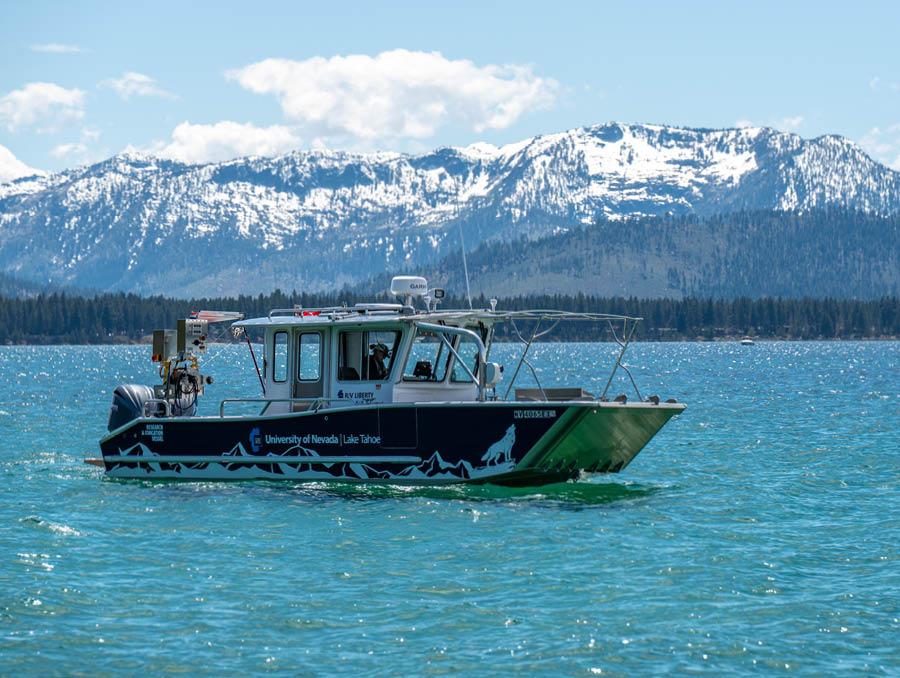
From the lake to forests of the Basin, a live sensor network is collecting real-time data on water quality, weather patterns, and ecosystem health throughout the region. The Tahoe Institute for Global Sustainability at the University of Nevada, Reno, partnering with the U.S. Forest Service and the Tahoe Science Advisory Council, is leveraging the Lake Tahoe campus and a new research vessel to pioneer this groundbreaking, interdisciplinary data network with nearly 35 sensors in the air, land and water to track how wildfires, climate and invasive species impact the lake.
Live data from flexible, scalable monitoring infrastructure supports public audiences, researchers, policymakers, land managers, and community stakeholders in making informed decisions about the lake’s future. In an interview with the Hitchcock Project for Visualizing Science, the TEON team explained this unique monitoring project.
“When it comes to the in-lake sensor network, we’re collecting temperature, dissolved oxygen, chlorophyll – which helps monitor algae production – conductivity, and wave height,” said Katie Senft, faculty and research vessel operator with the Tahoe Institute for Global Sustainability at the University of Nevada, Reno. “What’s really unique about TEON is this sensor network is collecting data in real time, which is also being uploaded to a website with open access to anybody. Whether you’re a recreational boater or beach user and you want to know what the water temperatures are at Tahoe that day or a researcher, whether you’re in the United States or elsewhere, you can get access to this data and use it for whatever you need.”
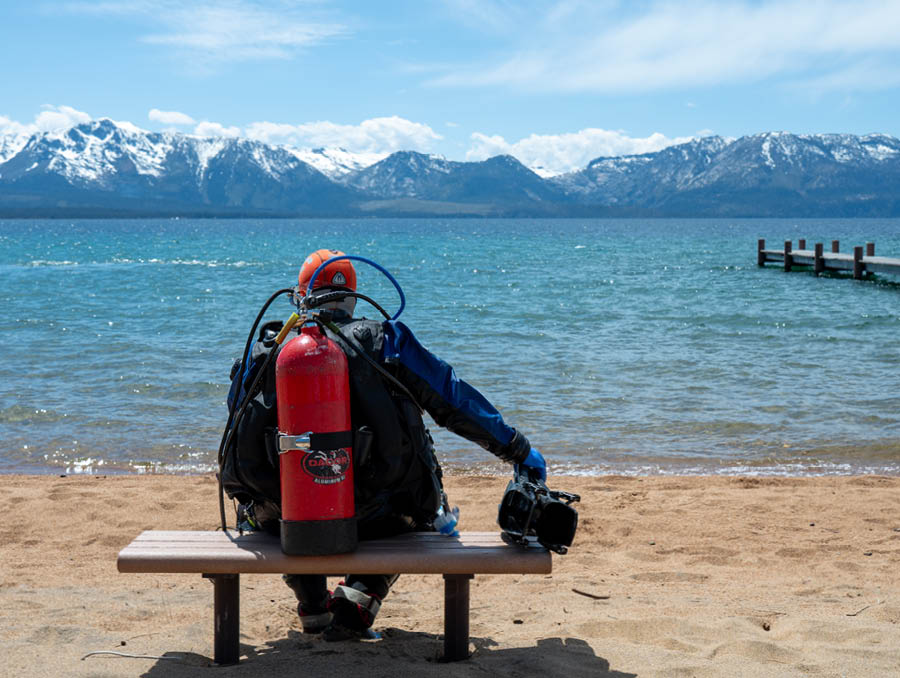
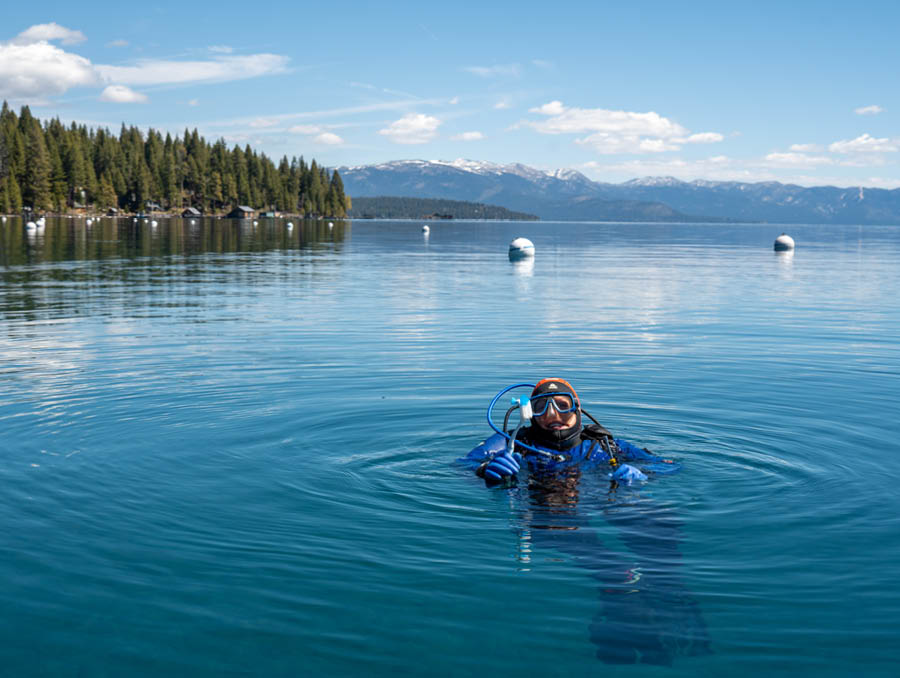
Emily Carlson, researcher at the Tahoe Institute, is a critical part of the TEON team. As a certified SCUBA diver, she leads efforts to maintain sensors, collect data underwater, and make sure that all systems are running smoothly.
“When we go out on the lake, one of the tasks we have is to grab all the underwater sondes – our data collection instruments – and bring them back to the lab to recalibrate them,” said Carlson. “We clean them off really well, get rid of all the algae that may be growing on the outside, download and backup the data, and then calibrate the instruments using standards that are certified by another third-party lab. This helps us make sure that everything is working correctly, that all of our values are as accurate as possible.”
The TEON team is at the forefront of protecting Lake Tahoe, with bold, innovative, and science-backed research that is setting the global standard for how we understand, monitor, and safeguard one of the world’s most treasured ecosystems. With long-term monitoring efforts, scientists have the ability to track how our climate and ecosystems are changing, and what policymakers can do to best protect the lake. Carlson explained that environmental protection can also come from simple daily practices by residents and visitors alike.
“We need to make sure that we’re not introducing other species to Lake Tahoe while also making sure that we’re not taking introduced species from Lake Tahoe to other lakes,” said Carlson. “You can achieve this by making sure that you clean, drain and dry all water toys, kayaks, stand-up paddle boards and floaties before you put them in a different lake or before you bring them to Tahoe. We want to make sure that we are maintaining a clean lake for our enjoyment, for future human enjoyment, but also for the animals that live here. Let’s keep it clean for everyone’s enjoyment and for the future.”