Falls are not a normal occurrence in aging and can be prevented. Small habits can have large impacts on balance, strength and prolonged safety.
According to the Nevada’s 2025 Trauma Registry Report, falls were the leading cause of traumatic injury addressed in Nevada trauma centers across all age groups, surpassing motor vehicle traffic-related injuries and other causes of trauma.
“There can be multiple factors as to why an older adult experiences falls as they age,” said Hannah Linden, MPH, director of health and wellness for the Sanford Center for Aging at the University of Nevada, Reno. “It can be a combination of medication side effects, environmental hazards and lack of strength. The good news is, something can be done about it.”
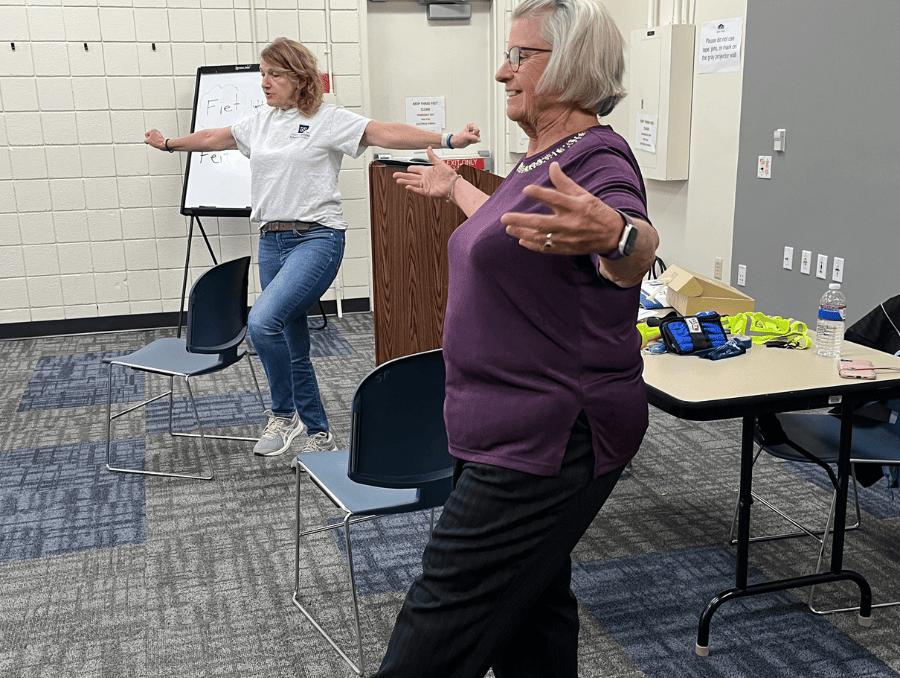
Strength training can help alleviate physical declines in older adults and there are free programs available. Sanford Center for Aging offers a variety of falls prevention workshops including Fit & Strong, Stepping On and Healthy Steps for Older Adults. All are free and designed to strengthen muscles, improve flexibility and diminish joint stiffness.
“Tearfully, I shared how demoralizing my falls had been and how afraid I was of falling again,” said Elise Cunningham, a participant of the Stepping On program. “With the trainer’s skill and support, and the encouragement of the group, I developed muscle strength, balance and confidence that I could avoid falls and if I did fall, I would be able to get myself up safely.”
Additionally, older adults are encouraged to clear homes of tripping hazards which can include rugs, wires and loose clutter. Well-lit areas are also beneficial as it enables a better view of the walking space. Health in Aging has a tip sheet for home safety that includes how to prevent falls and how to safety-proof the home, including reviewing medications for potential side effects such as dizziness and imbalance.
“Beyond expanding their sense of community, I find great value in restoring hope to people who have nearly resigned themselves to a life where they fear falling; instead they move forward carrying themselves with confidence and courage that they can prevent falls through reasonable changes in their homes and lifestyles,” said Iulia Vatamanu ’24 MS, graduate assistant for the health and wellness program at Sanford Center for Aging.
Falls can become more dangerous with age, with the Centers for Disease Control reporting that deaths due to falls increase per age range. For adults aged 65 to 74, there were 19.2 deaths per 100,000 population in 2023, for adults 75 to 84, it jumped to 74.7 deaths per 100,000 and then jumped again to 339.5 deaths per 100,000 for adults aged 85 and older.
“There is a community need which is why we are grateful to have built partnerships with both REMSA Health and the Reno Fire Department (RFD) to mitigate falls in the region,” said Linden. “We recently completed a project with both organizations where, when their team members responded to a fall-related incident, they referred those individuals to us so that we could complete an assessment and connect them to resources in the community.”
Each of the evidence-based falls prevention programs at the Sanford Center for Aging addresses balance and strength while giving tailored tools to help participants individually succeed.
“Facilitating these workshops grants me the privilege to work closely with the older adult population in the Northern Nevada region at large,” said Vatamanu. “I’m able to sit down and listen to the concerns of many individuals across the community. I have learned so much about aging, health, and how to maintain one’s health despite societal expectations of aging by listening to those with the virtue of lived experience.”
Currently Vatamanu is working toward her Ph.D. researching the role of social community in shaping ageism beliefs and physical activity behavior among older adults.
“The gifts of balance and strength, of socialization and a confidence in my physical abilities have combined to improve my cognition and commitment to try to be more active,” said Cunningham.


