A cancer diagnosis can come with both physical and emotional challenges.
People who have completed a cancer treatment will soon be able to access a program from Sanford Center for Aging called Cancer: Thriving and Surviving (CTS). The evidence-based self-management workshop is designed to help cancer survivors build the skills and confidence needed to manage the physical, emotional and practical challenges of life post cancer treatment.
“Survivorship-focused programs are an important part of comprehensive cancer care, helping to address the ongoing needs of individuals beyond active treatment,” said Amanda Morrissey, Ph.D., CCC-SLP, teaching assistant professor and speech-language pathologist in the Department of Speech Pathology & Audiology. “Completing treatment is an incredible milestone; however, cancer care doesn’t simply end when treatment does. Survivors face ongoing medical needs while also navigating scanxiety, fear of recurrence, appointment fatigue, financial toxicity and the very real burden of continuing to engage with the healthcare system. Peer support and community can be incredibly valuable during this time by connecting through shared lived experiences and by providing encouragement and support as they continue to navigate survivorship and ongoing care.”
Peer support programs connect people with similar experiences that can help build trust and a unified approach to a similar journey.
“Cancer is a significant health issue, especially for older adults,” said Hannah Linden, director of health and wellness for Sanford Center for Aging. “We are excited to offer this program in Northern Nevada so we can help meet the needs of our community members who have completed treatment yet are still dealing with the many symptoms that linger after treatment ends.”
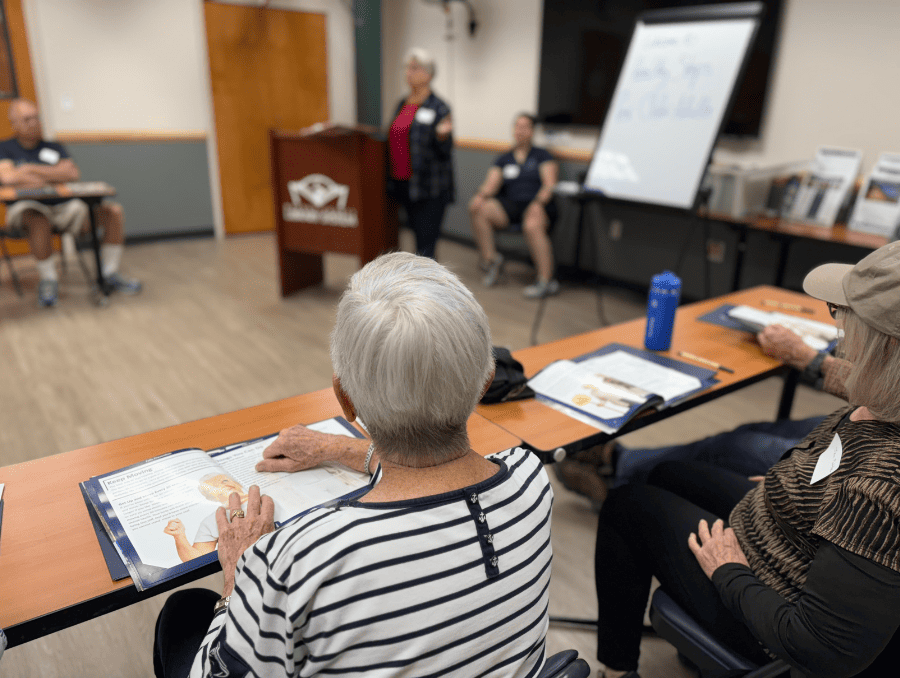
The program is interactive and emphasizes peer support, problem-solving and goal setting to help participants maintain active, healthy and fulfilling lives. Delivered in small groups, either in-person or virtually, participants meet weekly for six weeks. Workshops are led by two trained facilitators, one who is a cancer survivor too.
“Cancer patients often feel great support from their families and communities while undergoing treatment, but that support ends abruptly once treatment ends, leaving them feeling forgotten and abandoned,” said Linden. “We hope this program will help to fill this gap.”
Key topics include:
- Managing treatment-related symptoms such as fatigue, pain, sleep problems and stress.
- Coping with fear of recurrence and changes in body image.
- Healthy eating and physical activity.
- Communicating effectively with healthcare providers, family and friends.
- Making informed treatment decisions.
- Developing practical skills in action planning, problem solving and decision making.
CTS complements, rather than replaces, medical treatment. Participants are encouraged to work closely with their health care team while learning strategies that can improve quality of life, increase self-efficacy and support long-term well-being.
“Survivorship is about quality of life and helping people navigate the physical, emotional, social and practical realities of living after a cancer diagnosis,” said Morrissey. “After everything that comes with cancer treatment, joining a supportive community can understandably feel like one more thing to do, especially after months of appointments, treatments and demands on your time and energy. But having a space to connect with people who understand, share experiences and resources, and learn from one another can be incredibly valuable.”
The new workshop will start in 2027, but interested individuals are encouraged to sign up for the newsletter to learn about the workshop when it begins or call (775) 784-4774 Option 2.


