At the University of Nevada, Reno School of Medicine (UNR Med), the medical education curriculum is expanding to make space for artificial intelligence (AI) in research training. John Westhoff, M.D., MPH, associate professor and assistant dean of student research, created the Independent Data Exploration and Analysis (IDEA) Project, a year-long initiative that is part of the Evidence-Based Practice (ESP) curriculum for first–year medical students.
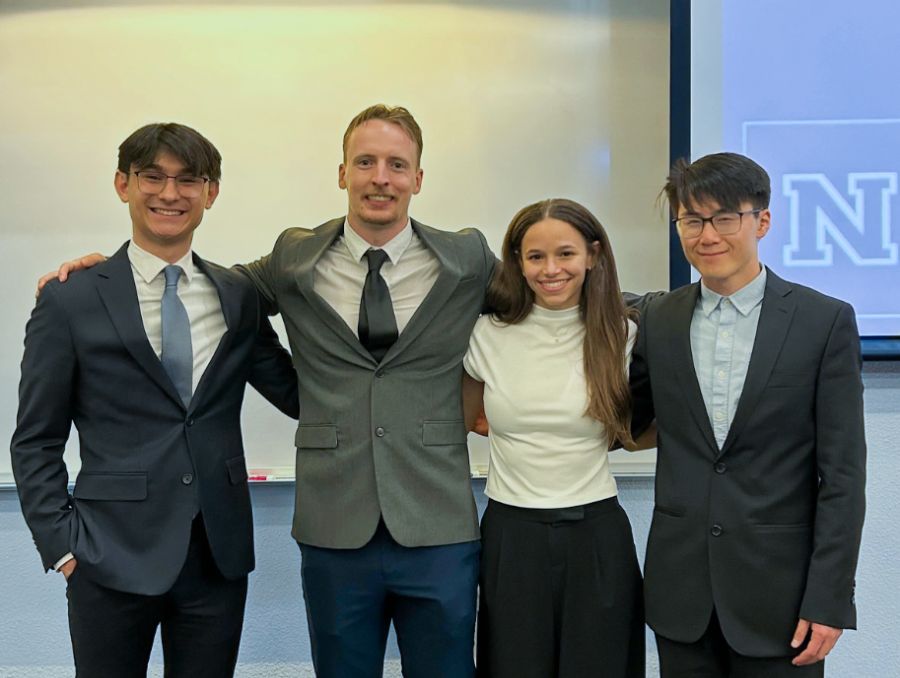
The IDEA Project’s goal is to give students hands-on experience working with real-world health data, developing research questions, analyzing statistics, and communicating findings, all with AI integration throughout the process. Students are able to collaborate with each other while working toward a similar research goal. This year, first-year medical students Jon Baker, Erin Halligan, Nick Hosilyk and Oh Byung Kwon were voted first place by a panel of judges as the best research presentation.
Their project examined whether current safety guidelines for the heart medication digoxin apply to critically ill patients in the intensive care unit (ICU). Analyzing data from 1,351 ICU patients, the team found that digoxin blood levels at or above 0.9 ng/mL were associated with a significantly higher risk of death within 30 days, with the greatest risk occurring during hospitalization. Their findings suggest that maintaining lower digoxin levels may be especially important for critically ill patients and highlight how data-driven research can help inform safer, evidence-based clinical care.
“The IDEA Project taught us that with guidance from our mentors, there are resources out there that help us extract the right data to answer clinical questions,” Kwon explained. “This was a great opportunity to combine knowledge we learned from our biostatistics classes with our current knowledge of tools to create a compelling story about our research question.”
Despite having limited prior experience, medical students approached their project with confidence, recognizing it as a valuable opportunity to develop more advanced research competencies. “It was an adventure into the unknown, with a common understanding that not one of us had background in retrieving data, analyzing data, or presenting a formal scientific presentation,” Baker said. “We found that we had the strength to work through difficulties and find time in our busy schedules.”
As AI becomes more integrated into education, it can help medical students and researchers access, analyze and apply information more efficiently. “I’m very positive about the integration of AI into medical education,” Halligan shared. “I see it as a powerful tool that can help students and physicians work more efficiently, especially when dealing with large datasets, literature reviews, and data analysis.”
Incoming students at UNR Med can benefit from opportunities to refine their research skills and further develop effective communication and teamwork.
"It brings into light the research process,” Kwon said. “Even if you start with zero background in data analysis, the collaborative nature of the project proves that you can master these skills through teamwork and communication.”
As AI continues to shape the future of medicine, initiatives like the IDEA Project are preparing students to confidently navigate an increasingly data-driven health care landscape. By combining research training, collaboration and responsible AI integration, the project equips future physicians with practical skills they can carry into clinical practice and scientific discovery. For Baker, Halligan, Hosilyk and Kwon, the experience was more than a class assignment. It demonstrated that with curiosity, teamwork and the right tools, students can tackle complex research questions and contribute to the future of evidence-based medicine.


