Each year in Yerington, Nevada, more than 2,500 foreign guest workers arrive from Mexico to work the fields at Peri & Sons Farms, leaving their families and lives behind while they perform seasonal labor in the U.S. under the H-2A visa program. These workers, who come to the U.S. in search of higher wages and better job opportunities, are a fundamental part of the chain that allows U.S. farms to operate and citizens to have fresh produce on their tables.
A new documentary from the Hitchcock Project for Visualizing Science and University of Nevada, Reno Extension takes viewers inside the H-2A system in Nevada. Through the experiences of Peri & Sons Farms and its workers, "H-2A: The Hands Behind Nevada's Harvest" explores in-depth why one Nevada farm relies on the program, what it means for their guest workers and their families, and some of the misconceptions surrounding temporary agricultural visas.
“Peri & Sons Farms is the largest H-2A employer in Nevada and a cornerstone of Yerington’s local economy,” said Loretta Singletary, professor with the University’s Department of Economics and University of Nevada, Reno Extension. “We hope that this film helps people to understand what an essential role the H-2A program has in our lives and the many benefits that the program has for both the farms and the guest workers.”
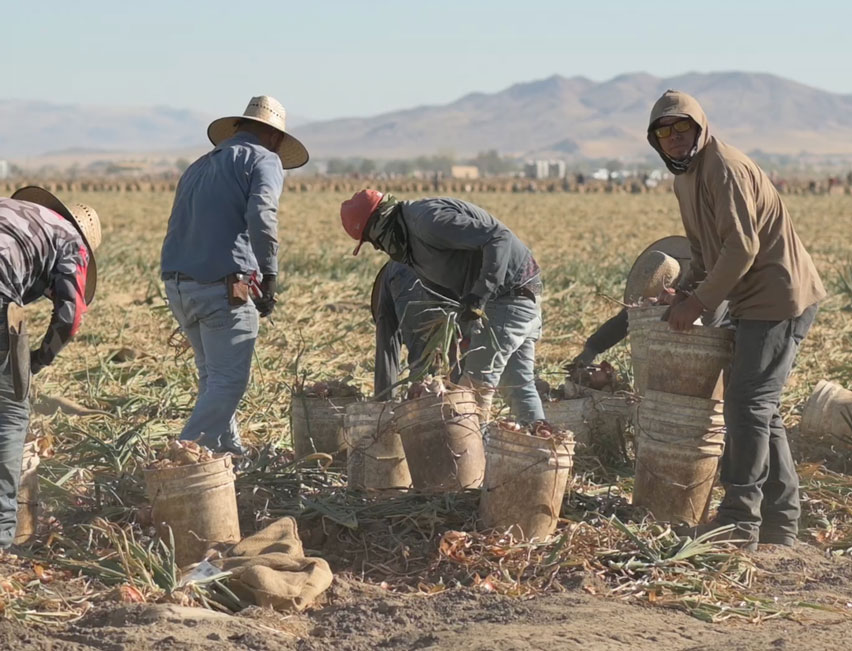
What is the H-2A program?
The film begins with an overview and brief history of the H-2A program, which was created to allow agricultural employers facing a shortage of available workers to temporarily hire workers from other countries. Its roots stretch back to the Bracero Program, established during World War II. Since then, temporary agricultural labor has become a much larger part of the U.S. farming workforce. In fiscal year 2025, employers secured certification for more than 398,258 H-2A positions nationwide, up from just over 48,000 in 2005.
Nevada is part of that growing trend and is one of the top states for H-2A labor, particularly during peak harvest seasons. Peri & Sons Farms, based in Yerington, is one of the country's top H-2A employers and the state's largest user of the program, with more than 2,600 H-2A employees in Nevada during 2025.
Although U.S. farmers must also attempt to recruit domestically, at Peri & Sons there has historically been little interest from U.S. citizens for these physically demanding, seasonal jobs – a challenge that Brad Johnson, the farm’s outside legal counsel, describes in the film.
“The H-2A program is absolutely vital to the ag industry,” Johnson said. “We don't receive any response from workers for these seasonal jobs. If the H-2A visa program did not exist, Peri & Sons Farms would not exist as it does today. It would not.”
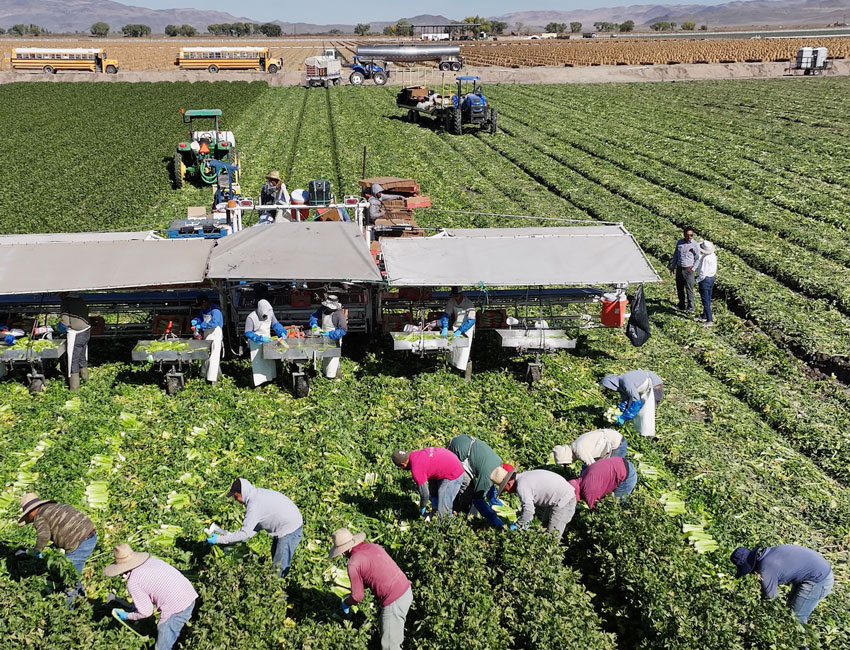 H-2A visa holders harvest celery from a field at Peri & Sons Farm in Yerington, Nev. Credit: Vanesa de la Cruz Pavas.
Addressing Myths and Misconceptions
Although many people believe that farms use foreign field workers because they are a cheap source of labor, bringing these workers to Nevada is neither simple nor inexpensive, the film explains. Employers must first demonstrate that they cannot find enough qualified U.S. workers and must follow a series of requirements related to recruitment, wages, housing and transportation. The program is also subject to rules intended to prevent it from negatively affecting U.S. workers.
At the same time, guest workers face challenges of their own. Because H-2A workers' legal status is tied to their employment, they can be particularly vulnerable to poor working conditions or retaliation.
The documentary also examines several common assumptions about H-2A workers: that they are unskilled, that they take jobs from U.S. citizens, that they do not contribute to rural communities, or that they come to the U.S. intending to stay. Interviews with workers and agricultural professionals offer a more complicated picture.
Uncertainty adds another layer to an already complicated system. Changes in federal immigration and labor policies, along with ongoing legal challenges over the rules governing the program, have made it harder for agricultural employers and workers to predict what requirements and costs they will face in future seasons.
Ultimately, the story of the H-2A program is about more than immigration or agricultural policy. It is about the people who harvest the food Americans eat, the farmers who depend on their labor and the communities shaped by both.
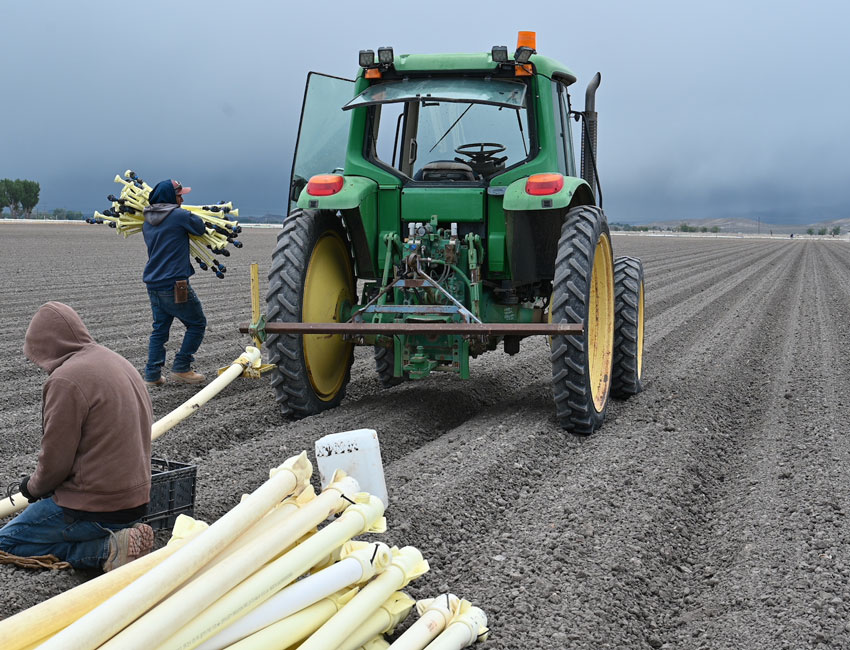 H-2A visa holders lay irrigation pipe in a farm field at Peri & Sons Farms in Yerington, Nev. Credit: Vanesa de la Cruz Pavas.
About this film
Watch the film, "H-2A: The Hands Behind Nevada’s Harvest,"on Extension's webpage.
This film was directed, edited and filmed by Vanesa de la Cruz Pavas from the Hitchcock Project for Visualizing Science in the Reynolds School of Journalism, with script co-writing and camera support from Kelsey Fitzgerald (Hitchcock Project/Reynolds School) and drone footage from Richard Bednarski from the Reynolds School. The film was narrated by Loretta Singletary (University of Nevada, Reno Extension), who also arranged interviews and assisted with storyline development. Special thanks to Olga Ilchuk (University of Nevada, Reno Extension) for project support.
The Hitchcock Project for Visualizing Science is an initiative to prepare students, professionals, and scientists to present science in visual, creative forms.


