Leaders from higher education, mining and government gathered at the University of Nevada, Reno to discuss critical minerals, workforce development and supply chain security.
The roundtable was a pivot from the postponed Elements of Change: Lithium & Critical Minerals Summit.
Assistant Secretary of U.S. Department of Energy Audrey Robertson and U.S. Rep. Burgess Owens, who represents Utah’s 4th Congressional District, led the conversation. Robertson posed questions to the group, namely: how do we prepare young people for the next phase of mining in the U.S.?
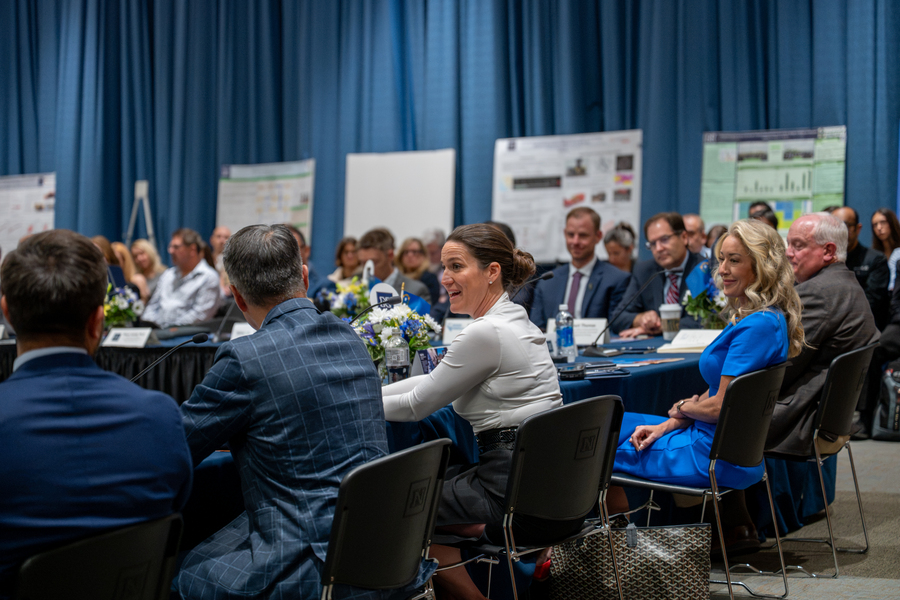
These questions are central to Robertson’s role leading the DOE's Office of Critical Minerals and Energy Innovation and spearheading new initiatives such as the $100M PROSPECT program. Representative Owens, also a champion of this work and the sponsor of the 2025 Mining Schools Act, aims to increase education in, and domestic production of, critical minerals. Their presence was crucial to the conversation and the University of Nevada was a fitting place for it: the home of the Mackay School of Earth Science and Engineering (one of the country’s oldest mining schools); and Nevada’s flagship, land-grant institution, with mining education written into the state’s constitution.
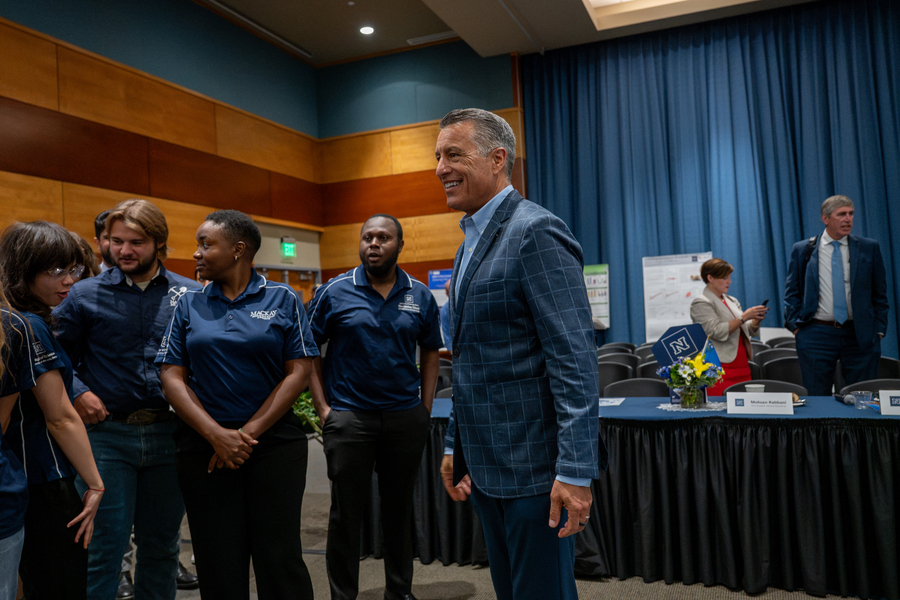 University President Brian Sandoval gathers with students at the roundtable event.
 “Since our founding, the University has played a central role in preparing the talent that powers Nevada's mining industry,” said University President Brian Sandoval. “And today we are helping educate the workforce that will drive the future of critical minerals, energy security and economic growth."
Students bring the workforce conversation into focus
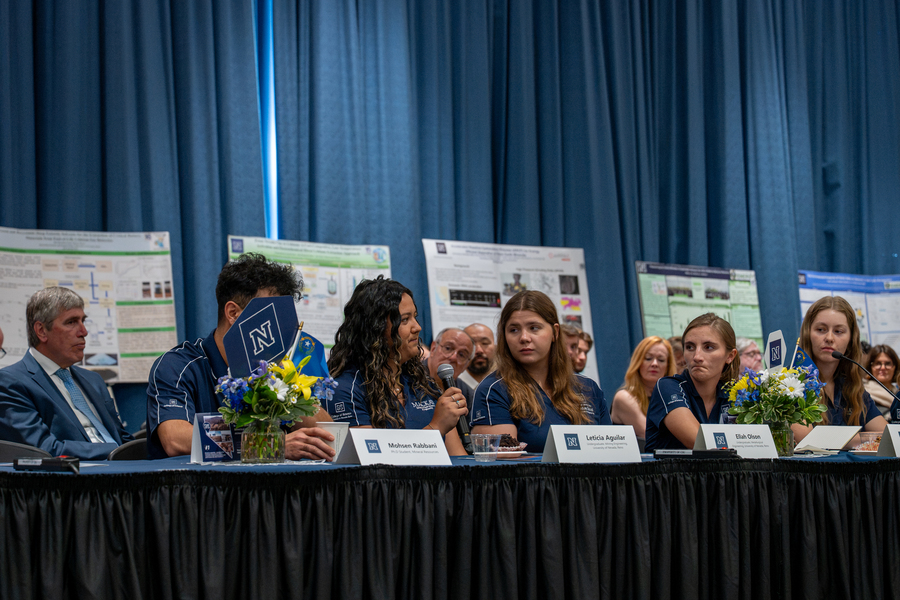
University students had a seat at the roundtable; they not only presented research and led campus tours, but offered their perspectives on what attracted them to mining and what could help the next generation discover the industry sooner.
For mining engineering and geology major Grace Merrill, a sixth-generation Nevadan, mining was part of the history she grew up around, but not a career she thought to pursue.
“I grew up learning about things like Virginia City, but I didn’t know a lot about what was happening in mining today,” Merrill, who serves as the John Mackay Club President, said.
Merrill shared with the group that she’d discovered the industry almost by chance and quickly found something she loved. She did not realize mining was a potential career until her senior year of high school. “We really need to get people excited about what’s happening in the industry today,” she said.
Natalie Hagerty, an undergraduate in mining engineering and vice president of Women in Mining, echoed the need to begin that introduction earlier and show students how dramatically the industry has changed.
“When I was in elementary school, we only learned about the history of mining," she said. “I’m much more interested in modern-day technology and how it applies to mining.”
“I came into this industry because there were so many scholarships that supported my education." – Andrea Oviatt, engineering student
Leticia Aguilar, an undergraduate in mining engineering and past president of the University’s Women in Mining Club, said outreach on campus has shown her how little students outside traditional mining disciplines know about the industry's career possibilities.
“We get to talk to a lot of students, not just mining students,” Aguilar said. “We’ve talked to business students, mechanical engineering students and others, and we tell them that there are a lot of opportunities for them in the mining industry.”
Efforts from the Mining Club, as well as others at the Mackay School of Earth Science and Engineering and the College of Science, aim to close that awareness gap.
According to the Bureau of Labor Statistics, U.S. universities graduate around 300 mining engineers per year, but the industry has 400-500 new openings annually. Those out-of-college jobs can often have a salary of $100,000 or more.
Ensuring students and their families know the opportunities after graduation is also essential. “How do we get students excited about statistics like 100% job placement?” was an echoed sentiment.
Leaning into partnerships
“Universities that partner with national laboratories and private industry are going to be incredibly important to building the critical minerals workforce,” said Robertson. “When UNR asks industry partners to provide students with internships, lab space, and hands-on experiences, we need industry to lean into those partnerships. That’s how we’re going to bridge this gap more quickly.”
"When UNR asks industry partners to provide students with internships, lab space, and hands-on experiences, we need industry to lean into those partnerships." – Assistant Secretary Robertson
Industry representatives at the roundtable, including Jonathan Evans, president, CEO and board director of Lithium Americas, and Dan Kappes, president and CEO of KCA, agreed and emphasized that opportunities in the modern mining industry extend well beyond engineering and geology.
“We have to get students excited about the mining industry and not just about becoming engineers,” said Jason Bubba, chief operating officer of NORCAT, a non-profit focused on skilled labor training, health and safety programs, and mining technology innovation. “If you want a career in marketing, there’s a job for you in mining. If you want to work in HR, there’s a job for you in mining. If you’re interested in IT or AI, there’s a job for you in mining.”
"We have to get students excited about the mining industry and not just about becoming engineers." – Jason Bubba, chief operating officer of NORCAT
Bubba pointed to AI and virtual reality as examples of tools that can help introduce younger students to an industry they may not think of as technologically advanced.
“The mines of the past aren’t the mines of the future,” Bubba said. “It’s a very high-tech industry with a lot of opportunities.”
Exposure can turn interest into a career
For University engineering student Andrea Oviatt, financial support and early experiences helped her envision a future in mining.
“I came into this industry because there were so many scholarships that supported my education,” Oviatt said.
She also pointed to what she worked on in classes and clubs outside of the classroom: mine tours, undergraduate research and the opportunity to attend a conference as a freshman.
“Being able to see the industry very early in my college career definitely helped me stay,” Oviatt said. “If anything, it encouraged me even more to continue. This is probably what builds the desire to stay in this industry for 10, 15, even 50 years. It all starts here.”
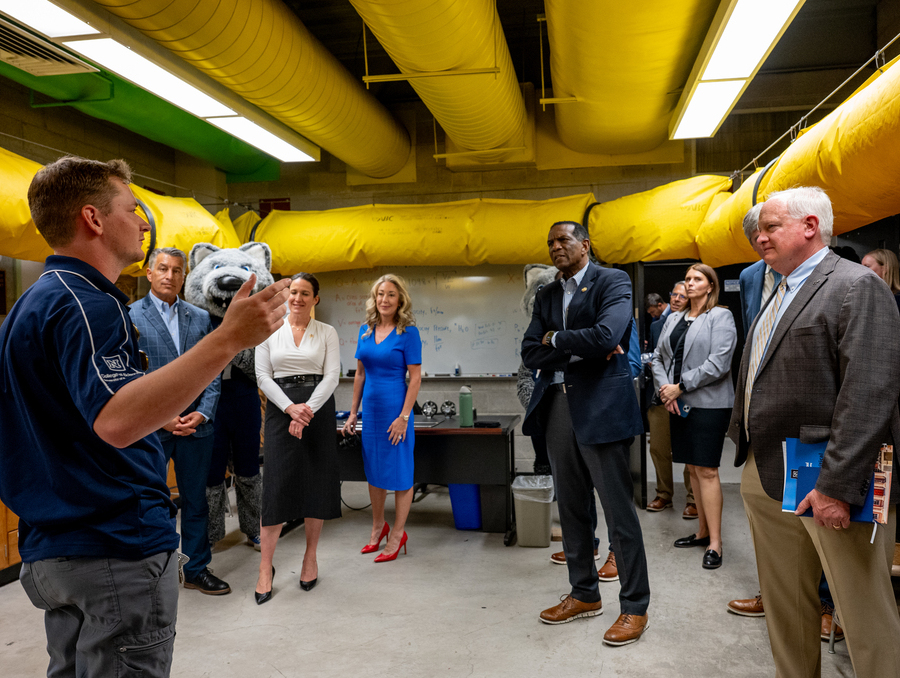 University and federal government leaders joined University students for a tour of The Mackay School.
One potential avenue to introduce the career path could be through the University of Nevada’s Collegiate Academy program, which connects high school students across Nevada with University coursework.
"Agencies across government are sitting around the same table and asking how we create opportunities for students, strengthen our domestic workforce and support the growth of American companies." – Assistant Secretary Robertson
A workforce issue with national attention
The conversation expanded beyond higher education and the state of Nevada as government and industry representatives connected critical minerals education to domestic supply chains, emerging technologies and national competitiveness.
“The federal government is looking at the supply chain in a fundamentally different way,” said Robertson. “Agencies across government are sitting around the same table and asking how we create opportunities for students, strengthen our domestic workforce and support the growth of American companies.”
Owens discussed federal efforts to strengthen mining education, recruitment and research.
The message from around the table was consistent: Building the critical minerals workforce is not only producing more mining graduates but will require introducing students to the industry earlier, showing them the breadth of careers available, providing educational and professional experiences, and creating stronger connections among universities, government and industry.
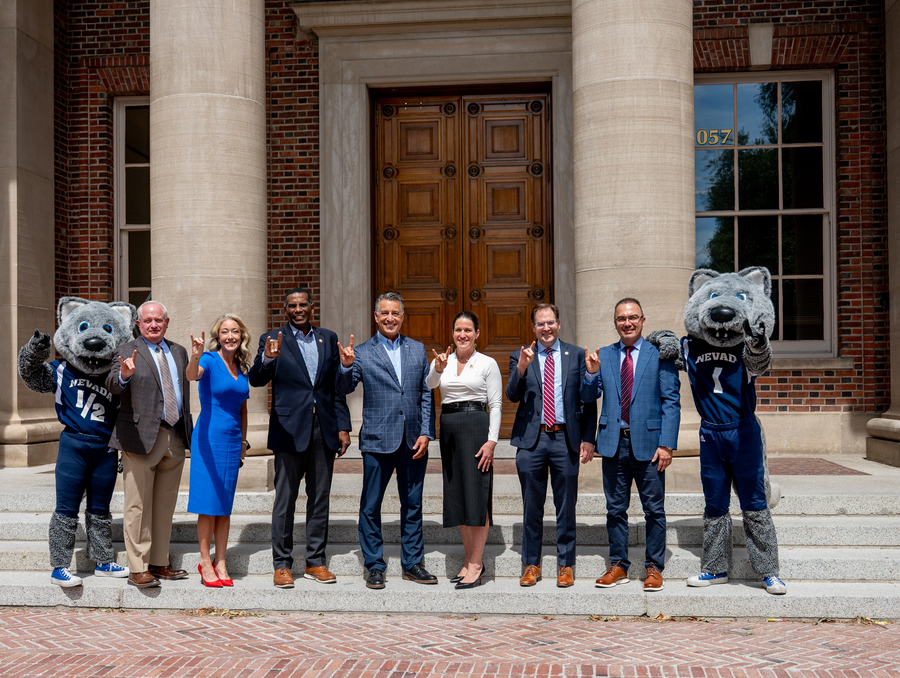
Other participants of the roundtable included Tom Burns, executive director of the Governor’s Office of Economic Development; Director of the Mackay School of Earth Science and Engineering Jeff Parshley, Fred Steinmann, director of the University Center for Economic Development; Associate Professor in the Department of Mining and Metallurgical Engineering Eshan Vahidi, engineering student Ellah Olson, College of Science Mackay School student Mohsen Rabbani; and other government leaders, industry partners, faculty members and students.
Although the Summit will be rescheduled for a later date, the roundtable offered a glimpse of where that larger conversation may lead. The discussion suggested the challenge is making those opportunities visible and creating connections that allow students to see themselves as part of the industry's future.
“Nevada is uniquely positioned to help answer one of the nation’s most pressing challenges,” University Executive Vice President and Provost Jeff Thompson addressed the room. “We have the mineral resources, the industry expertise and the research capacity. If the nation is serious about strengthening its critical minerals supply chain, Nevada and the University should be at the center of that work.”


