
Today’s high-tech world can create special challenges for youth today, but the 4-H Youth Development Program is leading the way to make sure youth are “Beyond Ready,” the theme of this week’s National 4-H Week, emphasizing equipping youth with essential skills for the future in a changing world. The week kicks off the “4-H year,” when youth and adults are encouraged to get involved in 4-H programs as participants or volunteers, and when the successes of 4-H youth are celebrated.
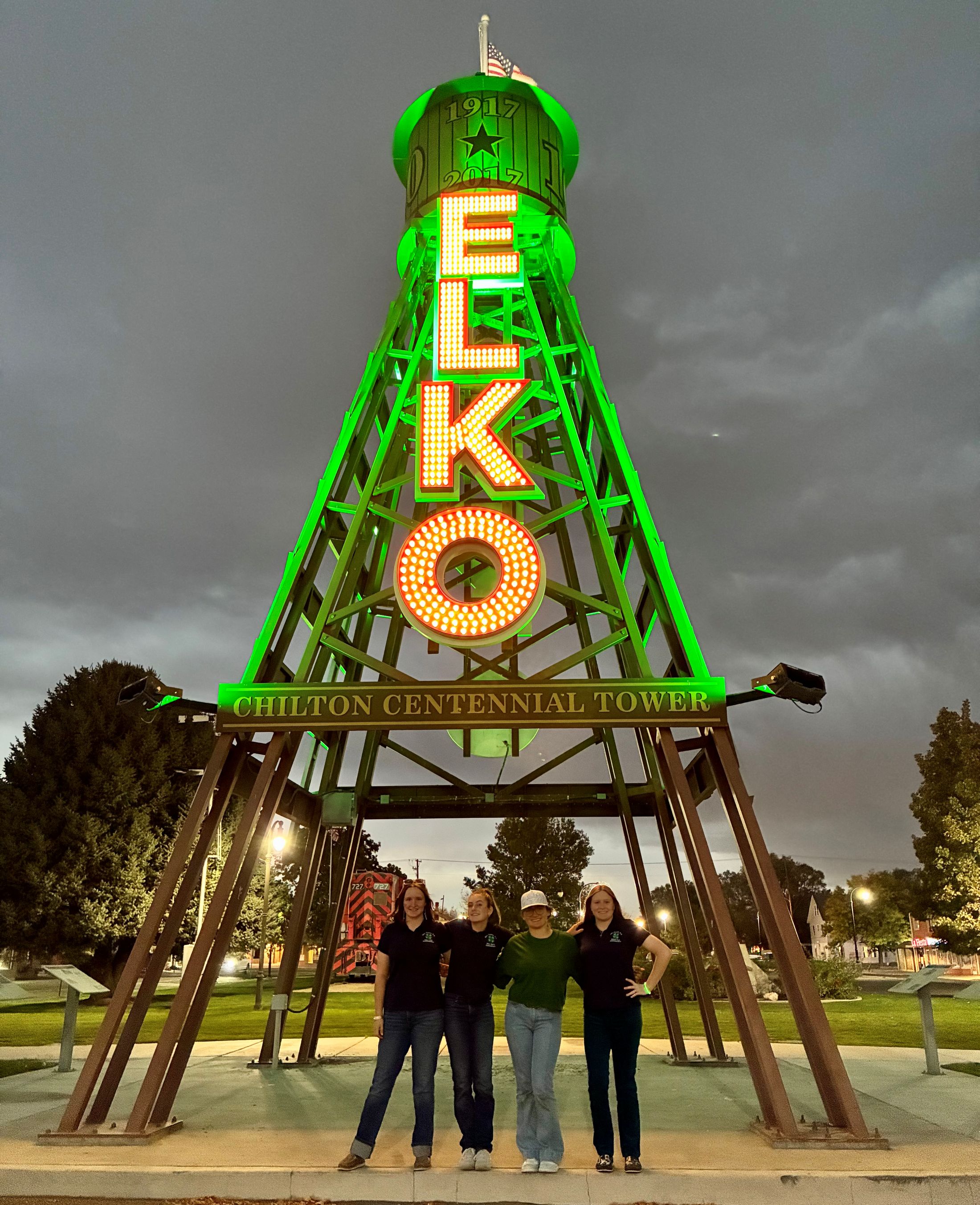
To celebrate, 4-H youth and those who support them were encouraged to wear green on Monday, “Go Green Day.” And, communities are incorporating green other ways that day as well, such as in Elko, Nevada, where the Elko Centennial Tower was lit up green at sundown. Additionally, Thursday is designated as “Thankful Thursday,” a day to recognize all 4-H youth who are doing good and making positive impact by helping their communities and beyond. Stories are being shared, including on social media using #4HBeyondReady. Throughout the week, many Nevada communities will also be issuing proclamations celebrating the successes of 4-H youth.
A culture of giving back
The Nevada 4-H Program is run by University of Nevada, Reno Extension. State 4-H Leader Lindsay Chichester, a self-described “ranch-raised, fourth-generation agriculturist,” grew up participating in the program from age 9 in Nevada’s Lyon County and went on to earn a Ph.D. in systems agriculture.
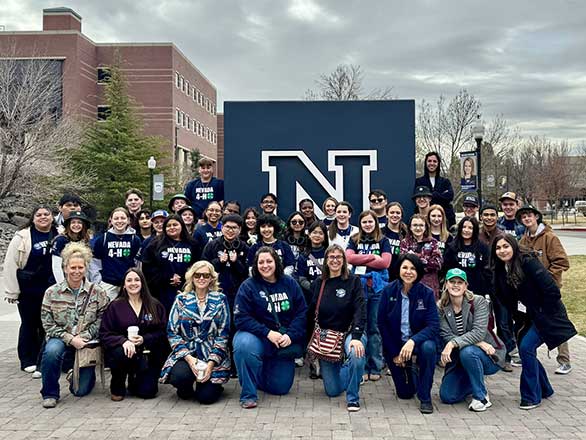
“4-H heavily influenced the trajectory of my life and my career,” she said. “The skills I learned in 4-H gave me advantages throughout college and continue to shape my professional career.”
In fact, research conducted by Tufts University shows that youth who participate in 4-H are three times more likely to give back to their community and twice as likely to make healthier choices, to participate in STEM activities and to have the goal of becoming a leader.
Although the program has expanded from its roots in animal- and ag-based activities to a whole host of activities, including things like robotics and aviation, Chichester points to an old expression that she says still sums up the program today: "We are raising blue-ribbon kids, not blue-ribbon animals."
“The underlying purpose of all 4-H project education, including animal science, is positive development of life skills and personal growth that benefit youth so that each 4-H club member will become a productive and contributing member of society,” she said.
Many 4-H alumni have become elected state officials, legislators and teachers, including former Nevada Governor and current University of Nevada, Reno President Brian Sandoval.
“The 4-H Program taught me responsibility and leadership, but more importantly, it equipped me with skills that have served me throughout my life and career,” he said. “In a rapidly changing world, programs like 4-H help young people build the confidence and practical skills needed to succeed in whatever path they choose.”
In Nevada, 4-H is reaching youth not only in project-based clubs, but also in classrooms, after-school programs and camps.
Meeting the kids where they are: in school and after school
According to Bethany Steiner, the Washoe County 4-H coordinator, sometimes youth who could greatly benefit from the 4-H experience aren’t likely to reach out and join a 4-H club. That’s why two years ago their team piloted an in-school STEM program to deliver in elementary schools. There are three lessons per grade, each an hour long, and teachers can sign up for one, two or three lessons. This year, the program will be in 550 Washoe County classrooms and will also be in some Carson City elementary schools.
“We’re going to be in about 40 of the 60 elementary schools in Washoe County this year," Steiner said. “What we’re trying to do is reach kids where they are at. We’re working on finding ways to reach out to other kids who might not be inclined to join a club to help them find their spark.”
In southern Nevada, 4-H is also reaching kids in the classroom. According to Yaritza Ileana Morales, a 4-H program officer in southern Nevada, about 800 elementary school students and 300 middle school students will benefit from a variety of 4-H programming in school, including everything from engineering to art.
Besides numerous club activities that take place after school at some schools and elsewhere, there will also be 4-H formal, structured after-school programs in three schools and two recreation centers in southern Nevada, and in 11 Title 1 schools in Washoe County, schools that typically serve a higher percentage of disadvantaged students. Other counties in the state will also have some 4-H in-school and after-school programming throughout the school year.
For Nevada youth in 4-H, the sky’s the limit, literally
It might not be surprising that the 4-H Program significantly contributes to fulfilling workforce development needs in animal- and ag-related fields. But now, Nevada’s 4-H Program is helping to address another critical workforce development need. Industry experts estimate that the U.S. has a shortage of about 24,000 pilots. Sparked by the interest of one youth in Northeast Clark County, and with the help of 4-H Program Officer Dianna Walker, Nevada 4-H launched its first youth aviation program, the 4-H Aviation Club, two years ago in Moapa Valley to create a pathway to a pilot’s license. Just a year later, its first member, 19-year-old Talon Newsom, earned his private pilot certificate.
In addition to flying, Newsom said he learned discipline and time management, improved his communication skills and increased his confidence.
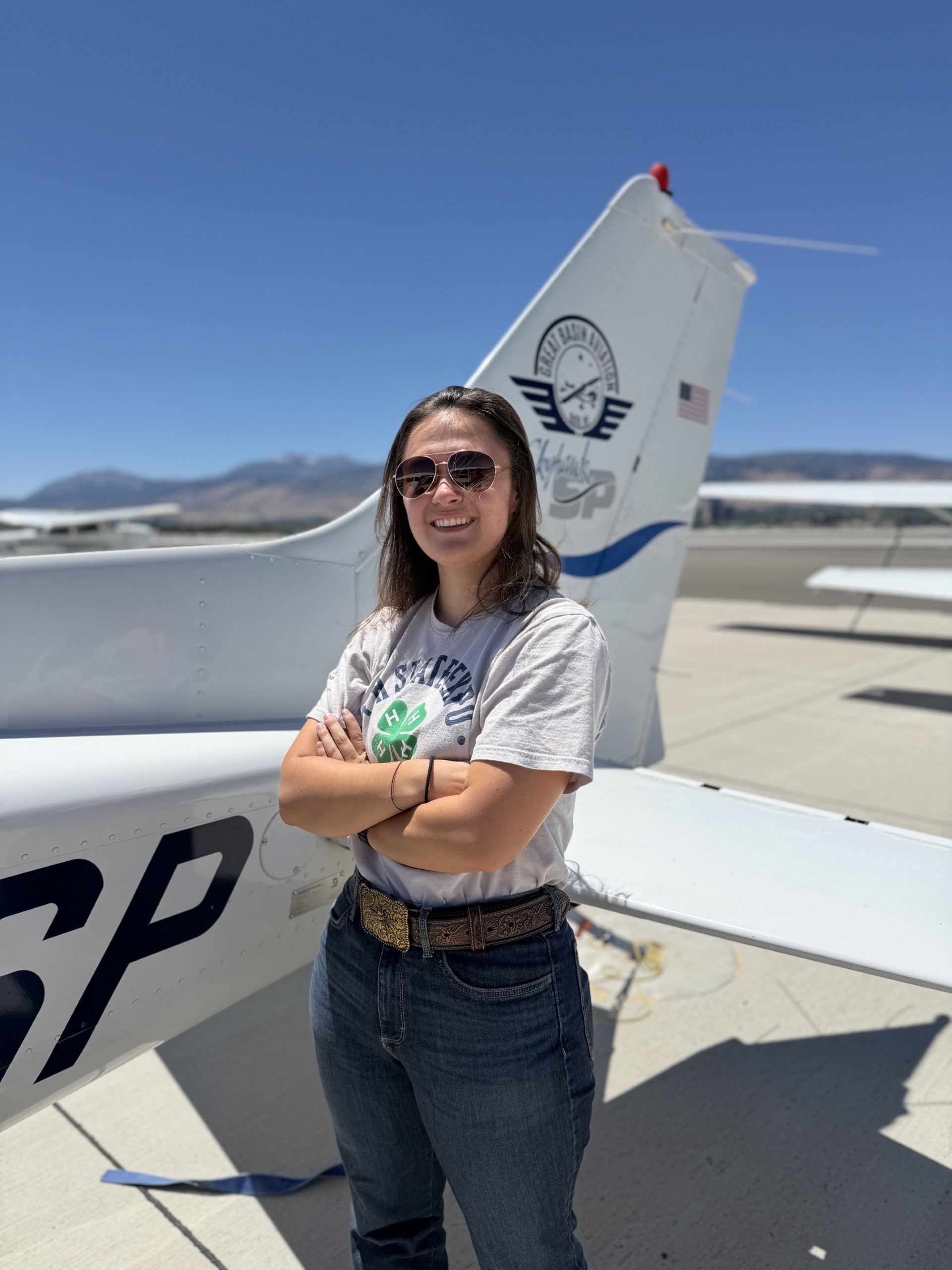
This summer, Keira Fong, a member of the Wingin’ It 4-H Aviation Club, formed about a year ago in Washoe County, also attained her private pilot certificate. With that, the senior at Debbie Smith CTE Academy (whose school mascot is the Mavericks) is off this week touring the U.S. Air Force Academy and Embry-Riddle University, the nation’s only university specializing in every aspect of aviation and aerospace fields.
That club was formed with leadership from Steiner, who says Keira has been involved in 4-H for many years, as have her two younger sisters. Their mother, Marie, is the club leader for three clubs focusing on raising chickens, beekeeping and gardening.
“She is truly one of our superstar volunteers,” Steiner said.
It takes a village – a village of 4-H volunteers – for club leadership
4-H clubs across the state depend on volunteer leaders and have various project areas including archery, shooting sports, cooking, photography, crafts, robotics, public speaking and more. According to Karen Bogdanowicz, the Churchill County 4-H coordinator, in rural communities such as those in her county, volunteers are the lifeblood of the program.
“We are always in need of more volunteers,” she said. “We really are only limited on the number of kids we can serve by the number of volunteers we have. Volunteers don’t need to be particularly knowledgeable in a certain project area. We have materials for all that. They just need to genuinely care about young people and want to help them learn and grow, and be willing to give their time.
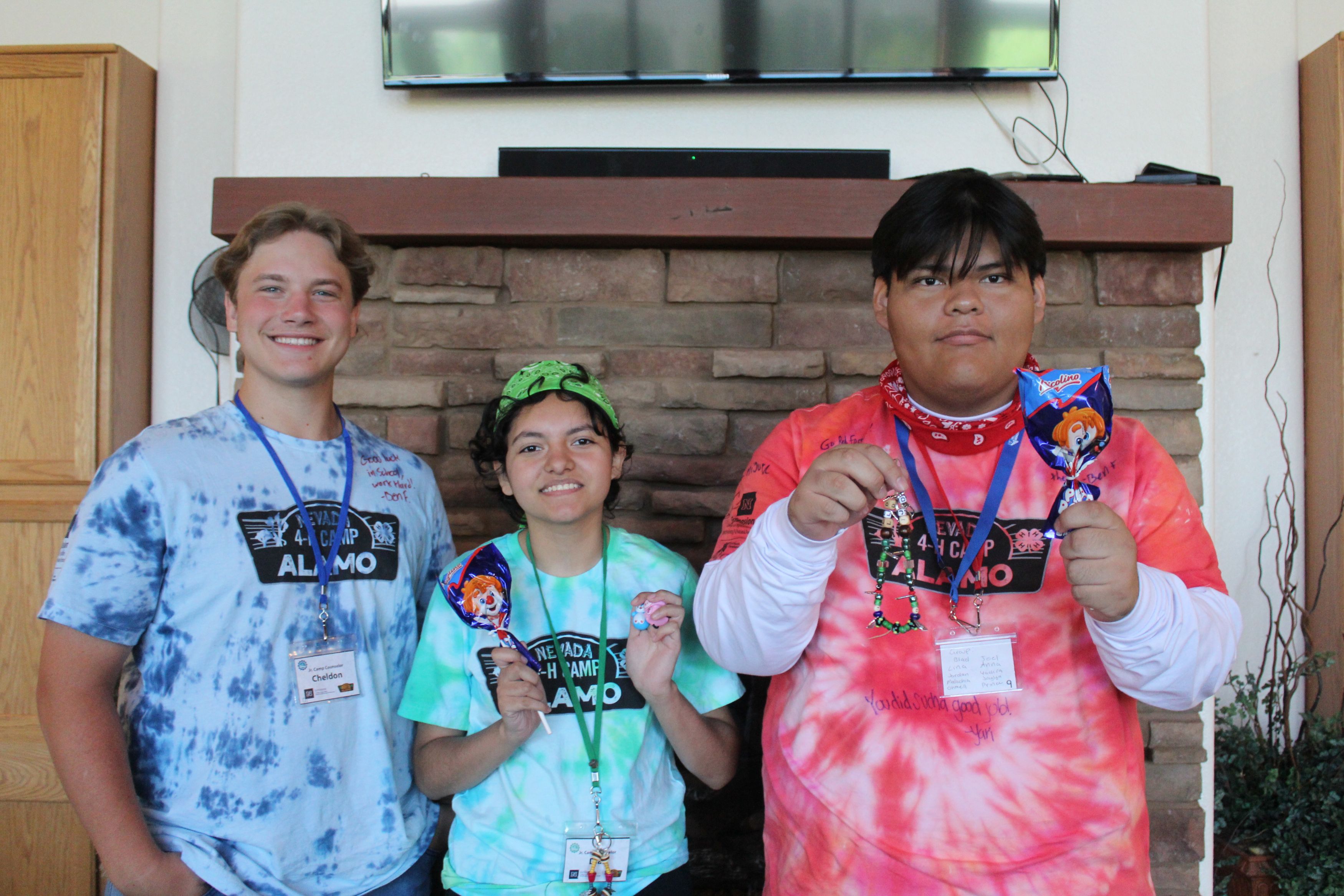
“It’s great to see. Dial and Luis, who were members of our Valley High School 4-H Club for the past couple of years, became junior camp counselors for our teen camp after their graduation,” she said. “They both come back to volunteer at their former 4-H club and are going to become 4-H AmeriCorps volunteers for the rest of the semester.”
And then comes summer – and summer camp
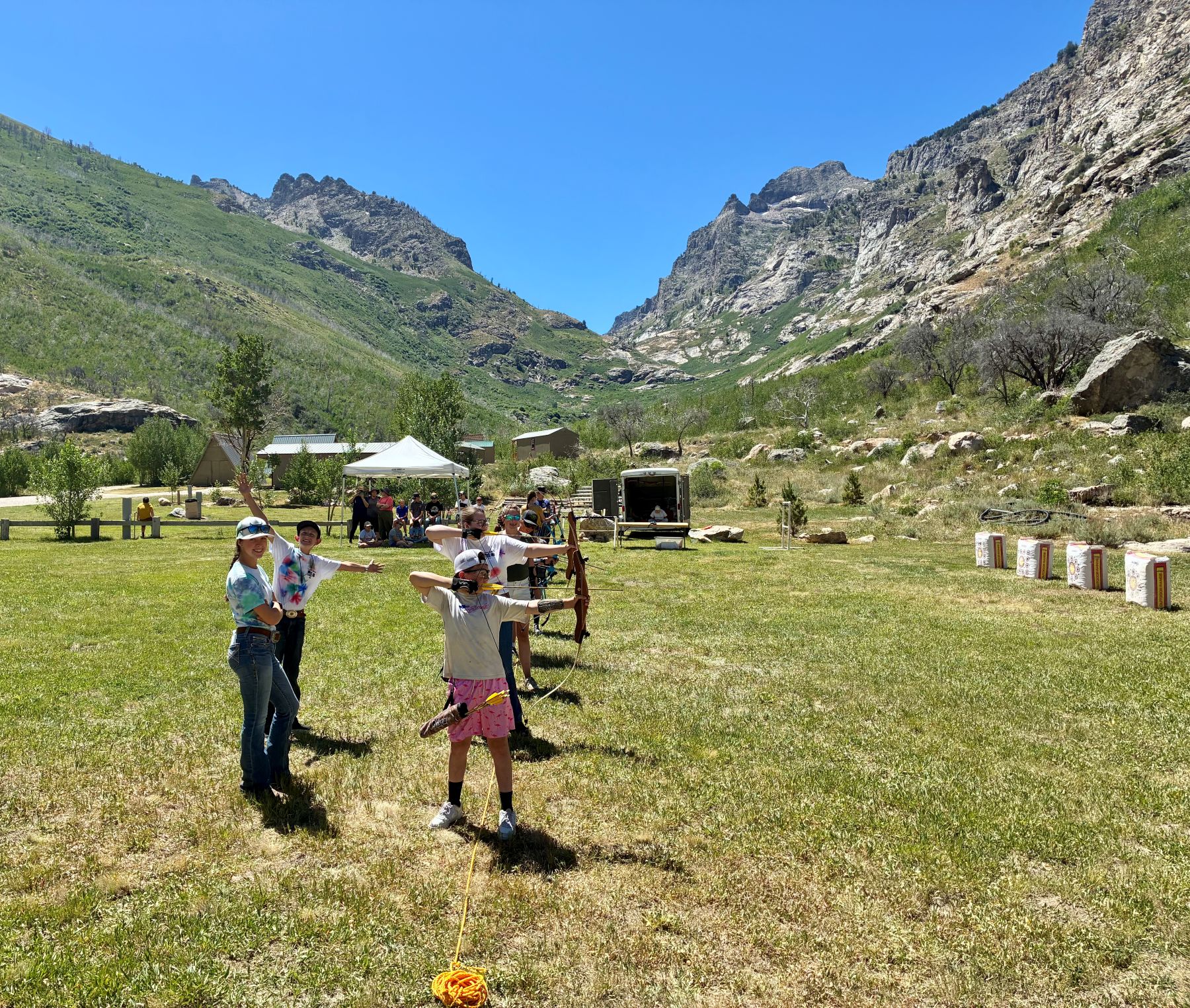
You can’t talk about 4-H, without talking about camp, especially summer camp. In Nevada, the first 4-H camp took place on the University of Nevada, Reno campus almost a century ago, in 1930. Now, hundreds of youth benefit from education and healthy activities in residential summer camps not only at the beautiful, environmentally rich 32-acre Nevada 4-H Camp Tahoe on the shores of Lake Tahoe, but also at the 72-acre stunning Nevada 4-H Camp Alamo, 100 miles north of Las Vegas. And this past summer, Elko County had its first summer camp since 2019, in the Lamoille Canyon. It was two nights and three days in the area prized for its beauty, hiking and natural environment. The camping area had been destroyed by fire.
Those interested in getting involved in 4-H should contact their local Extension office.


