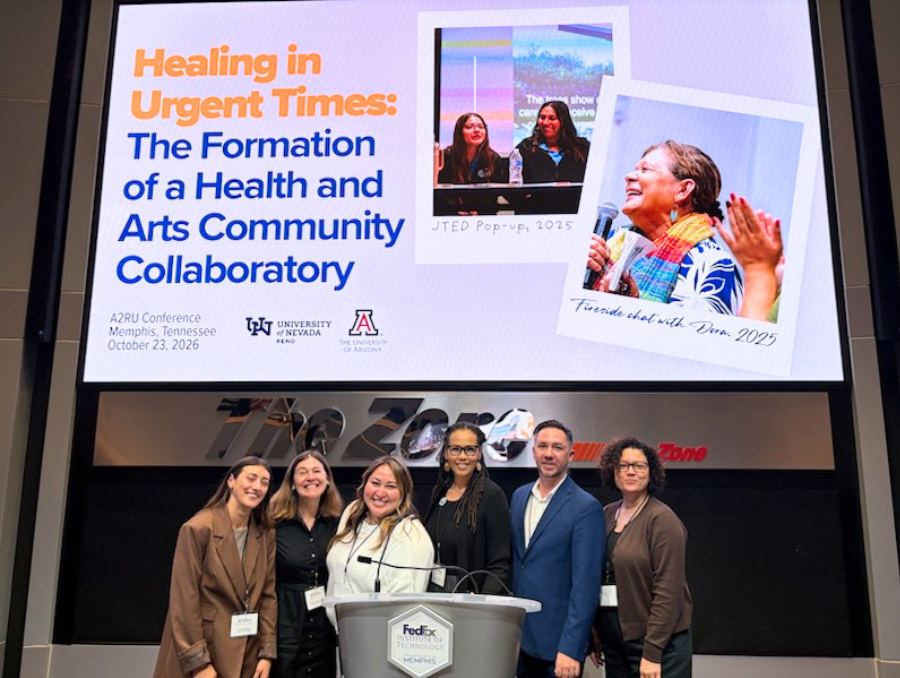
What does wellness look like? For Tarnia Newton, the answer starts with asking communities rather than assuming researchers already know.
As associate dean for Inclusive Excellence and Belonging at the University of Nevada, Reno's Orvis School of Nursing, Newton is exploring how photography, storytelling and community voices can deepen our understanding of health, migration and belonging. Her work centers on a simple but important idea: The people whose experiences are being studied should help define what wellness means.
Before joining the University, Newton helped develop the Health & Arts Community Collaboratory (HACC) at the University of Arizona College of Nursing. The interdisciplinary collaboration brings together nursing, public health, the arts, museum education and community partners to explore health and well-being through creative, community-engaged research. Newton continues this work with HACC colleagues while considering how similar approaches could inform nursing education and community engagement in Nevada.
One example is Where We Go Together: Reflections on Migration through the Lenses of Care, Consciousness and Community, a traveling exhibition featuring photographs and personal narratives created by students in the United States and Mexico. Through the project, participants explore migration beyond statistics and headlines, considering the connections between movement, health, family, culture and belonging.
“Migration usually shows up in the news as a crisis or a number,” Newton said. “Through art, the students saw something else: families, resilience, people caring for one another. A photograph doesn’t argue with you. It invites you to stop, and that opens a conversation that’s hard to start any other way.”
Using photography to understand wellness
At the center of the project is Photovoice, a participatory research method that gives people an opportunity to document and interpret their own experiences. Rather than having outside researchers determine what a community's experiences mean, participants use photographs and personal narratives to explore topics such as health, migration and wellness. They then discuss their images as a group, identifying what they reveal about their communities' strengths, challenges and priorities.
The photographs offer different perspectives on migration and the meaning of home. One student photographed a blue heron, reflecting on how birds migrate in search of better resources, much as people do. Another paired a photograph of new high-rises with the observation, “We don’t often stop to think about those who don’t get equal chances to live in communities that are safe and stable environments.”
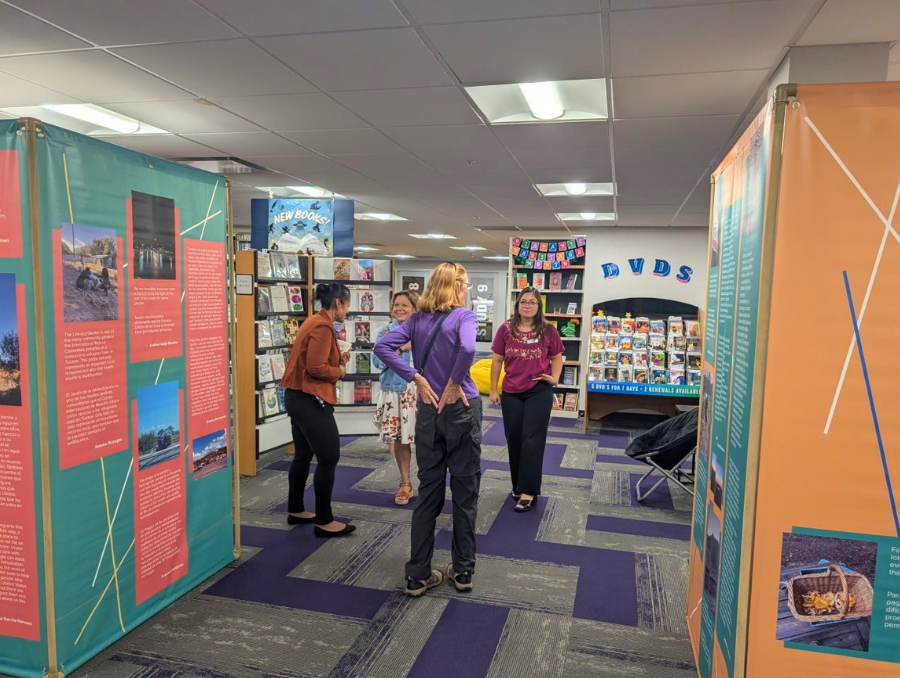
Photovoice exhibition at Eastern Arizona College Alumni Library.
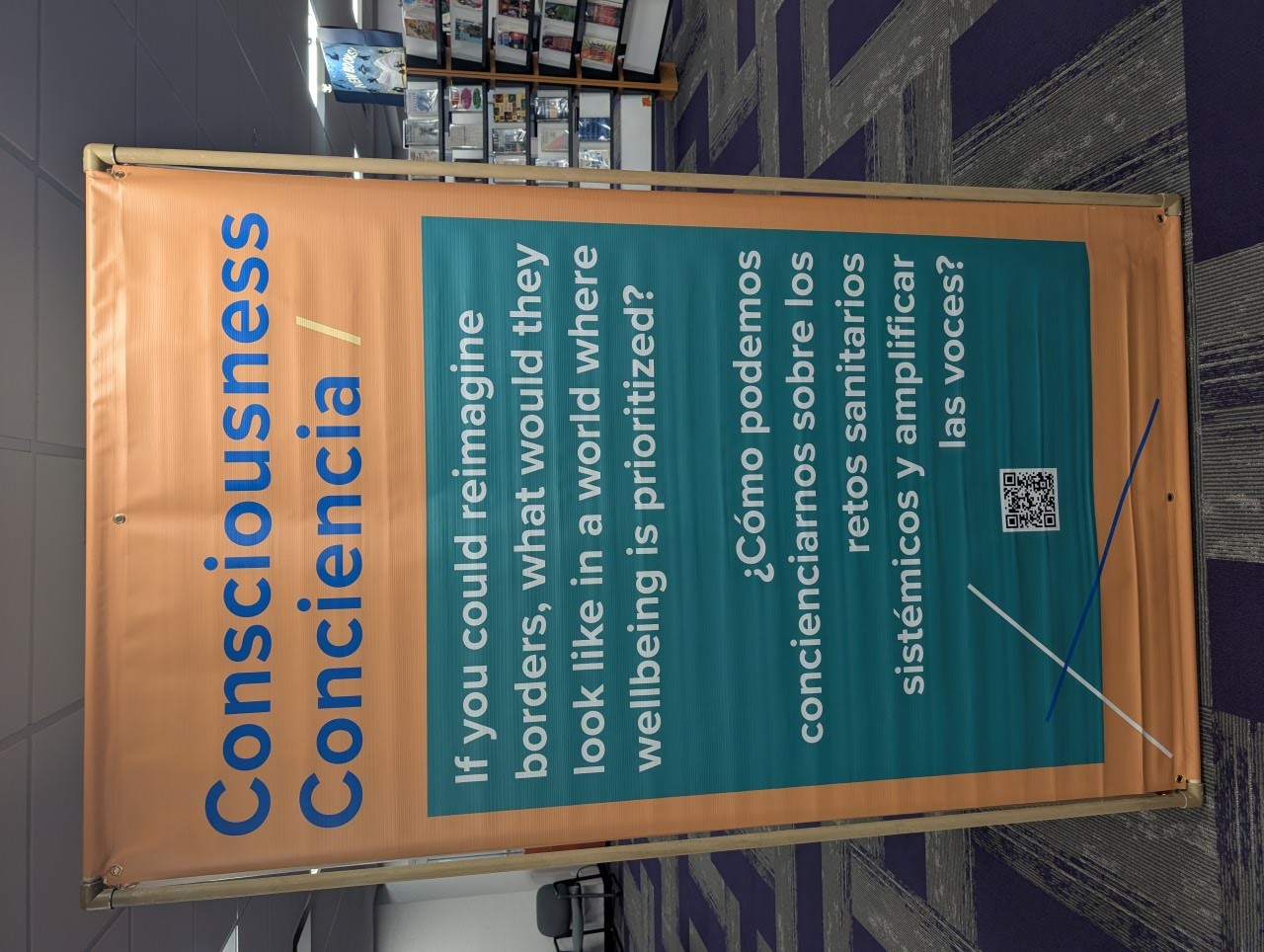
The exhibition also invites visitors to contribute their own perspectives. At a recent stop at the Eastern Arizona College Alumni Library in Thatcher, Arizona, visitors were asked to respond to two questions: “Tell us about a tradition in your family” and “How do you support the people you care about?”
The responses, written in English and Spanish, described family celebrations, cultural traditions and everyday expressions of care. One visitor shared how family members gather for Japanese New Year celebrations. Another described two annual Eid celebrations that bring relatives together and include sharing with neighbors in need. One response read, “Cantamos las Mañanitas para despertarnos en nuestro cumpleaños.” We sing “Las Mañanitas” to wake each other up on our birthdays.
None of the responses used the word “wellness.” All of them described it.
“As researchers, we often arrive with established definitions of health and wellness,” Newton said. “But what happens when we ask people to define wellness for themselves? Their responses reveal the importance of family, traditions, relationships, cultural identity and belonging. These are dimensions of well-being that may not always be captured through traditional measures.”
For Newton, those conversations are an important part of the research. They demonstrate how creative approaches can make space for perspectives that might otherwise be overlooked.
From research to community impact
The exhibition is designed as a pop-up experience, traveling to libraries, schools and community spaces where people can engage with the photographs and share their own experiences. Its sections explore care, consciousness and community, encouraging visitors to consider how people support one another and how ideas about borders and belonging shape well-being.
At the Thatcher library, the exhibit also created opportunities for conversations about migration and public health. A visit from Dora Rodriguez, author of "Dora: A Daughter of Unforgiving Terrain," added another perspective. Rodriguez's memoir recounts her survival of a deadly 1980 desert crossing after fleeing political violence in El Salvador. She is now the founder and director of Salvavision, an organization that advocates for migrants and their families.
“Migration is a public health issue with no borders,” Rodriguez said. “Our responsibility is to continue humanizing these experiences through stories.”
The exhibit's impact extended beyond the conversations it inspired. After attending the exhibit and hearing Rodriguez speak, one student joined the Southeast Arizona Area Health Education Center as a student helper. He now helps educate families in Graham and Greenlee counties about chronic health in English and Spanish.
“That’s what community-engaged research can do,” Newton said. “It doesn’t end with a publication. It ends with someone saying, ‘I want to help my community.’”
Engagement in Nevada
At the University of Nevada, Reno, Newton sees opportunities to build on this work through nursing education, research and community partnerships, particularly in rural and underserved areas of Nevada.
By incorporating photography, storytelling and other creative approaches, nursing students can gain a deeper understanding of the communities they serve. Just as importantly, community members can help shape conversations about their own health needs, experiences and definitions of wellness.
“The question I keep coming back to is whose knowledge we value,” Newton said. “Students have knowledge. Communities have knowledge. Our responsibility as educators and researchers is to create opportunities for those perspectives to come together.”
Newton hopes to explore how these approaches can help University students become more thoughtful, community-centered health professionals while strengthening connections between the Orvis School of Nursing and the communities it serves.
“I don’t want to walk into a rural Nevada community with a definition of wellness already written,” Newton said. “I want to ask what wellness looks like here, what helps people thrive and what they want me to understand about their lives. Then I want to listen.”
For Newton, that is where meaningful community-engaged research begins: listening, learning and recognizing that the people who make up a community are essential partners in


