No one can do this alone How first-generation students find support, belonging and a way forward

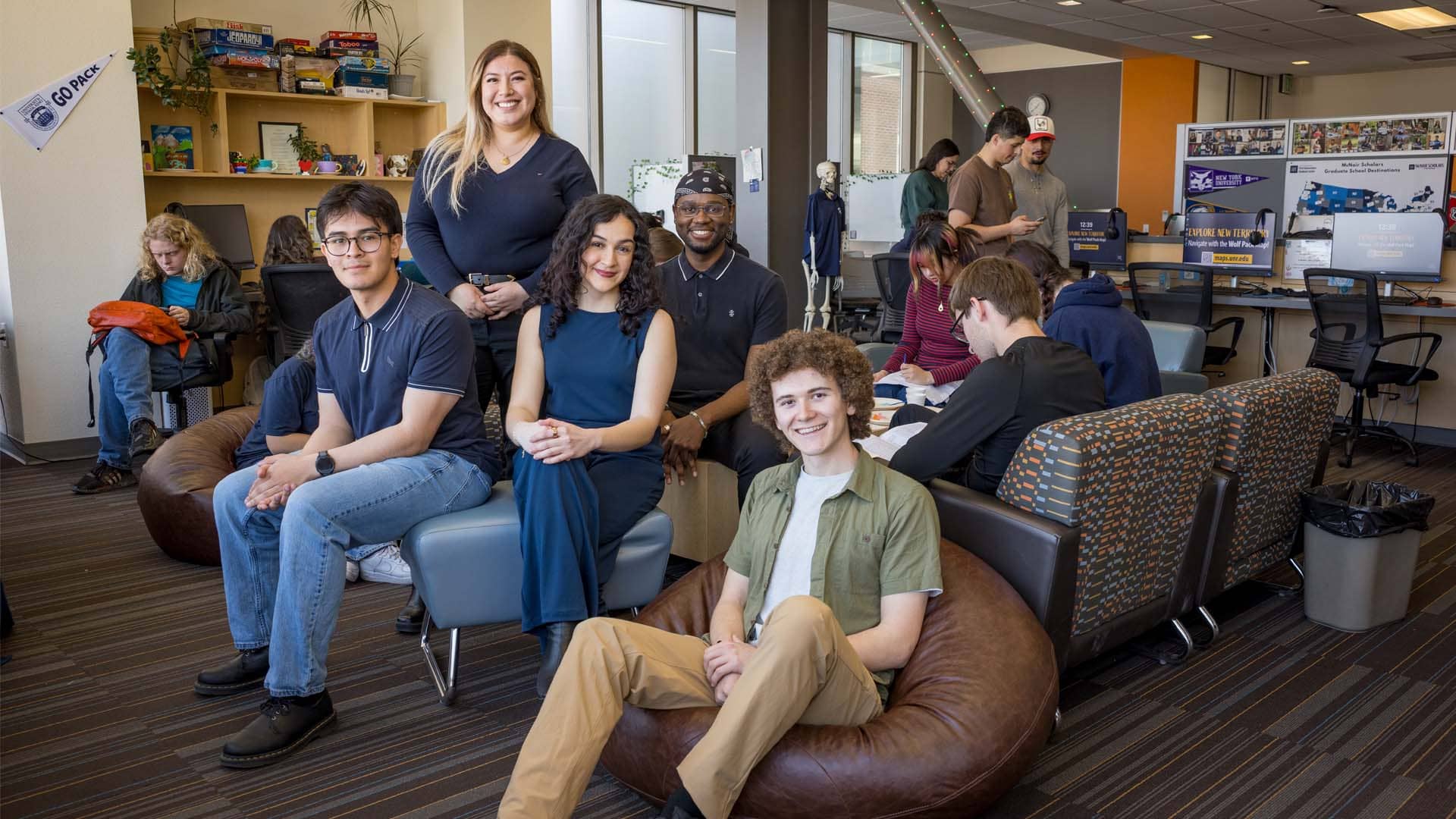
A group of people sit casually in a modern lounge, conversing and relaxed. Bean bags, couches, and computers create a collaborative atmosphere.

Students relax and enjoy each other’s company in the First-Gen Student Center. Photo: Brin Reynolds ’12, ’15 MBA.

No one can do this alone

How first-generation students find support, belonging and a way forward

“My first day on campus, standing on the Quad, I knew I was at home,” Fia Ewers ’25 (social work) said.

For a student who came to college without a roadmap, that feeling didn’t come automatically for Ewers. It took time, support and a community that helped her turn uncertainty into belonging.

First-generation students arrive at the University of Nevada, Reno with many different stories, but few have a clear sense of how college works or where to turn when challenges arise. For Ewers, navigating campus meant learning to ask for help, finding trusted support and slowly building confidence in a place that would become central to her life.

“I didn’t always know how to ask for help,” Ewers said. “Learning that it was OK and that there were people who wanted to help made all the difference.”

Ewers had learned to be self-reliant long before she arrived at Nevada. After aging out of the foster care system, she understood how quickly systems could feel overwhelming — and how easily people could fall through the cracks. College, she knew, would require more than academic preparation. It would require stability, connection and reliable support.

“You learn to figure things out on your own,” she said. “But college showed me that doing everything alone isn’t the same as doing it well.”

Building a support system

Early on, Ewers found her way to campus resources designed to support first-generation students. Through programs such as TRIO and Fostering the Pack, she began to build relationships with people who understood both her background and her goals. What started as practical support soon became something more enduring: a place she returned to, again and again, as she learned how to ask for help and trust that it would be there.

As Ewers became more rooted on campus, the support she received at the First-Generation Student Center began to shape how she saw her role — not just as an undergraduate navigating college, but as someone positioned to make change. Her path in social work reflected what had already become clear through experience: systems matter, and when they work well, they can alter lives. “Once I understood how these systems worked,” she said, “I wanted to be part of making them work better for other students.”

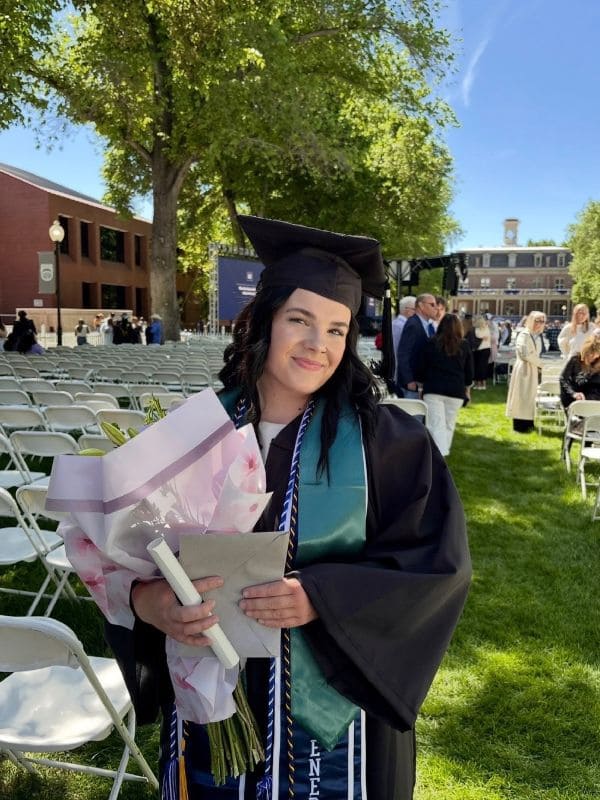
Fia Ewers wears a gown and holds a bouquet and a diploma, smiling outdoors on a sunny day. Rows of white chairs and people gathered in the background convey celebration.
Fia Ewers at spring commencement in the Quad. Photo courtesy of Fia Ewers ’25.

That understanding drew her toward advocacy and policy work focused on students with foster care experience. Through internships, research and leadership opportunities, Ewers began translating her lived experience into action — working to identify barriers, document needs and push for solutions that could make college more accessible for students like her. As Nevada’s delegate to the National Foster Youth Institute’s Congressional Leadership Academy, Ewers worked on higher-education policy issues and participated in advocacy efforts in Washington, D.C., sharing student-informed perspectives with lawmakers and staff.

From student to advocate

Ewers also found herself returning to the First-Generation Student Center — the same spaces that had once supported her, this time as a mentor and guide. Whether through tutoring, outreach or simply being present, she became part of the network that helps newer students find their footing. “I remember how overwhelming it felt at first,” she said. “If I can help someone feel less alone, that matters.”

After completing her undergraduate degree in 2025, Ewers remained on campus to continue her studies and give back to the community that supported her. Now an Upward Bound literacy specialist in the First-Generation Student Center, Ewers works with students who are beginning the same journey she once navigated herself, while in the home stretch of her graduate studies in social work.

The work feels natural. Having once navigated college without a clear roadmap, Ewers understands the power of being seen, heard and supported — and the responsibility that comes with that understanding. She carries that sense of belonging with her. The campus that once felt unfamiliar has become a place of reflection and grounding — one that reminds her how far she has come.

The Quad, in particular, holds that meaning. It marks both an arrival and a becoming: a reminder that home is not always something you start with, but something you build through connection, persistence and care.

Ewers’ journey is one example of what can happen when students find the support they need to navigate college on their own terms.


Many paths, shared support

Across campus, other first-generation students are charting their own paths — each shaped by different challenges, goals and definitions of success. Learn what can happen when students find the support they need to navigate college on their own terms.

Nick Coté (Class of 2029) A National Merit Scholar, Nick is a member of First in the Pack and a TRIO STEM Scholar.
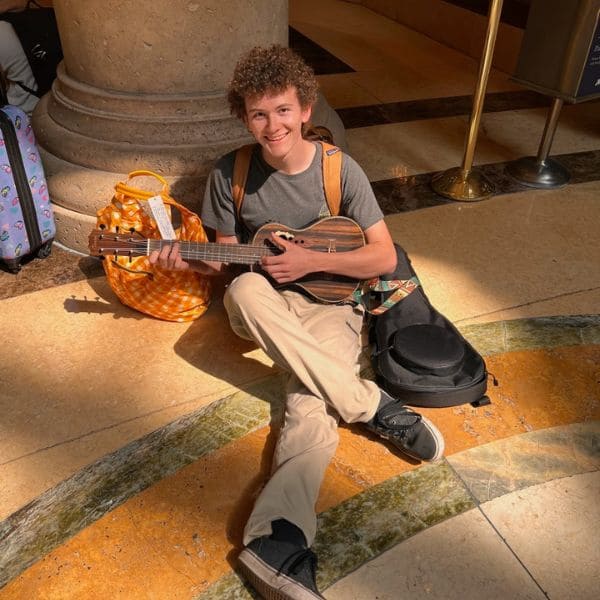
A young person with curly hair smiles while sitting on a polished floor, playing a ukelele. They are by a large column, next to a colorful bag.
Jaya Sicard ’24 (physics) A Nevada Air National Guard veteran, Jaya earned an NSF Graduate Research Fellowship and now studies nuclear engineering at UC Berkeley.
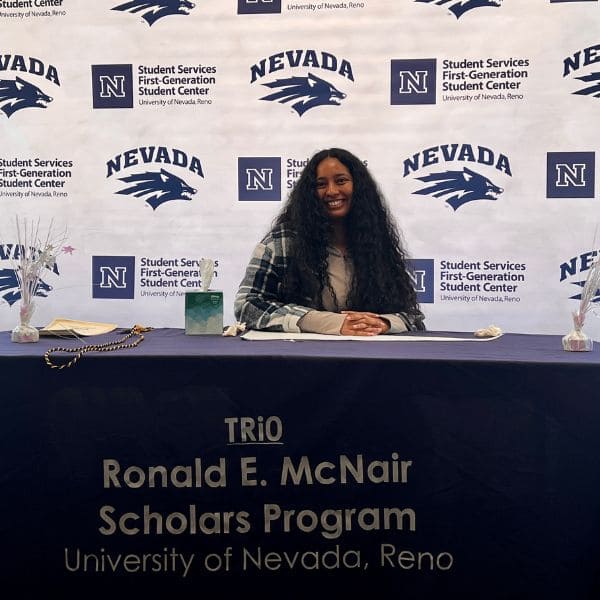
A woman with long hair smiles while seated at a table with a "TRiO Ronald E. McNair" banner. Behind her is a University of Nevada, Reno backdrop.
Jairo Cadena-Mendez (Class of 2026) One of only 150 students nationwide to earn a Google/TalentSpirit Techwise Fellowship and interned at NASA’s Jet Propulsion Laboratory.
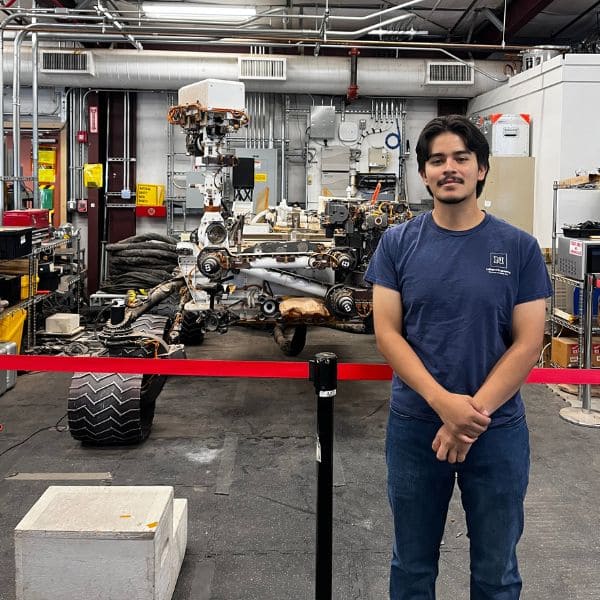
A man in a blue t-shirt stands in front of a Mars rover model inside a workshop filled with machinery and equipment, conveying a sense of innovation and exploration.
Benjamin Crutchfield (Class of 2026) Co-founded Nevada’s chapter of the National Society of Black Engineers.
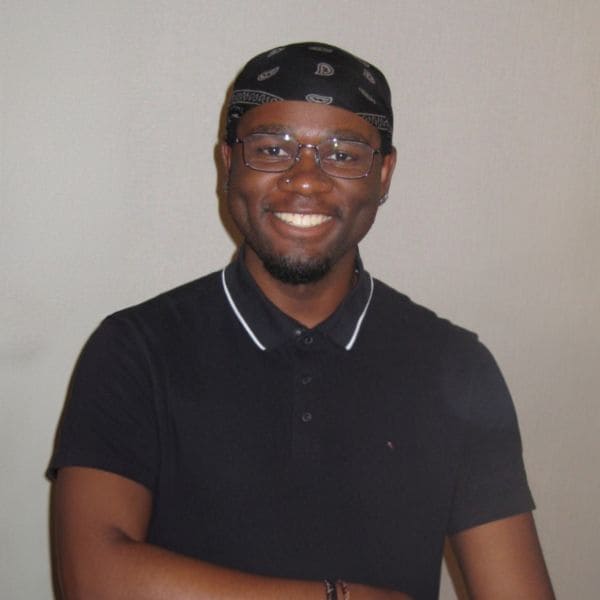
Smiling person wearing glasses, a black bandana, and a dark collared shirt against a neutral background, conveying a friendly and cheerful mood.
Carolina Rocha Becerra ’22 (chemistry) A TRIO STEM Scholar, Carolina presented her own chemistry research in Spanish at the National Congress of the Mexican Society of Electrochemistry.
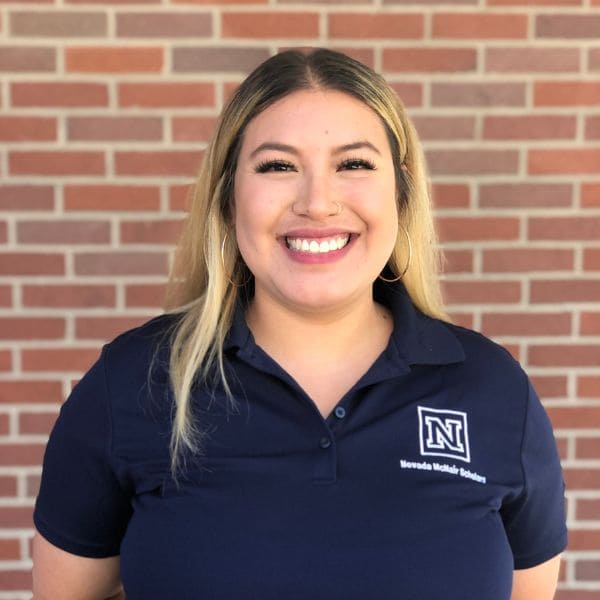
Smiling woman with long hair and hoop earrings stands against a brick wall. She wears a navy shirt with an emblem and appears confident and approachable.
Manuel Retana ’18 (mechanical engineering) Works at NASA as a project manager on environmental control and life-support systems.
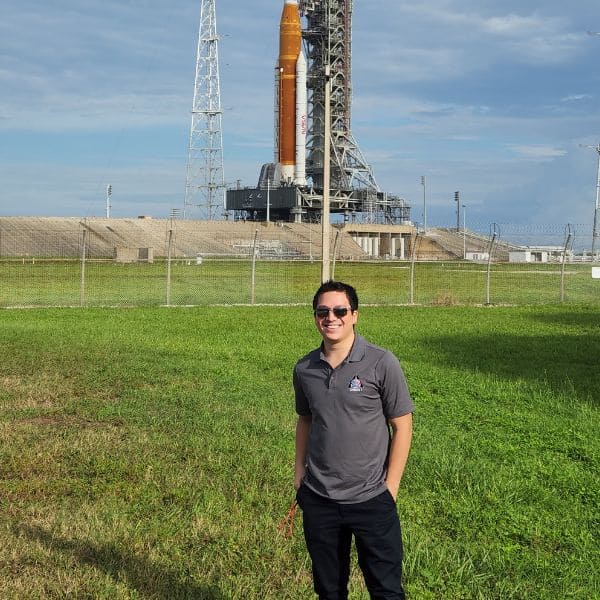
Manuel smiles in front of a space launch pad under a clear sky.
Fia Ewers Connected foster students with resources through the Fostering Success Initiative and researches food insecurity to help inform Nevada policy discussions.
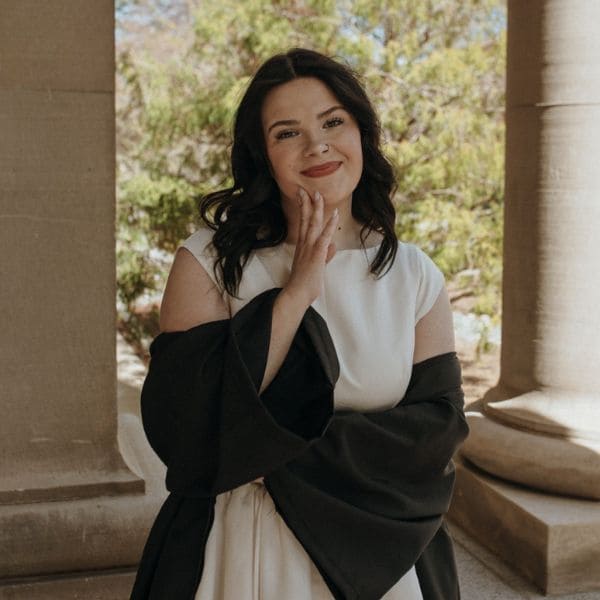
Smiling woman with dark hair and white dress, draped in a black graduation gown. She’s standing in a columned outdoor setting.
Alex Paredes Rivera ’23 (psychology) Graduate student, Upward Bound alumna and McNair Scholar Alex Paredes Rivera ’23 (psychology) served as Nevada’s youth suicide prevention specialist.
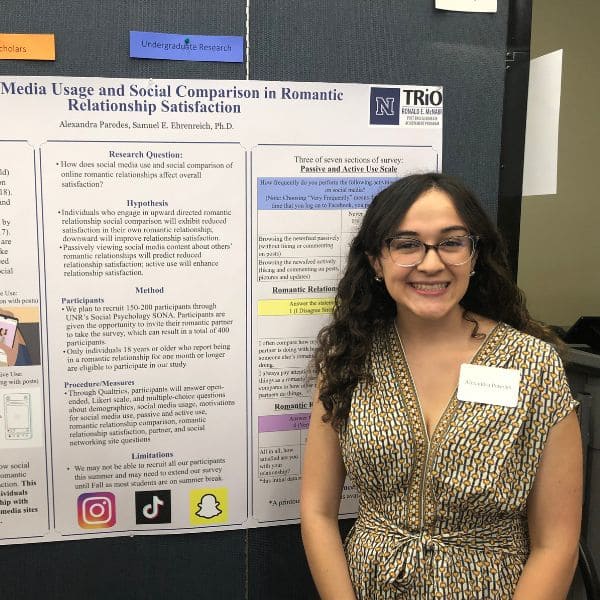
A smiling woman stands beside a research poster titled “Social Media Usage and Social Comparison in Romantic Relationship Satisfaction.” She is wearing glasses and a patterned top.
 

Support across the first-gen journey

About one-third of University of Nevada, Reno students identify as first-generation. Through a range of funded programs, the First-Generation Student Center supports students from high school through graduate study, providing targeted resources and community for those who participate.