
In 2018, the Nevada System of Higher Education made a powerful commitment to students who had been a part of the foster care system. Through the Fostering Success Initiative, these students are eligible for tuition waivers and benefit from a System-wide community of students from similar backgrounds. At the University, that means students like Fia Ewers ’25 (social work).
Finding support through the Fostering Success Initiative
By her own description, Ewers aged out of the foster care system and, as a result, understands the challenges former foster youth face in navigating higher education.
“College feels inaccessible,” Ewers said. “Challenges begin with finances. In Nevada, we are fortunate to have the fee waiver. But challenges are greater than that, including food insecurity.”
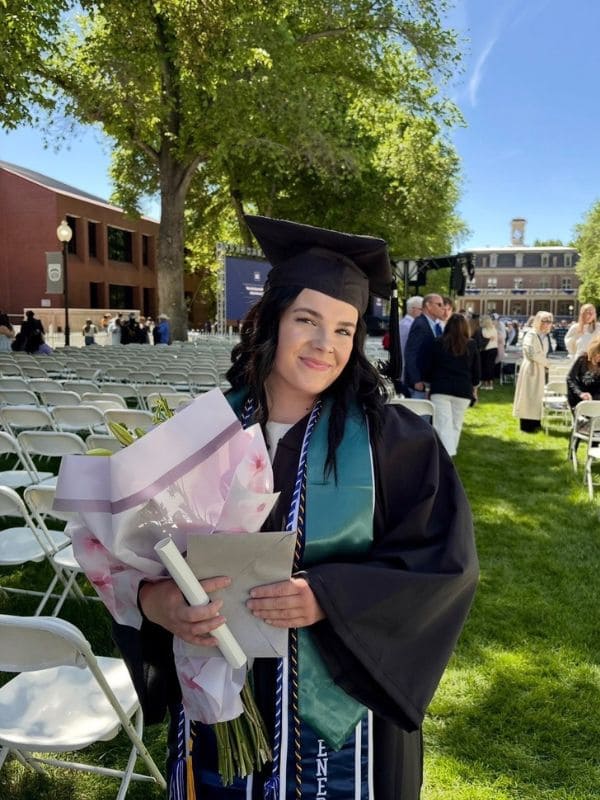
Ewers has always been determined to continue to build bridges over the barriers for foster students. Under the guidance of Laura Obrist, director of the Fostering Success Initiative, she worked with the Nevada System of Higher Education for two years, ensuring participants in the program were connected with one another and with the resources available to them. Her experiences in that role led to her service as the Nevada Delegate in the National Foster Youth Institute’s Congressional Leadership Academy, where she actively helped push policies forward that were designed to support foster youth.
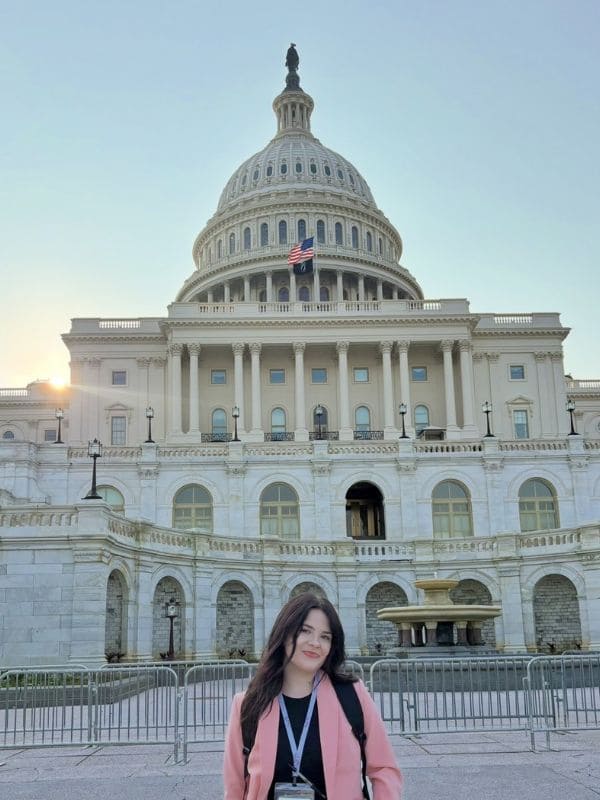
“Policy is my favorite thing,” she said, explaining how much of an impact appropriate policy implemented thoughtfully can make. The Congressional Leadership Academy program lasted nine months, culminating in a week in Washington DC, where Ewers shadowed Congresswoman Gwen Moore, who was working with Congressman Greg Landsman on efforts to expand higher education access for students with foster care experience. Of her time in the Capitol, Ewers said, “I got to see first-hand what it looks like to advance policy.”
Policy in action
As a result, Ewers earned the BSW Leadership Award for her outstanding advocacy, initiative and service to the campus and wider community.
Now pursuing her master’s in social work, Ewers is currently engaged in research to determine food insecurity needs of students with foster care experience with an aim toward shaping policy at the 2027 Nevada Legislative Session.
“I want to keep doing advocacy work and instilling change—at the state, national, and micro level,” she said. “I want to continue serving underserved youth populations.”
Even as she advocates for policy changes to clear the way for more foster youth to excel at the University, Ewers expressed the power of the First-Gen Center.
“I started in TRIO as a freshman, and I had amazing mentors,” she said. “The First-Gen Center is a great homebase. There are so many resources—from printing to socials, to access to computers. So many different things. And there are always people asking how you’re doing and what you need. You will be seen. The Center and the support it provides set you up for success in countless ways.”
Now an Upward Bound literacy specialist herself, Ewers is doing her part to pay that support forward. To the students she works with and to others who may wish to find success as former foster youth, she said, “It is natural to experience imposter syndrome. It is important to remember that you are as capable as everyone else. Success is not unattainable. There are so many barriers, especially for underserved youths. Don’t let them define or limit you. Shift your fear into gratefulness.”
For her part, Ewers is filled with gratitude for the place and purpose the University has provided.
Finding home at Nevada
“My first day on campus, standing on the Quad, I knew I was at home. When I took my first social work class, it felt natural to me. It was exactly what I believe and how I live my life.”
She added, “You will find a home here. You’ll find your people. You’re genuinely in a community here. And it’s beautiful.”
As her undergraduate degree concluded, like so many Wolf Pack alumni before her, Ewers soaked in the beauty and the power of campus.
“The last day before graduation, I walked to the Quad. I lay there for two hours. I didn’t talk, I didn’t read and I didn’t look at my phone. I was just quiet, and I let it sink in. Then, I was ready to move on.”
Thanks to Ewers and the First-Gen Student Center, others will find their home here, move on to do great things at the local, national, and international levels. And though their dreams may take them to the corners of the earth, the Quad will always welcome them home.