About the University of Nevada, Reno
- About the University
- Academics
- Academic Support Programs
- Statewide Outreach
- Research Achievements
- Student Demographics
- Faculty Demographics
- About the Region
- Extended Studies and Other Programs
- Intercollegiate Athletics
About the University
The University of Nevada, Reno is the state's historic flagship institution of higher education. The University has a student enrollment of more than 16,000,including about 3,200 graduate students, and a total budget of nearly $500 million. The University provides a broad range of programs and degree options, ranging from baccalaureate degrees in more than 75 disciplines to more than 100 graduate-degree programs at the master's and doctoral level. The University of Nevada School of Medicine is a vital component of the University, with campuses in both of Nevada's major urban centers, Las Vegas and Reno, and a health network that extends to much of rural Nevada.
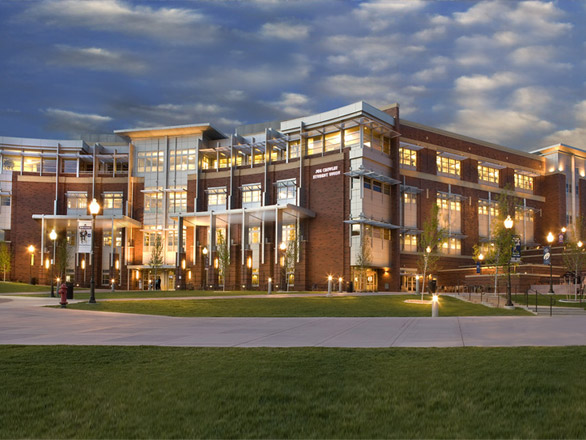
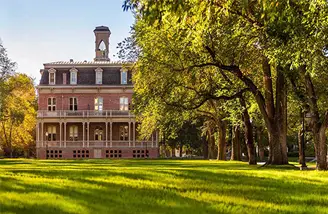
The University of Nevada was founded in 1874 in Elko as the state's first institution of higher education. Relocated to Reno in 1887, the University remained the state's only institution of higher education for 75 years. The first building on the Reno campus, Morrill Hall, is still in use today, and the campus has grown from a small cluster of buildings surrounding a central quadrangle (modeled after Thomas Jefferson's design for the University of Virginia), to a 250-acre site just north of downtown Reno. The University is one of eight institutions of higher education governed by the Nevada System of Higher Education.
Academics
The university's role is to serve students who have achieved the highest academic standards in secondary school, and those who are seeking advanced degrees. Admission to the university is determined primarily by a student's high-school grade-point average. The admission standard is currently set at a GPA of 2.5.The minimum GPA for admission will go up to 2.75 in core subject areasbeginning in the fall 2006 and will increase again to 3.0 no later than 2010.
The University comprises nine degree-granting colleges:
- Agriculture, Biotechnology, and Natural Resources
- Business Administration
- Education
- Engineering
- Health and Human Sciences
- Reynolds School of Journalism
- Liberal Arts
- Medicine
- Science
Additionally, Cooperative Extension is a non-degree-granting college. Several schools exist as sub-units of the colleges, including the Schools of Nursing, Public Health, and Social Work in Health and Human Sciences, the School of the Arts in Liberal Arts, and the Mackay School ofEarth Sciences and Engineering in the College of Science.
The University has 76 undergraduate degree programs, and more than 100 graduate degree programs (66 master's and 37 doctoral programs) from which students may choose. New majors approved recently include Atmospheric Sciences, Environmental Science, Forest and Rangeland Management, Wildlife Ecology, and Computer and Information Engineering. The University is also in the process of adding new Ph.D. programs in Mathematics, Statistics, and Geography, and a new interdisciplinary undergraduate program in Environmental Studies.
The University offers many standard degree programs found at most comprehensive research institutions (for more information, see the University's online catalog). However, it also features some distinctive programs that provide unique opportunities for students. Among the unique academic programs offered by the University are:
- Undergraduate Core Curriculum. All undergraduates are required to complete the University's Core Curriculum, which includes the development of basic writing, math, and critical thinking skills, foundational studies in humanities, social sciences, natural sciences, and fine arts, examination of diverse perspectives, and a capstone experience that integrates the various elements of the Core. The Core Curriculum has been cited for its excellence and for integrating basic skills throughout the undergraduate experience.
- Ph.D. in Basque Studies. Nevada offers the only advanced degree program in Basque studies in the United States through its highly-regarded Center for Basque Studies in the College of Liberal Arts. Courses in Basque language are also taught.
- B.S./M.S. in Biotechnology. This relatively new degree program offers students an opportunity to earn both a B.S. and an M.S. in Biotechnology in five years of study at the University.
- B.A., M.A., and Ph.D. in English with an emphasis in literature and environment. The University boasts one of the nation's strongest programs in this field. Its doctoral graduates, like those in other fields of English, go on to faculty positions at other universities, both in the U.S. and abroad.
- B.S. and M.S. in Geological Engineering and Mining Engineering. Thanks to the state's significant mining heritage, the University has developed strong programs for preparing professional engineers to enter the mining industry.
- M.S. and Ph.D. in Hydrology and in Hydrogeology. The University boasts one of the top ten programs in the country. The program is enhanced by the participation of DRI faculty in both instruction and research advising.
- M.S. and Ph.D. in Judicial Studies, M.S. in Justice Management. The National Judicial College, a separate non-profit organization, is located on the University's campus and provides opportunities for sitting judges to obtain professional development. The University offers these judges a further opportunity to obtain advanced degrees in Judicial Studies and for support staff to earn a master's in Justice Management.
- M.A. in Literacy Studies. These degrees, offered through the College of Education, provide specialized training for teachers to develop skills for teaching literacy to children. This program has been acclaimed as one of the best of its kind in the country.
- B.S. and M.B.A. in Managerial Science with an emphasis in Gaming Management. The University offers one of the foremost programs in gaming management and has worked with numerous countries overseas to extend that expertise to economies that are developing a gaming sector. The University also has a highly regarded executive program in gaming management offered through its Extended Studies program.
Academic Support Programs
The University's academic programs are augmented by other opportunities, such as the Honors Program with several hundred students, an active Army ROTC program, and a growing undergraduate research program. More than 250 University students in 2004-5 participated in study abroad with the University Studies Abroad Consortium. This consortium of 31 universities originated at the University of Nevada and is now one of the leading study-abroad providers in the country, offering 38 programs in 25 countries.
Statewide Outreach
As the state's land-grant institution, Nevada is mandated by the state constitution to offer instruction in agriculture, the mechanical arts (engineering), and mining. Its agricultural, liberal arts, and mining programs spawned the earliest academic colleges at the university, later followed by education, engineering and business in the 1950s, medicine in the late 1960s, journalism in the 1980s, and human and community sciences in the 1990s. The University of Nevada Cooperative Extension was created in 1914 as a part of the agriculture college, a result of the federal Smith-Lever Act, and then made into an independent college in 1993. More recently, the university realigned its College of Arts and Science into separate Colleges of Liberal Arts and of Science, the latter of which now includes the university's mining programs.
Coupled with its status as a land-grant institution, the University necessarily has a statewide mission and boasts programs and activities in all 17 counties of the state. It has more than 700 employees outside the Reno area, most of them in Las Vegas. It plays a critical role in the promotion of health throughout the state through its Schools of Medicine, Nursing, and Public Health.
The University also has responsibility to maintain a number of statewide programs that provide service and research support to constituents across the state. These programs include, among others, the Nevada Agricultural Experiment Station, the University of Nevada Cooperative Extension, the Nevada Small Business Development Centers, the University of Nevada Oral History Program, the Center for Basque Studies, the Nevada Bureau of Mines and Geology, the Nevada Seismological Laboratory, and the Nevada Center for Ethics and Health Policy. Both the state climatologist and the state demographer are faculty members of the University.
Research Achievements
The University ranks among the top 150 research institutions nationally according to the Carnegie Foundation's listing of colleges and universities. With more than 100 graduate degree programs, more than $130 million in external grants and contracts, and a faculty whose educational experiences include the top research institutions in the world, the University is already a significant institution of scholarship and learning, but its research capacity and activity continues to grow at a rapid pace. For example, total funding for sponsored projects has grown at a rate of 8-10 percent per year over the past 10 years. In addition, the University is taking an active role in regional economic development and diversification through its industrial partnerships, incubator facilities, and increased participation in intellectual property licensing and commercialization.
Among its more notable areas for research and creative activity are:
- American and Great Basin Studies. A number of faculty members in various colleges have helped the University develop strengths in regional and national cultural studies areas, including Native Americans of the Great Basin (Anthropology), environmental policy and western water rights (Political Science and Geography), the western landscape (History and Geography), social psychology and justice studies (Sociology, Health Ecology, Criminal Justice, and Human Development and Family Studies), and Latino studies (the Latino Research Center).
- Basque Studies. The Center for Basque Studies supports the foremost collection of Basque artifacts in the western hemisphere and includes about 50,000 volumes and 1,500 journal titles in the Basque library collection. Faculty members specialize in various areas of Basque anthropology, history, literature, cultural studies, bibliography and lexicography.
- Environmental Studies. Through the establishment of an Academy for the Environment, researchers in such widely-ranging fields as environmental science and engineering, environmental policy, and literature and the environment are able to find new areas for collaboration and cooperation. The leading journal in the area of environmental literature, Interdisciplinary Studies in Literature and Environment (ISLE) is housed at the University and edited by one of its faculty members.
- Genomics and Proteomics. Core laboratory facilities in genomics and proteomics, respectively, support research on campus in the School of Medicine and in the College of Agriculture, Biotechnology and Natural Resources. In the latter college, researchers have utilized adult stem-cell technology to investigate the feasibility of developing sheep with genetically-modified organs that may be used for human transplantation (news story). University biochemists have also begun to develop genetically-modified grapes that might be used in support of a Nevada-based wine industry (news story).
- High-Energy-Density Physics. The Nevada Terawatt Facility (NTF), located on a satellite campus of the University, includes both a terawatt Z-pinch generator and a terawatt-class high-intensity laser system. These two major instruments have recently been successfully coupled for the first time, giving the NTF unique capabilities for producing and studying high-energy-density plasmas.
- Medical Basic Sciences. Basic science researchers at the School of Medicine are investigating the pathogenesis of such diseases as anthrax, hantavirus, and herpes, potential therapies for bone marrow cancer, and the pharmacology and electrophysiology of ion channel transmission in smooth muscles including the heart and gastrointestinal tract. External research grants awarded to faculty members in Medicine account for more than a third of the total funding for the School.
- Structural/Earthquake Engineering and Seismology. The large-scale structures laboratory in the College of Engineering contains three shake tables, enabling University researchers to simulate a wide range of seismological phenomena and examine the impact of such events on a variety of structures. Notably, the laboratory was awarded the contract for testing the new San Francisco-Oakland Bay Bridge design (news story). In addition, the Nevada Seismological Laboratory in the College of Science hosts internationally-recognized expertise in the science and measurement of earthquakes. Using home-grown measurement techniques, a team of University scientists recently detected an 8 mm upward shift of a nearby mountain due to small earthquakes 20 miles beneath the surface of Lake Tahoe (news story).
In keeping with its land-grant mission, the University is actively involved in applying and extending its research to benefit state communities. Through applied research, Cooperative Extension and Nevada Agricultural Experiment Station faculty work to improve quality of life by, for example, enhancing agricultural crop production, reducing contaminants in drinking water, and conserving precious water resources. The College of Health and Human Sciences, along with Cooperative Extension, is involved with addressing major social and health needs of the citizenry. Other statewide research programs, including the Oral History Program, the Nevada Bureau of Mines and Geology, and the Research and Educational Planning Center provide specialized research assistance and outreach to the state. Finally, the newly created School of Public Health is engaged in a variety of investigations designed to examine and improve the general health of Nevadans.
Student Demographics
Roughly two-thirds of the University's students come from northern Nevada, including almost half, or 48 percent, from the University's home county, Washoe County. Another 13 percent of its students come from the Las Vegas area (Clark County). The University attracts students from all 50 states, totaling 16 percent of the student population (more than half of whom are from California), and has 664 international students (4.2 percent) from 39 foreign countries. The most rapidly growing group of undergraduates is from Las Vegas: over 500 came as new freshmen in fall 2005, an increase of more than 100 from the previous fall. About one-sixth of the student population is made up of students of color, and 55 percent of all students are female.
The average high school grade point average for entering freshmen is moving upward and is currently 3.36, compared to 3.20 prior to implementation of the Millennium Scholarship five years ago. Entering freshman average a composite score of 22.4 on the ACT and 1059 on the SAT (526 Verbal, 533 Math), the latter up from 1043 prior to the Millennium Scholarship program.
The tuition for Nevada resident undergraduates is among the lowest in the western United States and is a reflection of the Board of Regents' and state legislature's policy to provide access to as many Nevada high school graduates as are qualified. For example, the resident undergraduate tuition and fees total $2,850, which is lower than all but one of 15 western states. Non-resident undergraduate tuition and fees total $11,524 which is at the median for the western states.
Faculty Demographics
The faculty of the University is exceptionally well-qualified, with 94 percent of tenured faculty and 79 percent of the full-time faculty holding the highest degrees attainable in their respective fields. More than 50 percent of the faculty has been hired during the past 10 years, reflecting the retirement of the “baby boomer” generation of faculty and general growth of the University. Faculty-initiated research grants and contracts have increased 600 percent during the past 15 years, a result of attracting world-class faculty members.
At present, 37 percent of the University's 999 full-time academic faculty members are female, with 15 percent made up of men and women of color. The University's 663 administrative faculty, or professional staff, includes 53 percent women and 16 percent people of color.
About the Region
The Reno-Tahoe and northern Nevada region is a vibrant home for about 350,000 people, with an annual growth of 2.5 to 3 percent. Rated by national publications as a Top-10 location for businesses, and as a community with a high quality of life by such outlets as Forbes, Dun and Bradstreet, and Time magazine, the area supports many outdoor recreational opportunities and cultural outlets. Nestled on the eastern slope of the Sierra Nevada range, about 35 miles northeast of Lake Tahoe, Reno is home to both philharmonic and chamber orchestras, numerous arts and cultural festivals, first-class museums featuring the visual arts and vintage automobiles, and a variety of stage shows and concerts each year. The University of Nevada maintains a broad range of program collaborations and affiliations with city, state, federal and private entities, reflecting its mission as a land-grant university and its mandate to meet the teaching, research and service needs of Nevadans.
Due to its close proximity to Silicon Valley, Nevada is thought to be a logical place for the relocation of high-technology firms because of Nevada's favorable tax structure, lower cost of living, and Nevadans' work ethic. High-technology firms are increasingly choosing Northern Nevada, and Forbes Magazine (May 26, 2003) underscored this exodus of California “wage-earners, investors and business owners” to Nevada. The University of Nevada, Reno is playing a pivotal role in responding to these changing demographics and the need for a sophisticated workforce.
The University of Nevada is actively involved in many nonprofits that serve Nevada in the areas of arts, culture and science education. Co-located on the campus are the Fleischmann Planetarium and Science Center, KNPB public television, KUNR public radio, the Nevada Historical Society, Nevada Humanities, the University of Nevada Press, and the W.M. Keck Earth Science and Mineral Engineering Museum. In many cases, University faculty and administrators play a key role in these organizations that are central to the intellectual life of northern Nevada. The University is also a key player in “Reno is Artown,” the principal arts festival of northern Nevada, featuring more than 500 arts and cultural activities each July.
Extended Studies and Other Programs
The University has an active set of programs designed to provide professional development, adult education, summer studies, distance education, and specialty training through its Extended Studies. In collaboration with TMCC, the University has recently inaugurated a new “outreach education” campus, the Redfield Campus, on the south side of Reno. This campus, administered by Extended Studies, will offer specialized graduate programs for working professionals, non-credit courses, workshops, and other continuing education programs.
Extended Studies also manages the University's Fire Science Academy near Elko, Nevada. This 426-acre facility provides state-of-the-art emergency response and petroleum fire-fighting training for first response professionals.
In an exciting and potentially transformative partnership, the Davidson Institute for Talent Development has teamed with the University to establish the Davidson Academy of Nevada, a university school for the profoundly gifted, on the University's campus. The Davidson Academy will open its doors in fall 2006 to some 30 students representing the top tenth of 1 percent of all students in academic achievement. Academy students will study at an accelerated pace and will likely enroll in regular University classes as part of their secondary education. Once permanent facilities for the Academy are built, the Academy is expected to grow to more than 100 students, with many of its graduates going on to undergraduate studies at the University.
Intercollegiate Athletics
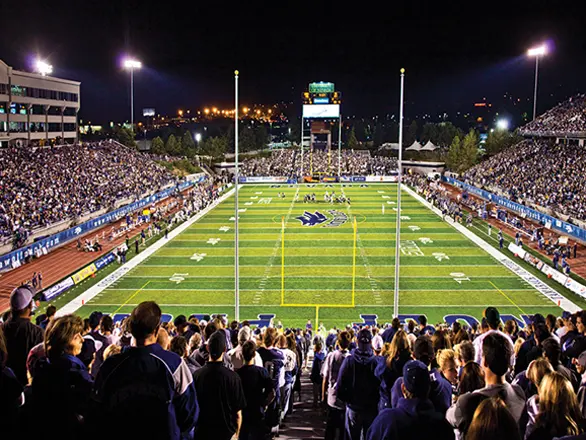
The University's athletics programs compete in NCAA Division I as part of the Western Athletic Conference (WAC). The University fields competitive teams in 18 sports, with seven men's sports and 11 women's sports teams offering scholarships. The University has recently realigned its academic support functions for student-athletes to improve the current 49 percent six-year graduate rate.